
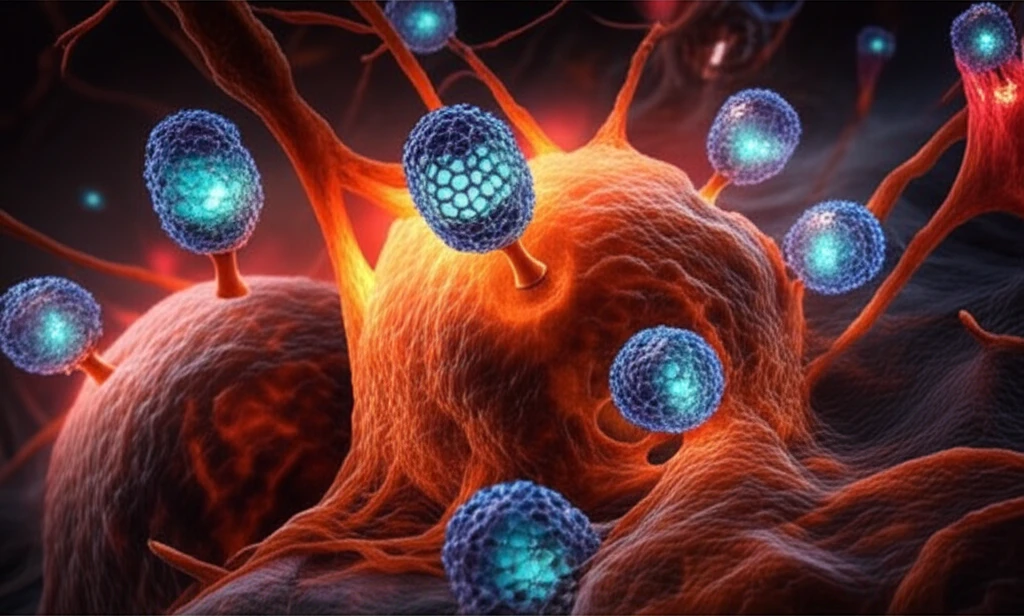
Nanoparticles selectively targeting and attacking cancer cells, overcoming drug resistance

Smarter Cancer Treatment: How Nanotechnology Can Overcome Drug Resistance

"Revolutionary reduction-sensitive micelles target tumor cells, reversing multidrug resistance and paving the way for more effective, personalized cancer therapies."


Chemotherapy, while a cornerstone of cancer treatment, often faces a significant hurdle: multidrug resistance (MDR). Cancer cells can develop the ability to resist the effects of drugs designed to kill them, rendering treatments ineffective. This resistance stems from various mechanisms, including increased drug efflux, reduced drug uptake, and alterations in drug targets within the cancer cells. Overcoming MDR is, therefore, crucial to improving cancer treatment outcomes.

To combat MDR, scientists are increasingly turning to nanotechnology. Nanocarriers, tiny vehicles designed to deliver drugs directly to cancer cells, offer a promising avenue for enhancing treatment efficacy and reducing side effects. Among these nanocarriers, mixed micelles—self-assembling structures formed from different types of polymers—have garnered considerable attention.

Recent research has focused on developing reduction-sensitive mixed micelles that can selectively release their drug payload inside tumor cells. These micelles are engineered to respond to the unique reducing environment within cancer cells, triggering drug release and overcoming resistance mechanisms. By combining reduction sensitivity with active targeting capabilities, these innovative nanocarriers hold the potential to revolutionize cancer therapy.

The Science Behind Reduction-Sensitive Mixed Micelles

Nanoparticles selectively targeting and attacking cancer cells, overcoming drug resistance

At the heart of this advancement lies the design and synthesis of reduction-sensitive mixed micelles. These micelles are typically composed of two main components: a hyaluronic acid-poly(lactide) (HA-ss-PLA) conjugate and D-α-tocopheryl polyethylene glycol 1000 succinate (TPGS). The HA-ss-PLA conjugate provides both a targeting mechanism and reduction sensitivity, while TPGS aids in drug encapsulation and MDR reversal.

Here's a breakdown of how these micelles work:

  • Selective Targeting: Hyaluronic acid (HA) targets cancer cells that overexpress the CD44 receptor, ensuring that the micelles preferentially accumulate at the tumor site.
  • Reduction Sensitivity: The disulfide bond (ss) in HA-ss-PLA is cleaved in the reducing environment of cancer cells, triggering the release of the encapsulated drug.
  • MDR Reversal: TPGS acts as a P-glycoprotein (P-gp) efflux inhibitor, preventing cancer cells from pumping the drug out, thereby enhancing its intracellular concentration.
In a recent study, researchers demonstrated the effectiveness of these mixed micelles in delivering paclitaxel (PTX), a common chemotherapy drug, to tumor cells. The micelles exhibited desirable particle size (124.32 nm) and high entrapment efficiency (87.97%), ensuring efficient drug delivery and retention. Importantly, the micelles showed good stability in systemic circulation and rapid PTX release within the reducing environment of cancer cells.

Future of Cancer Therapy: Targeted and Personalized Approaches

The development of reduction-sensitive mixed micelles represents a significant step forward in cancer therapy. By selectively targeting tumor cells and overcoming drug resistance mechanisms, these nanocarriers hold the potential to improve treatment outcomes and reduce side effects. The success of these micelles in delivering paclitaxel highlights their versatility and applicability to a wide range of chemotherapeutic drugs.

Looking ahead, further research is needed to optimize the design and formulation of mixed micelles for different types of cancer. Tailoring the targeting ligands and drug payloads to specific tumor characteristics will enable more personalized and effective treatment strategies. Additionally, clinical trials are essential to evaluate the safety and efficacy of these nanocarriers in human patients.

Ultimately, the integration of nanotechnology into cancer therapy promises a future where treatments are more targeted, efficient, and less toxic. As scientists continue to refine and innovate in this field, the dream of conquering cancer with personalized nanomedicine moves closer to reality.

About this Article -

This article was crafted using a human-AI hybrid and collaborative approach. AI assisted our team with initial drafting, research insights, identifying key questions, and image generation. Our human editors guided topic selection, defined the angle, structured the content, ensured factual accuracy and relevance, refined the tone, and conducted thorough editing to deliver helpful, high-quality information.See our About page for more information.

This article is based on research published under:

DOI-LINK: 10.1016/j.ijpharm.2018.08.019, Alternate LINK

Title: Reduction-Sensitive Mixed Micelles For Selective Intracellular Drug Delivery To Tumor Cells And Reversal Of Multidrug Resistance

Subject: Pharmaceutical Science

Journal: International Journal of Pharmaceutics

Publisher: Elsevier BV

Authors: Xiao Du, Shaoping Yin, Fang Zhou, Xu Du, Jianan Xu, Xiaochen Gu, Guangji Wang, Juan Li

Published: 2018-10-01

Everything You Need To Know

1

Why is multidrug resistance a problem in cancer treatment, and what strategies can be used to overcome it?

Multidrug resistance (MDR) develops when cancer cells resist drugs designed to kill them. Mechanisms include increased drug efflux, reduced drug uptake, and alterations in drug targets within the cancer cells. Overcoming MDR is crucial for improving cancer treatment outcomes. Strategies like using nanocarriers such as mixed micelles, which can deliver drugs directly to cancer cells, help bypass these resistance mechanisms.

2

What are reduction-sensitive mixed micelles made of, and how do they work to target and treat cancer cells?

Reduction-sensitive mixed micelles are composed of a hyaluronic acid-poly(lactide) (HA-ss-PLA) conjugate and D-α-tocopheryl polyethylene glycol 1000 succinate (TPGS). Hyaluronic acid (HA) targets cancer cells that overexpress the CD44 receptor. The disulfide bond (ss) in HA-ss-PLA is cleaved in the reducing environment of cancer cells, triggering drug release. TPGS acts as a P-glycoprotein (P-gp) efflux inhibitor, preventing cancer cells from pumping the drug out.

3

Can you explain the roles of hyaluronic acid, disulfide bonds, and TPGS in the function of reduction-sensitive mixed micelles?

Hyaluronic acid (HA) targets cancer cells overexpressing the CD44 receptor, ensuring the micelles accumulate at the tumor site. The disulfide bond (ss) in HA-ss-PLA cleaves in the reducing environment of cancer cells, triggering drug release. TPGS inhibits P-glycoprotein (P-gp), preventing cancer cells from pumping the drug out. This combination enhances drug concentration inside cancer cells, improving effectiveness.

4

How effective are reduction-sensitive mixed micelles in delivering chemotherapy drugs like paclitaxel to tumors?

Reduction-sensitive mixed micelles can deliver drugs such as paclitaxel (PTX) to tumor cells. These micelles exhibit desirable particle size (124.32 nm) and high entrapment efficiency (87.97%), ensuring efficient drug delivery and retention. They also show good stability in systemic circulation and rapid PTX release within the reducing environment of cancer cells, enhancing its impact on cancer cells while reducing systemic side effects.

5

What are the potential implications of using reduction-sensitive mixed micelles for the future of cancer therapy, and how could they change treatment approaches?

Reduction-sensitive mixed micelles selectively target tumor cells and overcome drug resistance mechanisms, improving treatment outcomes and reducing side effects. The versatility of these micelles, demonstrated with paclitaxel, suggests their applicability to a wide range of chemotherapeutic drugs. This approach represents a move toward more targeted and personalized cancer therapies, potentially revolutionizing how cancer is treated by making chemotherapy more effective and less toxic.

Newsletter Subscribe

Subscribe to get the latest articles and insights directly in your inbox.