
Smart 'Tadpoles' Swim to the Rescue: Revolutionary Cancer Therapy Shows Promise

"New research unveils pH-sensitive tadpole-like nanobots that target and destroy tumors with precision"
Imagine tiny, tadpole-shaped robots swimming through your body, hunting down and destroying cancer cells with pinpoint accuracy. This isn't science fiction; it's the cutting edge of cancer therapy, and new research is bringing this vision closer to reality. Scientists are engineering microscopic devices that can change shape in response to their environment, allowing them to navigate the complex landscape of tumors and deliver life-saving drugs exactly where they're needed.
Traditional cancer treatments like chemotherapy often act as a 'carpet bomb,' damaging both cancerous and healthy cells. This leads to debilitating side effects and reduces the overall quality of life for patients. The quest for more targeted therapies has led researchers to explore the potential of nanotechnology, creating structures that can interact with biological systems at the molecular level. Among these innovations, 'single-chain tadpole polymers' (SCTPs) are emerging as a particularly promising approach.
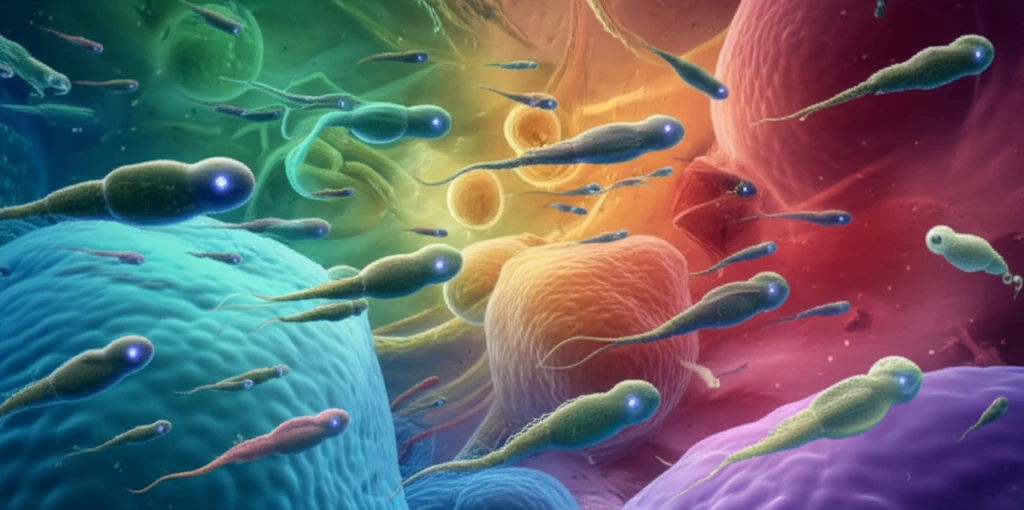
These innovative polymers are designed to self-assemble into tadpole-like shapes, each with a distinct 'head' and 'tail.' The head, a crosslinked globule, can encapsulate therapeutic drugs, while the tail, a pH-sensitive polymer chain, acts as a sensor, guiding the tadpole through the body. What's truly remarkable is their ability to morph in response to subtle changes in acidity, a characteristic that's exploited to target tumors effectively.
How Do These Tadpole Assemblies Outsmart Cancer?
The secret to the tadpole's tumor-targeting ability lies in its sensitivity to pH, a measure of acidity. Tumors tend to have a slightly more acidic environment than healthy tissues. Researchers designed the tadpole's tail to respond to this difference, causing the assemblies to change shape and penetrate deep into the tumor. Here's a step-by-step breakdown of how it works:
- Extravasation into Tumor: The MTAs reach the tumor site and begin to penetrate the leaky blood vessels that feed the tumor.
- pH-Triggered Disassembly: As the MTAs encounter the more acidic environment within the tumor (pH 6.5-7.0), the tadpoles' tails respond. The MTAs disassemble, releasing individual SCTPs.
- Deep Penetration: The individual SCTPs, now much smaller, can navigate through the dense matrix of the tumor, reaching areas that larger structures can't access.
- Drug Release: Once inside the tumor cells, the encapsulated drugs are released, destroying the cancer cells from within.
The Future is Small: A New Era of Cancer Treatment
The development of pH-sensitive tadpole assemblies represents a significant leap forward in targeted cancer therapy. By exploiting the unique characteristics of the tumor microenvironment, these nanobots can deliver drugs with precision, minimizing side effects and maximizing therapeutic impact. While this research is still in its early stages, it holds immense promise for revolutionizing cancer treatment and improving the lives of millions affected by this devastating disease.