
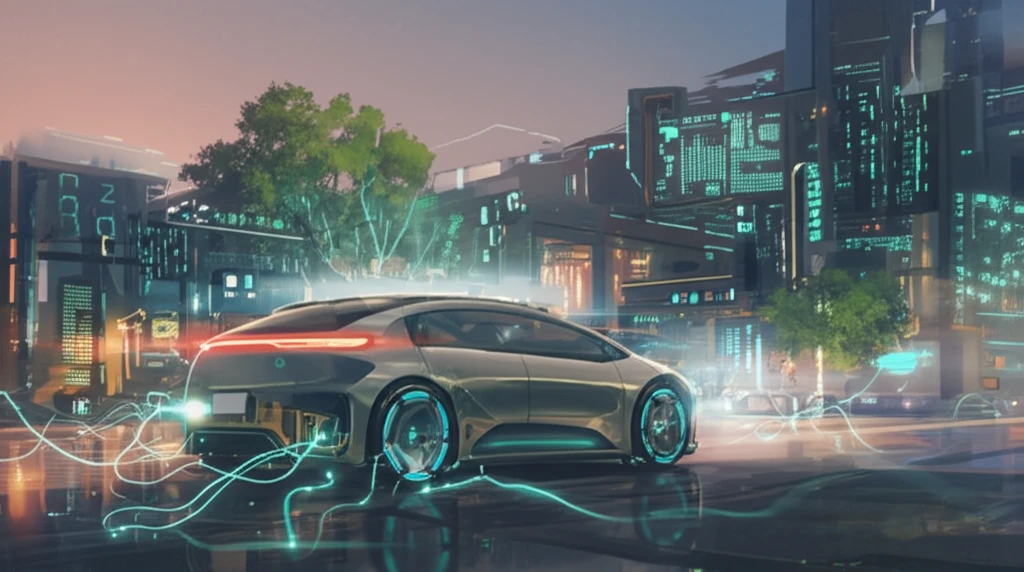
Smart Moves: How Predictive Energy Management is Revolutionizing Hybrid Cars

"Discover how energy prediction strategies are making hybrid electric vehicles more efficient and eco-friendly."
Hybrid electric vehicles (HEVs) represent a significant step towards addressing the pressing issues of energy consumption and air pollution. By combining an internal combustion engine with an electric motor, HEVs offer a cleaner and more efficient alternative to traditional gasoline-powered cars. However, the real magic lies in how these two power sources are managed.
Energy management strategies are the brains of the HEV operation. They dictate when to use the electric motor, when to rely on the engine, and how to recapture energy during braking. An effective energy management system can dramatically improve fuel economy and minimize harmful emissions. Now, researchers are taking these systems to the next level with the power of prediction.
Imagine a hybrid car that anticipates upcoming traffic conditions, hills, and stoplights. This is the promise of energy management strategies based on energy prediction. By forecasting future energy demands, these systems can optimize power distribution in real-time, leading to even greater efficiency and a smoother driving experience. One such strategy, known as ECMS-EP (Equivalent Consumption Minimization Strategy based on Energy Prediction), is showing remarkable potential.
Hybrid Vehicle Adoption and Market Presence
Hybrid vehicles, which use two or more distinct power sources such as internal combustion engines paired with electric motors, have become increasingly prevalent in the automotive market. According to available sources, conventional hybrids typically offer significantly better fuel economy than non-hybrid counterparts and often deliver comparable or enhanced power. The technology has matured to encompass various configurations including parallel, series, and plug-in hybrid designs, each suited to different driving needs and consumer preferences.
Traditional Hybrid Powertrain Configurations
Hybrid cars typically operate using two different power sources—a gas-powered engine and an electric motor—that work in concert to propel the vehicle. The three main configurations include parallel hybrids (both power sources can drive the wheels), series hybrids (the engine acts as a generator), and plug-in hybrids (which can recharge from external power sources). Understanding these distinctions is essential for consumers evaluating whether hybrid technology aligns with their driving patterns and budget considerations.
Evolution of Hybrid Technology
The concept of hybrid propulsion has historical roots predating modern automotive applications, with early implementations observed in maritime contexts where vessels used diesel on the surface and batteries when submerged. The development of hybrid passenger vehicles represented a significant engineering milestone, though specific adoption curves and technological breakthroughs remain areas of ongoing documentation and study. As with many emerging technologies, the trajectory from concept to mass-market availability involved considerable research, development challenges, and iterative improvements.
How Does Predictive Energy Management Work?
At the heart of ECMS-EP lies a sophisticated prediction system. This system uses a "chaining-neural-network" method to estimate the vehicle's velocity over different timeframes. Think of it as a highly advanced GPS that not only knows where you are but also anticipates how fast you'll be going in the next few seconds or minutes. This prediction is crucial because it allows the car to prepare for changes in energy demand.
- Velocity Prediction: Uses a chaining-neural-network to forecast the car's speed.
- Adaptive Rule: Eliminates the need to reset the initial equivalent factor.
- Real-Time Adjustment: Continuously optimizes the balance between fuel and electricity.
Contemporary Developments in Hybrid Systems
Current research in hybrid vehicle technology continues to explore improvements in battery efficiency, regenerative braking systems, and power management algorithms. While comprehensive recent studies on predictive energy management systems are still emerging, the fundamental principles of optimizing the interplay between electric and combustion power sources remain central to ongoing innovation efforts in this space. The field appears to be at an intermediate stage where foundational concepts are being refined rather than radically transformed.
Challenges and Limitations of Hybrid Systems
Despite their advantages, hybrid vehicles face certain limitations including higher upfront costs compared to conventional vehicles, potential battery degradation over time, and the added complexity of maintaining dual powertrain systems. Consumer adoption may also be constrained by range anxiety in plug-in models and the availability of charging infrastructure. However, specific failure rates or documented cases of predictive energy management system failures in commercial applications remain limited in publicly available literature.
Hybrid vs. Conventional Powertrains
When compared to conventional internal combustion engines, hybrid vehicles generally demonstrate superior fuel economy and often provide enhanced acceleration capabilities due to the combined output of multiple power sources. The specific performance characteristics vary significantly between parallel, series, and plug-in configurations, making direct comparisons dependent on the particular use case and driving conditions. Without comprehensive comparative data across all hybrid types, definitive rankings of efficiency or performance remain challenging to establish with certainty.
The Road Ahead for Hybrid Technology
Predictive energy management is poised to become a key feature in the next generation of hybrid electric vehicles. As technology advances and these systems become more refined, we can expect even greater fuel efficiency, reduced emissions, and a more sustainable transportation future. By harnessing the power of prediction, hybrid cars are not just adapting to the road – they're anticipating it.
Consolidating Hybrid Technology Insights
The available evidence suggests that hybrid vehicle technology has established itself as a viable alternative to purely conventional powertrains, offering tangible benefits in fuel efficiency and performance. Expert analysis generally supports the view that hybrids serve as an important transitional technology, though the long-term trajectory toward fully electric vehicles remains a subject of industry discussion. The integration of predictive energy management concepts appears promising but requires further validation through real-world deployment data.
Emerging Directions in Hybrid Development
Future developments in hybrid technology are likely to focus on improving battery energy density, reducing component costs, and enhancing the intelligence of power management systems. As automotive manufacturers continue to invest in electrification strategies, hybrid platforms may serve as testbeds for advanced control algorithms before deployment in fully electric vehicles. However, specific predictions about technological breakthroughs or adoption timelines remain speculative given the rapidly evolving nature of the automotive industry.
Industry-Wide Implications of Hybrid Adoption
The proliferation of hybrid vehicles reflects broader trends in automotive engineering toward electrification and efficiency optimization. Systemic challenges include supply chain considerations for battery materials, infrastructure requirements for plug-in models, and the need for standardized approaches to energy management across different vehicle platforms. These factors collectively influence the pace and direction of hybrid technology development, though detailed analyses of these systemic issues require specialized industry reports not included in the available sources.
Consumer Experience with Hybrid Vehicles
From a consumer perspective, hybrid vehicles offer practical benefits including reduced fuel costs and often smoother driving experiences due to the seamless integration of electric and combustion power. The decision to purchase a hybrid typically involves considerations of driving habits, budget constraints, and access to charging infrastructure in the case of plug-in models. While specific satisfaction surveys or user experience data would strengthen understanding of real-world impacts, the available sources indicate that hybrids have found a stable position in the automotive market.