
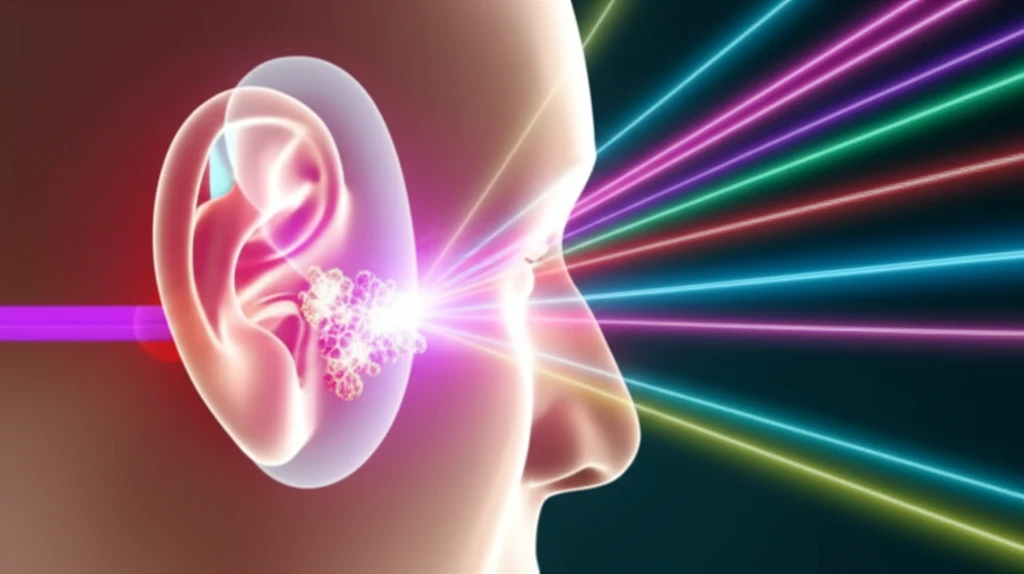
Skin Cancer Treatment: Is Brachytherapy the Conformal Choice for Nose and Ear?

"Discover how CT-based surface mould brachytherapy offers a highly targeted approach to treating non-melanoma skin cancers, potentially outperforming traditional radiation methods."
Skin cancer is the most common type of cancer, and its incidence is rising. While surgery is often the first line of treatment, radiation therapy (RT) plays a crucial role, especially when surgery isn't an option or achieving optimal cosmetic results is a concern. However, traditional external beam radiation therapy (EBRT) can be challenging for tumors in complex locations like the nose and ear due to setup difficulties and potential for damage to surrounding tissues.
Brachytherapy (BT), a type of RT where radioactive sources are placed directly in or near the tumor, offers a potential solution. Because the radiation dose falls off rapidly, BT can precisely target the cancer while minimizing exposure to nearby healthy tissues. This makes it theoretically superior to EBRT for lesions in difficult-to-reach areas. But real-world evidence comparing the two approaches has been limited.
Now, a new study investigates the effectiveness of CT-based surface mould BT for non-melanoma skin cancers (NMSC) of the earlobe and nose. The research compares BT to EBRT in terms of dose conformity (how well the radiation targets the tumor), dose coverage, and the ability to spare healthy tissue, offering valuable insights for patients and clinicians alike.
Why Skin Cancer Matters
Skin cancer is the most common form of cancer in the United States, according to the CDC. Central cancer registries collect data on melanoma of the skin and nonepithelial skin cancers, including Merkel cell carcinoma, a rare but often aggressive type of skin cancer. High-dose-rate electronic brachytherapy is described as a nonsurgical treatment option for patients with non-melanoma skin cancer, and research has assessed its long-term effectiveness and safety.
Where Brachytherapy Fits
Surgical treatment is commonly used for keratinocyte carcinoma, but radiation therapy techniques, including external beam radiation and brachytherapy, are also available. The American Brachytherapy Society states that skin brachytherapy is a standard-of-care option for appropriately selected patients with keratinocyte carcinoma. Radionuclide-based brachytherapy is described as well established, whereas electronic brachytherapy is recommended for keratinocyte carcinoma on a prospective clinical trial or registry because mature data remain limited. A CT-based surface mould technique has also been described for non-melanoma skin cancers of the nose and earlobe in 10 individuals.
From Radium to Modern Brachytherapy
The history of brachytherapy is linked to Henri Becquerel's discovery of radioactivity in 1896 and Marie and Pierre Curie's discovery of radium in 1898. According to historical accounts, the first successful radium brachytherapy involved skin irradiation of two patients with basal cell carcinoma in St. Petersburg in 1903. Surface mould and plaque treatments came before the development of intracavitary techniques. The term brachytherapy derives from the Greek word for “short,” referring to the short distance between the therapeutic agent and the target lesion.
Brachytherapy vs. External Beam: A Conformal Showdown
The study focused on ten patients with NMSC of the nose and earlobe. Researchers created customized surface mould applicators based on CT scans, ensuring a precise fit to the patient's unique anatomy. This mould held the radioactive sources in place, delivering targeted radiation directly to the tumor. Treatment plans were carefully tailored to each patient, and the results were compared to those that would have been achieved with EBRT.
- Conformity: BT was significantly more conformal than EBRT, meaning it targeted the tumor more precisely.
- Dose Coverage: Both BT and EBRT provided adequate radiation dose to the tumor.
- Tissue Sparing: BT was better at sparing healthy tissue at medium to high radiation doses.
Conformity on Irregular Surfaces
The GEC-ESTRO ACROP recommendations describe CT-based surface mould brachytherapy as a highly conformal method for superficial lesions on irregular surfaces such as the nose and ear. The recommendations report good dose homogeneity and normal-tissue sparing at high doses compared with external beam radiotherapy. A separate retrospective analysis examined brachytherapy for non-melanoma skin cancers in the peri-auricular region and reported that 10 patients with tumors of the auricle and external nose were irradiated.
Limits of the Evidence
A study of CT-based surface mould brachytherapy reported limitations in its comparison with external beam radiotherapy, including the finding that external beam treatment was less conformal and spared normal tissue less effectively at medium to high doses. However, the study did not compare doses delivered to organs at risk. Shields were used during treatment but not during planning CT, so their effect on organ-at-risk doses was not included in the assessment. More broadly, complex skin topology can challenge photon and electron external beam techniques, while brachytherapy itself requires careful quality and risk analysis, as illustrated by evaluation of the Esteya electronic brachytherapy device.
Brachytherapy Versus Surface Radiation
HDR brachytherapy and external beam radiotherapy are both commonly used radiation options for non-melanoma skin cancer, which is described as the single most common cancer in the United States in one comparative study. A patient-oriented source reports that both brachytherapy and superficial radiation therapy offer non-surgical options, with cure rates exceeding 90%, while emphasizing that treatment choice depends on tumor location, size, depth, and insurance coverage. The same source characterizes brachytherapy as particularly suited to facial tumors because of cosmetic outcomes, whereas superficial radiation therapy is described as useful for superficial lesions. Superficial radiation therapy uses low-energy X-rays delivered to the skin surface, while electronic brachytherapy places a small electronic X-ray source directly into or near the cancer.
The Future of Skin Cancer Treatment: Precision and Personalization
This study adds to the growing body of evidence supporting the use of brachytherapy for skin cancer, particularly in areas where precision is paramount. The ability to create customized treatment plans based on CT imaging allows for a highly personalized approach, maximizing the chances of successful treatment while minimizing side effects.
A Conformal, Selective Option
Reviews describe skin brachytherapy as an alternative treatment for patients with non-melanoma skin cancers. Its reported advantages include conformity of dose distribution, rapid dose falloff, and a smaller treatment volume than external beam radiotherapy, which may support hypofractionation. A review also identifies a matched-pair cohort study comparing electronic brachytherapy with Mohs micrographic surgery for early-stage non-melanoma skin cancer. These points support considering brachytherapy selectively rather than treating it as a universal replacement for surgery or other radiation techniques.
Developing the Next Generation
A 2026 report describes brachytherapy as an established treatment modality for selected skin cancers and notes that published studies have reported high local-control rates and favorable cosmetic outcomes. It also cautions that much of the evidence comes from non-randomized studies. Other sources emphasize reduced radiation exposure to healthy tissues, shorter treatment time than external beam radiation therapy, and continuing technological advances that may expand brachytherapy's applicability. These developments point toward broader use guided by stronger clinical evidence and careful patient selection.
While the study focused on a small group of patients, the results are promising. Further research is needed to confirm these findings in larger populations and to explore the long-term outcomes of CT-based surface mould brachytherapy. However, this study provides valuable insights for clinicians and patients considering treatment options for NMSC in challenging locations.
As technology advances and our understanding of skin cancer grows, expect to see even more sophisticated and targeted treatment approaches emerge. Brachytherapy, with its ability to deliver precise radiation doses, is poised to play a significant role in the future of personalized skin cancer care.