
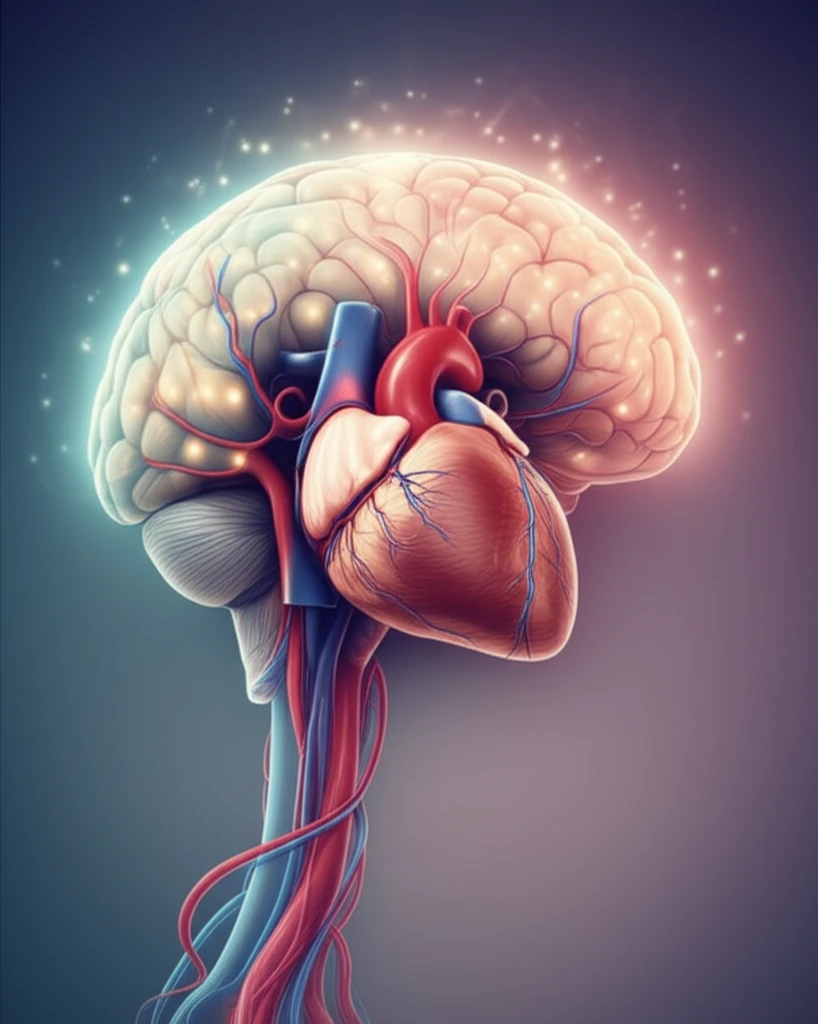
Stylized illustration of brain and heart valve symbolizing the link between heart and brain health.

Silent Strokes: How Biomarkers Could Revolutionize Brain Health After Heart Valve Surgery

"Could a simple blood test replace expensive MRIs in detecting silent brain damage following heart procedures? New research explores the potential of NSE and MMP 9 as early warning signs."


Many people undergoing heart valve procedures may experience silent brain infarctions (SBI), also known as silent strokes, which often go unnoticed. While these events don't cause immediate, obvious symptoms, they can have long-term consequences on brain health.

Currently, magnetic resonance imaging (MRI) is the primary method for detecting SBI. However, MRI scans are expensive, time-consuming, and not always feasible for acutely ill patients. This has prompted researchers to seek simpler, more accessible ways to identify these silent strokes.

Exciting new research is exploring the potential of blood biomarkers – specifically neuron-specific enolase (NSE) and matrix metalloproteinase 9 (MMP 9) – as early indicators of SBI following transcatheter aortic valve implantation (TAVI), a common heart valve procedure. This could revolutionize how we monitor brain health after heart procedures.

What are Silent Brain Infarctions (SBI) and Why Do They Matter?

Stylized illustration of brain and heart valve symbolizing the link between heart and brain health.

Silent brain infarctions (SBI) are small strokes that don't cause immediate or obvious symptoms. Despite the lack of noticeable effects, SBIs can lead to subtle neurological deficits, cognitive dysfunction, psychiatric disorders, and an increased risk of overt strokes and early mortality. Because of these potential long-term consequences, doctors are keen to find ways to detect SBIs early.

The challenge is that current detection methods, primarily MRI scans, aren't always practical for routine screening. MRIs are costly, time-consuming, and may not be safe for all patients, especially those who are acutely ill. This has spurred the search for a more accessible and convenient way to identify SBIs.

  • Subtle Neurological Deficits: SBIs can affect coordination, balance, and other motor skills.
  • Cognitive Dysfunction: Memory, attention, and executive functions may be impaired.
  • Psychiatric Disorders: SBIs can increase the risk of depression, anxiety, and other mental health issues.
  • Increased Stroke Risk: Individuals with SBIs are more likely to experience a full-blown stroke in the future.
Researchers at The Prince Charles Hospital in Australia conducted a study to investigate the potential of blood biomarkers in detecting SBI after TAVI. They focused on neuron-specific enolase (NSE) and matrix metalloproteinase 9 (MMP 9), proteins that are released into the bloodstream when brain cells are damaged.

The Future of SBI Detection

The study's findings suggest that NSE and MMP 9 hold promise as biomarkers for detecting SBI after TAVI. While further research is needed to confirm these results and determine the optimal use of these biomarkers, they could potentially lead to earlier detection of SBI, allowing for interventions to prevent further brain damage and improve patient outcomes. A simple blood test could replace costly MRI scans, making brain health monitoring more accessible for individuals undergoing heart valve procedures.

About this Article -

This article was crafted using a human-AI hybrid and collaborative approach. AI assisted our team with initial drafting, research insights, identifying key questions, and image generation. Our human editors guided topic selection, defined the angle, structured the content, ensured factual accuracy and relevance, refined the tone, and conducted thorough editing to deliver helpful, high-quality information.See our About page for more information.

Everything You Need To Know

1

What are Silent Brain Infarctions (SBI) and why are they a concern after heart valve surgery?

Silent Brain Infarctions (SBI), also known as silent strokes, are instances of brain damage that don't immediately present with obvious symptoms. Following heart valve procedures like transcatheter aortic valve implantation (TAVI), SBIs can occur. While seemingly harmless initially, SBIs can lead to subtle neurological deficits, cognitive dysfunction, psychiatric disorders, and an increased risk of future strokes and earlier mortality. This makes early detection critical for patient care.

2

How is Silent Brain Infarction (SBI) typically detected, and what are the drawbacks of this method?

Currently, the primary method for detecting SBI is through magnetic resonance imaging (MRI) scans. However, MRI scans have several limitations. They are expensive, time-consuming, and not always feasible for acutely ill patients. This can delay diagnosis and treatment, highlighting the need for more accessible and convenient detection methods.

3

What is the potential of NSE and MMP 9 in detecting Silent Brain Infarctions (SBI)?

Research suggests that neuron-specific enolase (NSE) and matrix metalloproteinase 9 (MMP 9), which are blood biomarkers, could potentially detect SBI. These proteins are released into the bloodstream when brain cells are damaged, indicating the occurrence of a silent stroke. The study focused on these biomarkers after transcatheter aortic valve implantation (TAVI), suggesting a simpler way to identify SBIs through a blood test.

4

What are the benefits of using biomarkers like NSE and MMP 9 to detect Silent Brain Infarctions (SBI)?

Using biomarkers such as NSE and MMP 9 offers several advantages. A simple blood test could replace costly and time-consuming MRI scans, making SBI detection more accessible, especially for acutely ill patients. Early detection allows for timely interventions, potentially preventing further brain damage and improving patient outcomes. It could revolutionize brain health monitoring after heart valve procedures such as transcatheter aortic valve implantation (TAVI).

5

What are the long-term implications of Silent Brain Infarctions (SBI) that make early detection so important?

Early detection of Silent Brain Infarctions (SBI) is critical because, even without immediate symptoms, they can cause a range of long-term issues. These include subtle neurological deficits, cognitive dysfunction (like memory and attention problems), an increased risk of psychiatric disorders (such as depression and anxiety), and a higher likelihood of experiencing a full-blown stroke in the future, potentially leading to early mortality. Identifying SBIs early allows for interventions to mitigate these risks and improve overall patient outcomes.

Newsletter Subscribe

Subscribe to get the latest articles and insights directly in your inbox.