
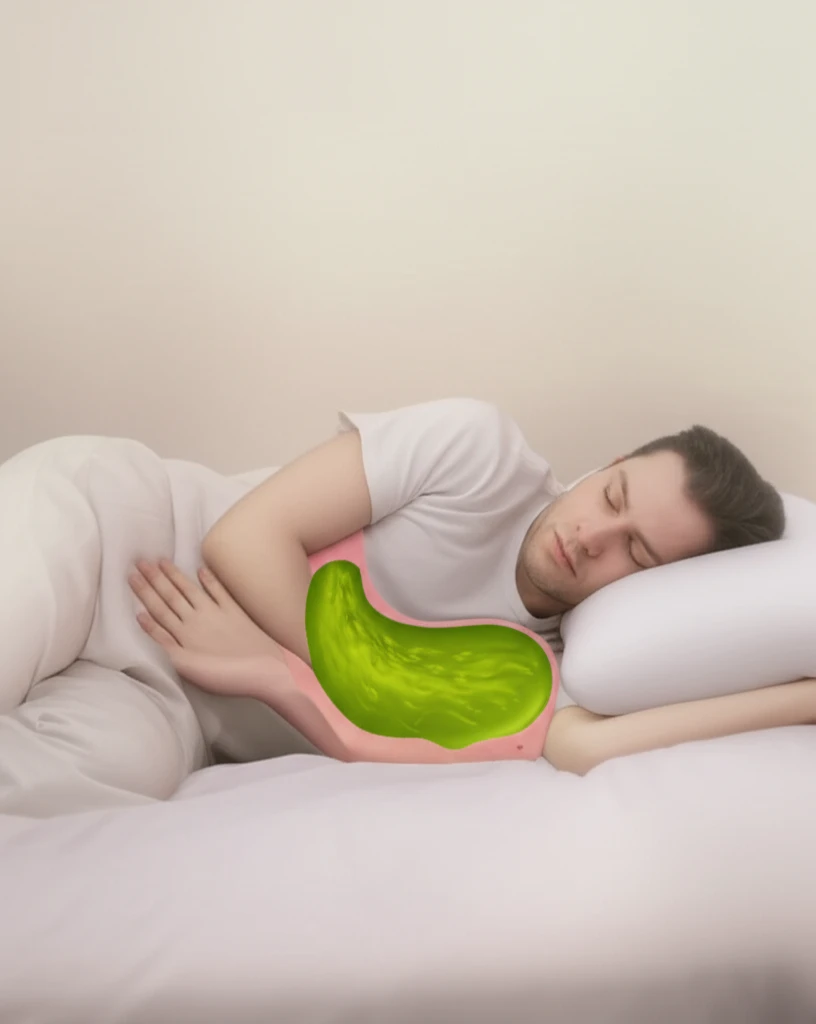
Illustration of a person sleeping comfortably with controlled acid reflux.

Silent Night Sabotage: Can Your Sleep Position Worsen Acid Reflux?

"Uncover the surprising link between sleep posture and laryngopharyngeal reflux (LPR). Is your nighttime rest secretly fueling throat irritation?"


Laryngopharyngeal reflux (LPR), often dubbed “silent reflux,” presents a unique challenge in comparison to its more recognized counterpart, gastroesophageal reflux disease (GERD). Unlike GERD, which is notorious for causing heartburn and indigestion, LPR frequently manifests with subtle symptoms such as chronic cough, hoarseness, and throat clearing. These symptoms can significantly impact one's quality of life, leading to discomfort and frustration.

A recent study published in the American Journal of Otolaryngology-Head and Neck Medicine and Surgery investigated the effectiveness of using a sleep positioning device to mitigate LPR symptoms. The study, conducted by Tierney et al., sparked considerable interest due to its innovative approach. The research explored whether altering sleep posture could offer a minimally invasive solution for individuals grappling with LPR.

While the study highlights the potential benefits of sleep positioning, it also raises important questions about the underlying causes of LPR and the suitability of this approach for all patients. A deeper understanding of how sleep position affects reflux and what other factors might be at play is essential for effectively managing this condition.

The Sleep Position and Acid Reflux Connection: Unpacking the Details

Illustration of a person sleeping comfortably with controlled acid reflux.

The study by Tierney et al. primarily examined how a sleep positioning device could alleviate LPR symptoms. The device aims to keep patients from sleeping completely flat, reducing the amount of acid exposure in the upper airways during sleep. However, an important point raised in a commentary on the study is the need to consider the broader context of LPR and GERD.

GERD typically flares up when you're lying down. This is because gravity isn't helping to keep stomach acid where it should be. When you're supine, it’s easier for stomach acid to flow backward into the esophagus and even up into the larynx and pharynx, causing LPR. However, LPR doesn't always present like classic GERD.

  • GERD: Often associated with heartburn, indigestion, and a sour taste in the mouth. Symptoms worsen when lying down.
  • LPR: Can present with a chronic cough, hoarseness, throat clearing, and a feeling of a lump in the throat. May not always involve heartburn.
While GERD is often linked to stomach acid, LPR can also result from non-acid reflux or gas reflux. Understanding these nuances is crucial for tailoring effective treatments. The commentary emphasizes that relying solely on sleep positioning without addressing other potential factors might not provide comprehensive relief for all LPR sufferers.

Beyond Sleep Position: A Holistic Approach to Managing Reflux

While strategically adjusting your sleep position can be a valuable tool in managing acid reflux, it's most effective when combined with other lifestyle adjustments and, if necessary, medical treatments. By understanding the nuances of your specific condition and adopting a comprehensive approach, you can achieve significant relief and improve your overall well-being. Always consult with healthcare provider.

About this Article -

This article was crafted using a human-AI hybrid and collaborative approach. AI assisted our team with initial drafting, research insights, identifying key questions, and image generation. Our human editors guided topic selection, defined the angle, structured the content, ensured factual accuracy and relevance, refined the tone, and conducted thorough editing to deliver helpful, high-quality information.See our About page for more information.

Everything You Need To Know

1

What is Laryngopharyngeal Reflux (LPR) and how does it differ from Gastroesophageal Reflux Disease (GERD)?

Laryngopharyngeal Reflux (LPR), often called "silent reflux," differs from Gastroesophageal Reflux Disease (GERD) primarily in its symptoms. While GERD typically causes heartburn and indigestion, LPR often presents with a chronic cough, hoarseness, throat clearing, and a feeling of a lump in the throat. Unlike GERD, LPR may not always involve heartburn. Both conditions involve stomach contents flowing back up, but their manifestations and the impact on the individual can vary significantly.

2

How does sleep position influence Laryngopharyngeal Reflux (LPR)?

Sleep position can significantly affect LPR. The study, mentioned by Tierney et al., highlights how sleeping flat (supine position) can worsen LPR because gravity doesn't help keep stomach acid down. When in this position, it's easier for stomach acid, or even non-acid reflux or gas reflux, to flow backward into the esophagus, potentially reaching the larynx and pharynx, thus causing LPR. Using a sleep positioning device can help reduce acid exposure in the upper airways during sleep.

3

What is the role of a sleep positioning device in managing Laryngopharyngeal Reflux (LPR), and how effective is it?

A sleep positioning device, as investigated by Tierney et al., aims to alleviate LPR symptoms by preventing patients from sleeping completely flat. The device helps keep the head and upper body elevated, reducing the amount of acid exposure in the upper airways during sleep. While the study indicates potential benefits, the effectiveness can vary. It's most effective when used in conjunction with other lifestyle adjustments and, where necessary, medical treatments. It's important to understand that it may not be a complete solution for all LPR sufferers, particularly if non-acid reflux is a significant factor.

4

Besides sleep position, what other factors contribute to Laryngopharyngeal Reflux (LPR), and how should it be managed?

Beyond sleep position, other factors such as diet, lifestyle, and the presence of non-acid reflux or gas reflux can contribute to LPR. Managing LPR involves a holistic approach. This includes potentially adjusting sleep position, dietary changes (avoiding trigger foods), lifestyle adjustments (such as weight management), and, if necessary, medical treatments prescribed by a healthcare provider. It's crucial to consult a healthcare provider for a proper diagnosis and to develop a tailored management plan to address the underlying causes and symptoms of LPR.

5

What are the key takeaways from the study by Tierney et al. regarding sleep posture and Laryngopharyngeal Reflux (LPR)?

The primary takeaway from the study by Tierney et al. is the potential of sleep positioning to alleviate LPR symptoms. By using a sleep positioning device, individuals can reduce the amount of acid exposure in the upper airways during sleep. However, the study also highlights that sleep positioning is not a standalone solution. The research suggests that it's essential to consider the broader context of LPR, which includes understanding that LPR can be caused by factors other than just acid. The study underscores the need for a comprehensive approach that combines sleep adjustments with other lifestyle and medical interventions for effective management of LPR.

Newsletter Subscribe

Subscribe to get the latest articles and insights directly in your inbox.