
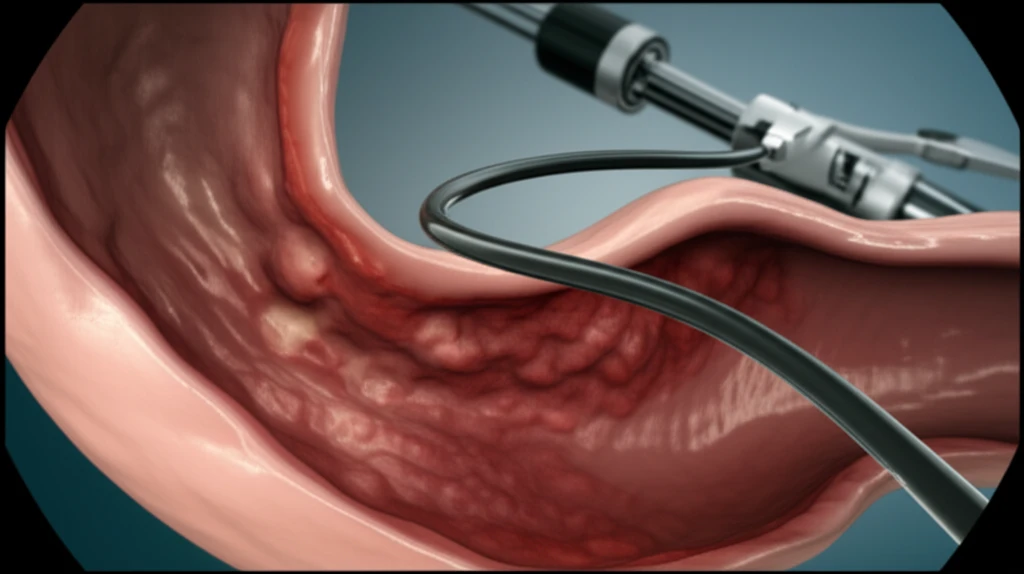
Is Endoscopy Before Bariatric Surgery Always Necessary? What the Data Says

"A large study in the Middle East sheds light on the value of routine upper endoscopy before weight loss surgery, challenging conventional wisdom and raising important questions for patients and surgeons."
For individuals considering bariatric surgery, the journey involves numerous pre-operative evaluations to ensure the best possible outcome. One common procedure is an upper endoscopy, where a doctor uses a camera to examine the esophagus, stomach, and duodenum. The question is, is this procedure always necessary?
Morbid obesity is frequently linked to gastrointestinal issues, significantly increasing the risk of conditions like gastroesophageal reflux disease (GERD), erosive esophagitis, and hiatal hernias. In fact, those with obesity are 2 to 3 times more likely to experience upper digestive diseases compared to individuals with a healthy weight, highlighting the importance of thorough pre-operative assessments.
While some surgeons consider upper endoscopy a crucial step to rule out any underlying gastrointestinal diseases that could impact the surgical plan, others argue that it's an unnecessary procedure that exposes patients to potential risks, such as complications from sedation, especially given that many bariatric patients have existing health concerns. A recent study aimed to clarify this debate by reviewing the records of over 1200 patients who underwent preoperative endoscopy before bariatric surgery.
A Personalized Decision
Whether endoscopy is needed before bariatric surgery is not a question with one universal answer. The appropriate evaluation may depend on the planned procedure, the patient's symptoms, and the clinician's assessment of potential risks. Decisions should therefore be individualized rather than based on a blanket rule.
Established Roles and Limits
Metabolic and bariatric surgery remains the gold standard for obesity treatment because of its demonstrated short- and long-term effectiveness and safety, although it is not suitable for every patient. Bariatric endoscopy is a growing field that includes primary and revisional endoluminal therapies, with reviews examining their efficacy, safety, and clinical applications. After surgery, endoscopy has an established role in identifying and managing complications such as anastomotic leaks and gastrointestinal bleeding, sometimes avoiding surgical intervention or revision.
From Surgery to Endoscopy
Bariatric endoscopy developed at the intersection of obesity medicine and bariatric surgery, filling a distinct niche as treatments for obesity evolved. Historical reviews describe a rapidly expanding body of scientific literature surrounding bariatric surgery and newer endoscopic procedures. One review marking 20 years of bariatric endoscopy also notes that endoscopic weight-loss technology may eventually replace some surgical bariatric procedures, although that remains a future possibility rather than an established outcome.
The Value of Routine Endoscopy: What the Study Revealed
Researchers in Dubai reviewed the medical records of 1278 patients who had undergone preoperative endoscopy at Rashid Hospital between 2013 and 2016. The study, published in Endoscopy International Open, divided patients into three groups based on endoscopy findings:
- Group 0: Patients with normal endoscopy results.
- Group 1: Patients with abnormalities that wouldn't affect the timing or type of surgery.
- Group 2: Patients with abnormalities that directly impacted the surgical procedure.
What Recent Reviews Compare
Recent research describes endoscopic bariatric surgery as a newer treatment for obesity and compares its efficacy, safety, and likelihood of metabolic complications with laparoscopic sleeve surgery. The current literature also reports substantial advances in traditional bariatric-surgery endoscopy and broader acceptance of newer endoscopic bariatric techniques. These findings support continued evaluation of endoscopic options rather than assuming that one approach is appropriate for every patient.
Managing Complications Without More Surgery
Endoscopic treatment is not limited to primary weight-loss procedures; it is also used to manage complications after bariatric surgery. Reported approaches include stenting, endoscopic internal drainage, and endoscopic vacuum-assisted closure. Because revisional laparoscopic or open surgery can be challenging, recent advances have expanded endoscopy's diagnostic and therapeutic role, although the available interventions depend on the specific complication.
Endoscopic Versus Surgical Options
Comparative research has evaluated endoscopic and surgical bariatric modalities through systematic reviews, network meta-analysis, and large database studies. One analysis used more than 600,000 patients from the Metabolic and Bariatric Surgery Accreditation and Quality Improvement Program database from 2016 to 2020 to compare adverse events, readmissions, reoperations, and reinterventions after endoscopic sleeve gastroplasty and surgical treatment. Reviews comparing endoscopic sleeve gastroplasty with laparoscopic sleeve gastrectomy emphasize that outcomes such as weight loss and HbA1c are more standardized than adverse-event reporting, making cross-study comparisons less consistent.
The Bottom Line: Is Endoscopy Right for You?
This study suggests that routine endoscopy plays a significant role in preparing patients for bariatric surgery, particularly in the Middle East. The high prevalence of abnormalities detected through endoscopy led to changes in the surgical plan for a substantial number of patients.
A Tailored Clinical Decision
The available evidence supports a tailored approach to endoscopy around bariatric treatment rather than an automatic rule for every patient. Endoscopy can provide important diagnostic and therapeutic information, but its role depends on the clinical context and the procedure being considered. Patients should discuss the expected benefits, limitations, and alternatives with their bariatric team.
An Expanding Field
Bariatric endoscopy is likely to remain an active area of research as clinicians refine less invasive treatment options. Future studies may clarify which patients benefit most from endoscopic evaluation and intervention. Until stronger evidence resolves remaining uncertainties, clinical decisions will need to balance emerging research with individual patient factors.
Evidence and Access
The broader challenge is to translate a growing and varied evidence base into consistent clinical practice. Differences in procedures, patient selection, and outcome reporting can make studies difficult to compare directly. Clearer standards and individualized assessment may help clinicians use endoscopy appropriately without treating it as either universally necessary or universally unnecessary.
Patient-Centered Care
For patients considering bariatric surgery, the question of preoperative endoscopy can feel both technical and personal. The decision should account for symptoms, medical history, treatment goals, and the risks associated with additional testing. Shared discussions with the surgical and endoscopy teams can help patients understand why a recommendation is being made in their particular case.
However, it's important to remember that every patient is unique. Factors like your individual risk factors, symptoms, and the specific type of bariatric surgery you're considering will all play a role in determining whether or not an endoscopy is necessary. The decision should be made in consultation with your surgeon, weighing the benefits and risks in your specific case.
As research continues and more data becomes available, guidelines may evolve. This study adds to the growing body of evidence that will help surgeons and patients make informed decisions about the role of preoperative endoscopy in bariatric surgery.