
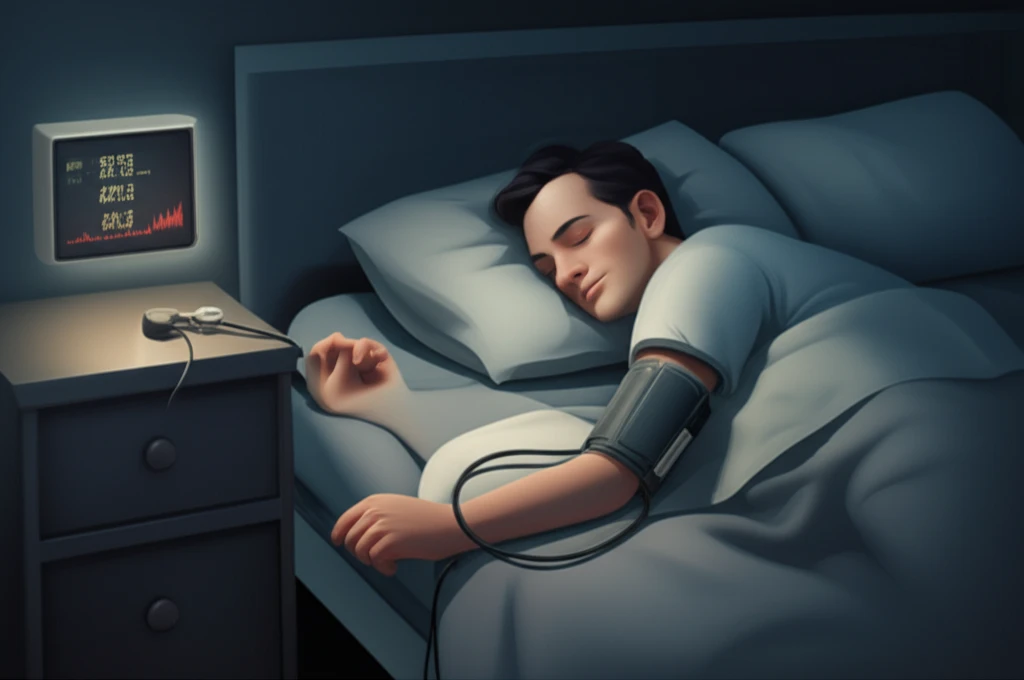
Silent Night, Risky Mind: How Blood Pressure During Sleep Could Signal Dementia in Parkinson's Patients

"New research spotlights the link between nocturnal blood pressure patterns and cognitive decline in Parkinson's disease, urging vigilance over nighttime readings."
Parkinson's disease (PD) is often recognized by its motor symptoms: tremors, rigidity, and slow movement. However, the disease extends beyond these physical manifestations, significantly impacting cognitive functions. Dementia, a severe decline in cognitive abilities, affects a considerable portion of individuals with PD, impacting their quality of life and creating substantial caregiving challenges.
Recent research has begun to explore the connection between blood pressure fluctuations and cognitive health, particularly in the context of Parkinson's. Circadian blood pressure, or the natural variation in blood pressure over a 24-hour period, is often disrupted in PD patients. These disruptions, especially abnormal patterns at night, are now being investigated for their potential link to dementia.
This article will unpack the findings of a recent study that examines how specific nocturnal blood pressure profiles—particularly a pattern known as the 'riser' pattern—correlate with the risk of dementia in Parkinson's disease. By understanding these links, individuals and caregivers can be more proactive in monitoring and managing factors that contribute to cognitive decline.
The Nighttime Blood Pressure-Dementia Connection: What the Research Reveals
A recent study investigated 137 patients with Parkinson's disease, monitoring their blood pressure over 24 hours using ambulatory blood pressure monitoring (ABPM). The study aimed to identify correlations between nocturnal blood pressure patterns and the presence of dementia. Researchers classified patients according to their nighttime blood pressure patterns: 'dippers' (normal decline at night), 'non-dippers' (less decline), 'risers' (increase at night), and 'extreme dippers' (excessive decline).
- Riser Pattern: Patients with a riser pattern had a significantly higher prevalence of dementia.
- Orthostatic Hypotension (OH): The coexistence of a riser pattern and OH further increased the risk of dementia.
- Other Factors: The study also identified other factors associated with dementia, including age, male gender, disease stage, diabetes, history of stroke, and cerebrovascular lesions.
Taking Action: What This Means for Parkinson's Patients and Caregivers
The results of this research highlight actionable steps for individuals with Parkinson's and their caregivers. Regular monitoring of blood pressure, including nighttime measurements, can provide valuable insights into potential cognitive risks. Discussing these patterns with healthcare providers is crucial for developing appropriate management strategies.
Given the link between blood pressure and cognitive decline, lifestyle adjustments and medical interventions to manage blood pressure may play a role in mitigating dementia risk. These could include dietary changes, exercise, medication adjustments, and strategies to manage orthostatic hypotension.
While this study sheds light on significant connections, further research is needed to fully understand the underlying mechanisms and to determine the most effective interventions. Prospective studies that follow patients over time will help clarify the cause-and-effect relationships between nocturnal blood pressure patterns and cognitive outcomes in Parkinson's disease. Staying informed and proactive is key to promoting long-term cognitive health.