
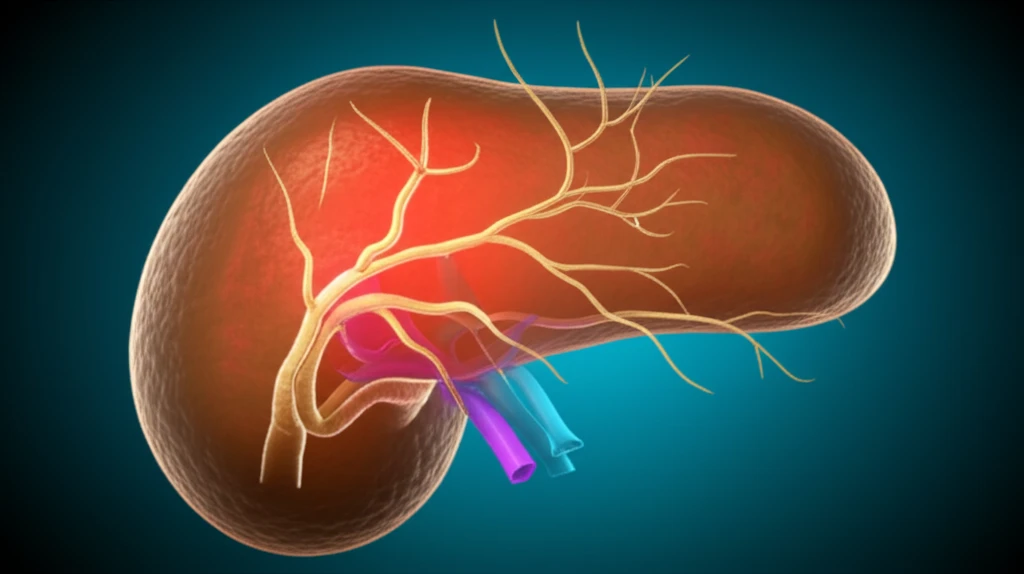
Symbolic illustration of remnant pancreatic cancer with new cancer pathways emerging.

Second Chance Surgery: Can Removing the Remnant Pancreas Extend Life?

"A new study explores the benefits and challenges of re-operating on patients after initial pancreatic cancer surgery, offering hope for improved survival."


Pancreatic cancer is a formidable disease, ranking as the fourth leading cause of cancer-related deaths in Japan. While advancements in diagnostic imaging, surgical techniques, and peri-operative care have decreased postoperative mortality, long-term survival rates remain discouragingly low at 15-20%. This is often due to the presence of undetected, systemic disease at the time of initial surgery, which eventually leads to distant metastases in the liver and peritoneum.

Even after a seemingly successful initial surgery, a new cancer can develop in the remaining portion of the pancreas, termed 'remnant pancreatic cancer' (PC). This can either be a local recurrence of the original cancer or a completely new primary cancer. Distinguishing between these two possibilities and determining the best course of treatment presents a significant challenge.

A recent multicenter retrospective study conducted by the Kyushu Study Group of Clinical Cancer aimed to clarify the clinical characteristics of remnant PC, investigate the role of genetic mutations, and evaluate the effectiveness of repeat surgical removal of the affected pancreatic tissue. This article breaks down the study's findings, offering insights into the complexities of managing this challenging condition and providing hope for improved outcomes.

The Remnant Pancreas: Understanding the Risk and the Hope of Re-operation

Symbolic illustration of remnant pancreatic cancer with new cancer pathways emerging.

The study analyzed data from 50 patients who developed remnant PC after undergoing initial pancreatic resections. The initial surgeries were performed for various reasons, including invasive ductal carcinomas and other pancreatic tumors. A key aspect of the research involved analyzing RAS mutations in both the initial tumor and the remnant PC to understand the cancer's origin and development.

The study revealed two distinct paths for patients with remnant PC:

  • Resected Group: 37 patients underwent a second pancreatectomy to remove the remnant PC.
  • Unresected Group: 13 patients did not undergo further surgery due to various factors.
The results showed a significant survival benefit for the resected group. The median overall survival time was 42.2 months in the resected group compared to only 12.3 months in the unresected group. This suggests that repeat pancreatectomy can significantly prolong survival in select patients.

Genetic Insights and Future Directions

The study also delved into the genetic characteristics of remnant PC by analyzing RAS mutations. This analysis revealed that, in most cases, the remnant PC did not share the same genetic mutations as the initial tumor. This suggests that many remnant PCs are not simply recurrences but rather new primary cancers arising from the pancreas.

These findings highlight the importance of considering remnant PC as a distinct entity, potentially requiring different treatment strategies than a simple recurrence. The study suggests that repeat pancreatectomy, when feasible, can offer a significant survival advantage. Furthermore, the insights into RAS mutations emphasize the need for personalized treatment approaches based on the genetic profile of the cancer.

While this study provides valuable insights, it is essential to acknowledge its limitations, including the relatively small sample size and retrospective nature. Future research should focus on larger, prospective studies to validate these findings and explore the optimal treatment strategies for remnant PC. Furthermore, advancements in genomic analysis may enable clinicians to distinguish between recurrence and new primary cancers before surgery, leading to more tailored and effective interventions.

About this Article -

This article was crafted using a human-AI hybrid and collaborative approach. AI assisted our team with initial drafting, research insights, identifying key questions, and image generation. Our human editors guided topic selection, defined the angle, structured the content, ensured factual accuracy and relevance, refined the tone, and conducted thorough editing to deliver helpful, high-quality information.See our About page for more information.

This article is based on research published under:

DOI-LINK: 10.1007/s00535-018-01535-9, Alternate LINK

Title: Pancreatic Cancer Arising From The Remnant Pancreas After Pancreatectomy: A Multicenter Retrospective Study By The Kyushu Study Group Of Clinical Cancer

Subject: Gastroenterology

Journal: Journal of Gastroenterology

Publisher: Springer Science and Business Media LLC

Authors: Daisuke Hashimoto, Kota Arima, Shigeki Nakagawa, Yuji Negoro, Toshihiko Hirata, Masahiko Hirota, Masafumi Inomata, Kengo Fukuzawa, Takefumi Ohga, Hiroshi Saeki, Eiji Oki, Yo-Ichi Yamashita, Akira Chikamoto, Hideo Baba, Yoshihiko Maehara

Published: 2018-12-04

Everything You Need To Know

1

What exactly is 'remnant pancreatic cancer'?

The term 'remnant pancreatic cancer' (PC) refers to a new cancer developing in the remaining portion of the pancreas after an initial pancreatic surgery. This can be either a local recurrence of the original cancer or a completely new primary cancer. Distinguishing between these two scenarios is crucial for determining the most effective treatment approach.

2

How does 'repeat pancreatectomy' affect survival?

The study found that repeat surgical removal of the affected pancreatic tissue, or 'repeat pancreatectomy', significantly improved survival rates. The median overall survival time for the 'resected group' (those who underwent a second pancreatectomy) was 42.2 months, compared to only 12.3 months for the 'unresected group'. This highlights the potential of 'repeat pancreatectomy' to extend life for individuals with 'remnant PC'.

3

Why is 'genetic analysis' important in understanding 'remnant PC'?

Genetic analysis, specifically looking at 'RAS mutations', plays a vital role in understanding the origin and development of 'remnant PC'. By comparing the 'RAS mutations' in the initial tumor and the 'remnant PC', researchers can determine if the new cancer is a recurrence or a new primary cancer. The study found that in most cases, the 'remnant PC' did not share the same 'RAS mutations' as the initial tumor, suggesting it was often a new primary cancer.

4

What was the purpose of the study conducted on 'remnant PC'?

A 'multicenter retrospective study' was conducted by the Kyushu Study Group of Clinical Cancer to investigate 'remnant PC'. The study analyzed data from 50 patients who developed 'remnant PC' after initial pancreatic resections. The study aimed to clarify the clinical characteristics of 'remnant PC', investigate the role of 'genetic mutations', and evaluate the effectiveness of repeat surgical removal of the affected pancreatic tissue.

5

What are the broader implications of this research on 'remnant pancreatic cancer'?

The implications of these findings are significant because they offer hope for improved outcomes for individuals with 'remnant PC'. The study demonstrates that 'repeat pancreatectomy' can significantly prolong survival in select patients. Furthermore, understanding the genetic characteristics of 'remnant PC' can help to differentiate between recurrence and a new primary cancer, informing treatment decisions. The study emphasizes the importance of careful management strategies for this challenging condition.

Newsletter Subscribe

Subscribe to get the latest articles and insights directly in your inbox.