
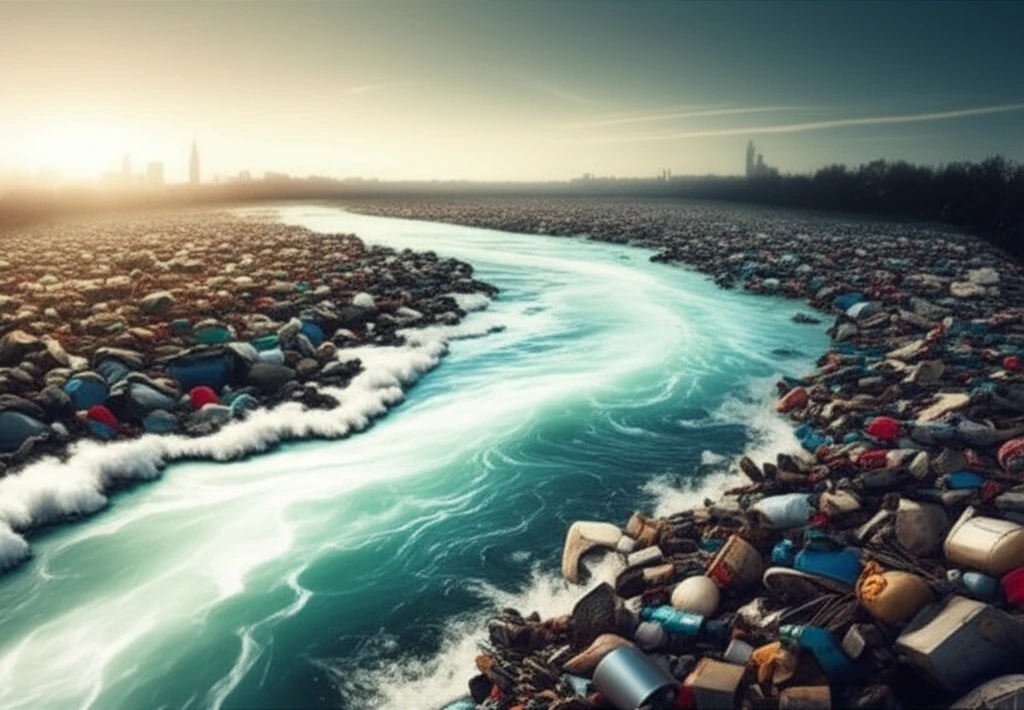
River Pollution Unveiled: How Urban Sewage Impacts Water Quality

"Discover the hidden dangers of domestic waste on river ecosystems and what it means for our water resources."
Many cities still lack proper treatment for domestic sewage, leading to the introduction of a complex mixture of biodegradable organic substances and inorganic nutrients into aquatic environments. This pollution reduces water quality by affecting the physical and chemical properties of the water.
Rivers are the primary recipients of domestic sewage. When they receive volumes exceeding their natural purification capacity, physical and chemical modifications occur in the water, affecting the entire ecosystem along the watercourse. This includes increased proliferation of decomposing microorganisms and a reduction in dissolved oxygen levels, impacting aquatic life.
The Piracicaba, Capivari, and Jundiaí river basin, home to over 5 million people, suffers from significant eutrophication due to high levels of total phosphorus from domestic sewage. This study investigates the influence of organic sewage on the Camandocaia River, aiming to understand the extent of pollution from its sources to its mouth.
The Impact of Sewage on River Characteristics
The study examined the influence of domestic sewage on the water quality of the Camandocaia River by analyzing various limnological variables, including pH, turbidity, color, manganese, iron, dissolved oxygen, and total nitrogen and phosphorus. Water samples were collected from 12 points along the river, from its headwaters to its confluence with the Jaguari River. The data collected were analyzed using Principal Component Analysis to understand the major factors influencing water quality.
- Oxygen Saturation: Oxygen saturation levels were generally good, staying above 70% at most points, except at Point 9 (38.8%).
- Nitrogen Levels: The lowest nitrogen levels were detected at Points 1-3 (0.18 to 0.21 mg L-1), while the highest levels were at Points 9 and 10 (1.29 and 1.79 mg L-1).
- Phosphorus Levels: The highest phosphorus concentration was found at Point 9 (345.5 µg L-1), exceeding acceptable limits.
- Correlation Analysis: Most variables, except oxygen saturation, correlated positively with the first principal component. The two main components explained 86.6% of the total variance.
Protecting Our Rivers: A Call to Action
This study highlights the vulnerability of river ecosystems to urban sewage and the importance of effective wastewater treatment. The Camandocaia River, while showing some self-purification capacity, still suffers from significant pollution in certain areas, particularly near urban centers.
The findings emphasize the need for improved sewage treatment facilities and better management practices to protect water quality. Reducing the discharge of untreated sewage into rivers is crucial for maintaining healthy aquatic environments and safeguarding water resources for future generations.
By understanding the impacts of pollution and implementing effective solutions, we can work towards preserving the ecological integrity of our rivers and ensuring access to clean water for all.