
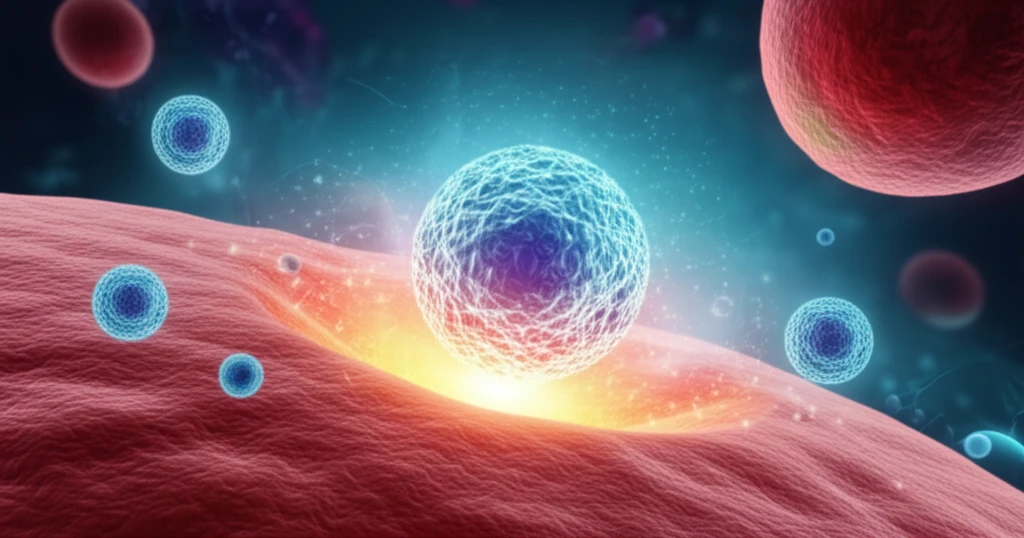
Illustration of glimepiride nanosuspension entering a cell, showing the future of diabetes treatment.

Revolutionizing Diabetes Care: How Cutting-Edge Nano-Technology is Enhancing Glimepiride Treatment

"Discover the groundbreaking advancements in drug delivery that are transforming the lives of those managing type 2 diabetes."


In the ever-evolving landscape of healthcare, innovation is constant. One area experiencing rapid transformation is drug delivery, particularly for chronic conditions like type 2 diabetes. Millions worldwide rely on medications like glimepiride to manage their blood sugar levels. But the effectiveness of these drugs can sometimes be limited by how well the body absorbs them. Fortunately, cutting-edge nanotechnology offers a promising solution, and it's already making waves.

This article dives deep into a revolutionary approach that's significantly enhancing glimepiride's effectiveness. We'll explore the science behind nanosuspensions and oral thin films (OTFs), and how they're being combined to create a powerful new way to administer this vital medication. We will be focusing on the latest research, including in-depth studies and analysis, to help you understand the benefits and what this advancement means for the future of diabetes care.

This isn't just about medical jargon; it's about real people and the daily battles they face. By making glimepiride more effective and easier to take, this new technology promises to improve the quality of life for individuals managing type 2 diabetes. Join us as we explore this exciting development and its potential to reshape diabetes treatment.

What is Glimepiride, and Why is Effective Delivery So Crucial?

Illustration of glimepiride nanosuspension entering a cell, showing the future of diabetes treatment.

Glimepiride, a cornerstone in type 2 diabetes treatment, belongs to a class of medications called sulfonylureas. It works by stimulating the pancreas to release insulin, helping to lower blood sugar levels. However, glimepiride's effectiveness depends heavily on how well the body absorbs it. If the drug isn't absorbed efficiently, the patient may not get the full benefits, leading to poorly controlled blood sugar and potential health complications.

This is where the challenge lies. Glimepiride has relatively low solubility, which means it doesn't dissolve easily in the body's fluids. This can hinder absorption, particularly when taken orally. Traditional methods of drug delivery often struggle to overcome this hurdle. The result? Variability in how the drug works, and sometimes, lower overall effectiveness.

  • Poor Solubility: Glimepiride's limited ability to dissolve in bodily fluids.
  • Absorption Issues: Challenges in the body absorbing the drug efficiently.
  • Variable Effectiveness: Inconsistent results in managing blood sugar levels.
This is why the innovative use of nanotechnology is so significant. By improving glimepiride's solubility and absorption, we can make a real difference in how the drug works, offering patients a more reliable and effective treatment option.

The Future of Diabetes Treatment: A Glimpse into Tomorrow

The journey towards better diabetes care is ongoing, and the development of nano-based OTFs for glimepiride treatment marks a significant milestone. As research continues and technology advances, we can anticipate further improvements in drug delivery, offering even more effective and patient-friendly solutions. The future of diabetes treatment is bright, with a focus on innovation, better outcomes, and an enhanced quality of life for those living with diabetes.

About this Article -

This article was crafted using a human-AI hybrid and collaborative approach. AI assisted our team with initial drafting, research insights, identifying key questions, and image generation. Our human editors guided topic selection, defined the angle, structured the content, ensured factual accuracy and relevance, refined the tone, and conducted thorough editing to deliver helpful, high-quality information.See our About page for more information.

This article is based on research published under:

DOI-LINK: 10.22159/ijap.2017v9i2.16714, Alternate LINK

Title: Development Of Stable Nanosuspension Loaded Oral Films Of Glimepiride With Improved Bioavailability

Subject: Pharmaceutical Science

Journal: International Journal of Applied Pharmaceutics

Publisher: Innovare Academic Sciences Pvt Ltd

Authors: Vaishali Kilor, Nidhi Sapkal, Anwar Daud, Shruti Humne, Tushar Gupta

Published: 2017-03-10

Everything You Need To Know

1

What is Glimepiride, and why is its effective delivery important for managing type 2 diabetes?

Glimepiride is a medication belonging to the sulfonylurea class, primarily used in the treatment of type 2 diabetes. It functions by stimulating the pancreas to release insulin, which helps lower blood sugar levels. Effective delivery is crucial because Glimepiride has low solubility, hindering its absorption in the body. Poor absorption can lead to inconsistent blood sugar control and reduced overall effectiveness of the medication. Innovative drug delivery methods, like nanosuspensions and oral thin films (OTFs), aim to enhance Glimepiride's solubility and absorption, thus improving its therapeutic outcomes.

2

How are nanosuspension technology and oral thin films (OTFs) improving Glimepiride treatment for type 2 diabetes?

Nanosuspension technology and oral thin films (OTFs) are revolutionizing Glimepiride treatment by addressing the drug's poor solubility and absorption issues. Nanosuspensions involve formulating Glimepiride into extremely small particles, increasing its surface area and, consequently, its dissolution rate. OTFs, on the other hand, are thin, dissolving films that deliver the medication directly into the bloodstream via the oral mucosa, bypassing the digestive system. The combination of these two technologies enhances Glimepiride's bioavailability, leading to more consistent and effective blood sugar control. This approach also simplifies drug administration, potentially improving patient compliance and quality of life. Further research and development are needed to optimize these delivery systems and explore their long-term benefits.

3

What challenges does Glimepiride face in terms of absorption and solubility, and how does nanotechnology address these issues?

Glimepiride faces significant challenges due to its low solubility in bodily fluids, which leads to poor absorption when taken orally. This can result in variable effectiveness and difficulty in achieving consistent blood sugar control for patients with type 2 diabetes. Nanotechnology addresses these challenges by formulating Glimepiride into nanosuspensions, which are extremely small particles that significantly increase the drug's surface area. This increased surface area enhances the dissolution rate and, consequently, the absorption of Glimepiride in the body. By improving solubility and absorption, nanotechnology helps to ensure that patients receive a more reliable and effective dose of the medication, leading to better management of their diabetes.

4

What are the potential benefits of using nano-based oral thin films (OTFs) for Glimepiride administration in managing type 2 diabetes?

Nano-based oral thin films (OTFs) offer several potential benefits for Glimepiride administration in managing type 2 diabetes. Firstly, OTFs enhance the drug's bioavailability by delivering Glimepiride directly into the bloodstream through the oral mucosa, bypassing the digestive system. This leads to faster absorption and more consistent blood sugar control. Secondly, OTFs are convenient and easy to use, particularly for patients who have difficulty swallowing pills. This can improve patient compliance and quality of life. Additionally, the nano-based formulation further increases the drug's solubility and absorption rate, maximizing its therapeutic effect. While research is ongoing, the use of nano-based OTFs for Glimepiride represents a promising advancement in diabetes treatment, with the potential to improve patient outcomes and adherence.

5

How might advancements in Glimepiride delivery impact the daily lives of individuals managing type 2 diabetes, and what future innovations can be anticipated?

Advancements in Glimepiride delivery, particularly through nanosuspensions and oral thin films (OTFs), have the potential to significantly improve the daily lives of individuals managing type 2 diabetes. Enhanced bioavailability and more consistent blood sugar control can lead to fewer complications and a reduced burden of managing the condition. The ease of use of OTFs can also improve patient compliance and quality of life, particularly for those who struggle with traditional pills. Future innovations might include even more targeted drug delivery systems, such as stimuli-responsive nanoparticles that release Glimepiride only when blood sugar levels are high, or personalized formulations tailored to individual patient needs. Continuous research and development in nanotechnology and drug delivery hold promise for even more effective, convenient, and patient-centric treatments for type 2 diabetes.

Newsletter Subscribe

Subscribe to get the latest articles and insights directly in your inbox.