
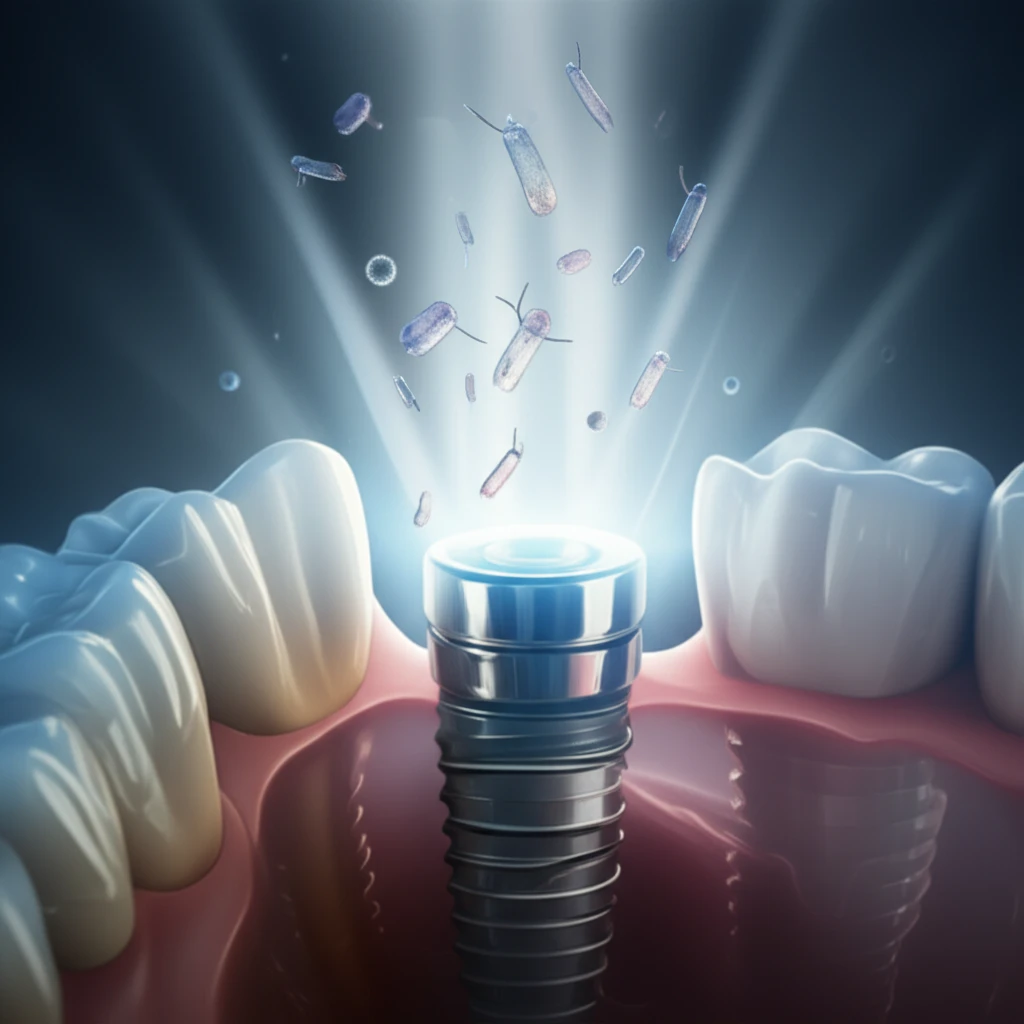
Dental implant healing with infection removal.

Retrograde Peri-Implantitis: Saving Your Smile After an Implant Infection

"Discover how a novel apicoectomy approach can combat apical infections and preserve dental implants."


Losing a tooth can be a difficult experience, impacting both your physical and emotional well-being. Dental implants offer a fantastic solution, but what happens when complications arise, such as an infection around the implant? Immediate implant placement has become a common and effective way to replace teeth after extraction. However, when these implants are placed in areas where previous infections existed, there's a risk of what's known as retrograde peri-implantitis—an infection at the tip of the implant.

This article delves into a fascinating case where an implant became infected at its apex (the root tip). We'll explore how a specialized procedure, called an apicoectomy, combined with advanced analysis using scanning electron microscopy (SEM), helped to resolve the infection and save the implant.

This approach offers a promising solution for those facing similar challenges, especially when traditional methods are not enough. By understanding this technique, you'll be better informed about the options available for maintaining your dental health and preserving your beautiful smile.

Understanding Apical Infections and Implant Treatment

Dental implant healing with infection removal.

Apical peri-implantitis, or retrograde peri-implantitis, happens when an infection develops around the tip of a dental implant. This can occur for several reasons, including:

The risk factors include:

  • Bone overheating during the drilling process.
  • Contamination of the implant itself.
  • A bone cavity that's too long for the implant.
  • Immediate implant placement after a tooth extraction without properly treating an existing infection.
  • Infections spreading from neighboring teeth.
While various treatments exist, a reliable protocol for consistently resolving these infections has been lacking. This case study highlights a specific approach: surgically removing the infected portion of the implant (apicoectomy) and thoroughly cleaning the surrounding bone. This method aims to eliminate the infection while preserving the implant's stable, integrated portion.

A Promising Solution for Retrograde Peri-Implantitis

This case study offers valuable insights into treating apical implant infections. By combining surgical removal of the infected implant portion with thorough cleaning and disinfection, it presents a viable option for preserving implants that might otherwise be lost.

The SEM analysis also underscored the importance of eliminating bacterial colonies firmly attached to the implant surface, suggesting that simply curetting the surrounding bone might not always be sufficient.

While this technique shows promise, it's crucial to remember that each case is unique. A dental professional must carefully evaluate the location of the infection, the amount of healthy implant structure remaining, and the overall anatomical considerations before deciding on the best course of treatment. If you're experiencing pain or suspect an infection around a dental implant, consulting with a qualified dental specialist is essential for prompt and effective care.

About this Article -

This article was crafted using a human-AI hybrid and collaborative approach. AI assisted our team with initial drafting, research insights, identifying key questions, and image generation. Our human editors guided topic selection, defined the angle, structured the content, ensured factual accuracy and relevance, refined the tone, and conducted thorough editing to deliver helpful, high-quality information.See our About page for more information.

This article is based on research published under:

DOI-LINK: 10.1563/aaid-joi-d-16-00162, Alternate LINK

Title: Apicoectomy And Scanning Electron Microscopy Analysis Of An Implant Infected By Apical (Retrograde) Peri-Implantitis: A Case Letter

Subject: Oral Surgery

Journal: Journal of Oral Implantology

Publisher: American Academy of Implant Dentistry

Authors: Rafael Manfro, Gislaine Felipe Garcia, Marcelo Carlos Bortoluzzi, Vinicius Fabris, Atais Bacchi, Carlos Nelson Elias

Published: 2018-08-01

Everything You Need To Know

1

What exactly is retrograde peri-implantitis?

Retrograde peri-implantitis is an infection at the tip of a dental implant, also known as apical peri-implantitis. It is a complication that can arise after dental implant placement, particularly when implants are placed in areas with previous infections. This infection can jeopardize the implant's stability and longevity, potentially leading to implant failure. The implications of retrograde peri-implantitis include the need for additional interventions, such as apicoectomy, to save the implant or, in severe cases, implant removal and replacement.

2

What is an apicoectomy, and why is it important in this context?

An apicoectomy is a surgical procedure used to treat apical infections around dental implants. The procedure involves removing the infected portion of the implant apex and thoroughly cleaning the surrounding bone to eliminate the infection. This approach is particularly valuable when traditional treatments fail to resolve the infection. The significance of apicoectomy lies in its potential to save a compromised implant, offering a solution for those facing post-implant complications and avoiding the need for implant removal. It's a targeted approach aimed at preserving the existing dental work and maintaining the patient's oral health.

3

What role does scanning electron microscopy (SEM) play in this scenario?

Scanning electron microscopy (SEM) is an advanced analytical technique used in this context to analyze the implant and the surrounding bone. SEM provides a high-resolution view of the implant surface, allowing for detailed examination of the infection and the effectiveness of the treatment. This is important for understanding the nature of the infection and ensuring that it has been completely removed during the apicoectomy. SEM analysis ensures a more thorough diagnosis and treatment planning for the patient.

4

What are the main risk factors associated with retrograde peri-implantitis?

Several factors can increase the risk of retrograde peri-implantitis. These include bone overheating during the drilling process, contamination of the implant, a bone cavity that is too long for the implant, immediate implant placement without treating an existing infection, and infections spreading from neighboring teeth. Understanding these risk factors is crucial for prevention and early intervention, as it helps dentists and patients alike to take precautions and recognize potential issues before they escalate.

5

Why is this approach considered a promising solution for implant infections?

This approach is considered promising because it offers a viable solution for treating apical implant infections, especially when other methods fail. By combining apicoectomy with thorough cleaning and disinfection, it aims to eliminate the infection while preserving the implant. The case study highlights its effectiveness in resolving infections and saving implants, providing hope for patients experiencing similar complications. This approach provides dentists with an alternative treatment strategy to save the implant, and help the patient maintain their oral health.

Newsletter Subscribe

Subscribe to get the latest articles and insights directly in your inbox.