
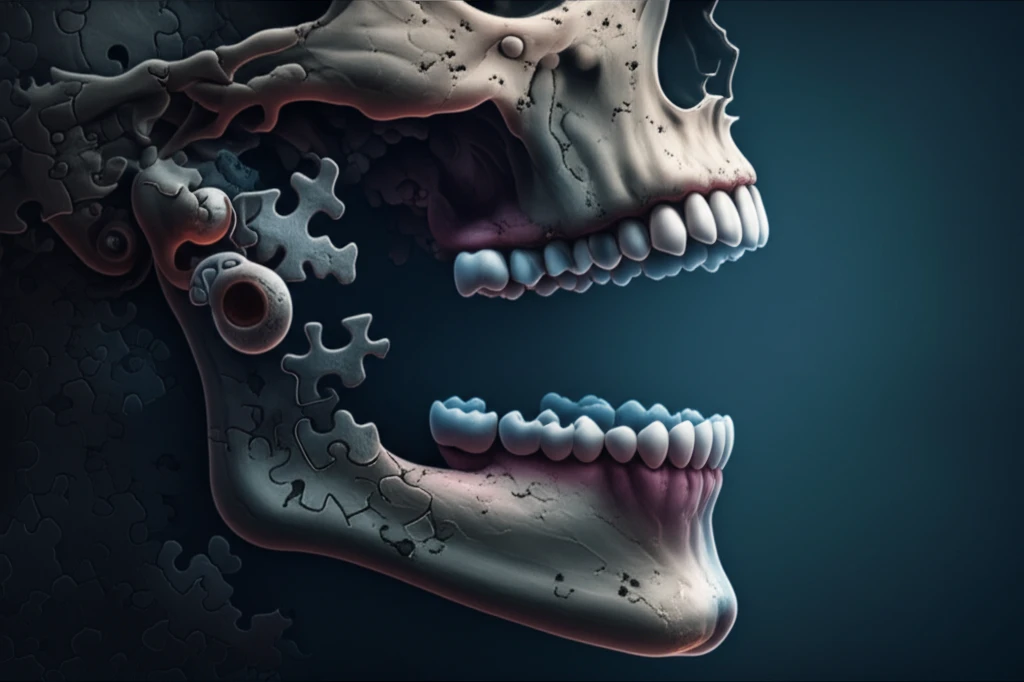
The Silent Culprit: How Missing Molars Can Wreck Your Jaw

"Uncover the surprising link between missing mandibular molars and temporomandibular joint dysfunction (TMD). Learn how seemingly small dental issues can lead to chronic jaw pain and long-term health problems."
Temporomandibular joint (TMJ) health is crucial for overall well-being, acting as a critical hinge for the masticatory system. Its functionality is closely linked to dental occlusion. When key teeth, like mandibular molars, are lost and not promptly replaced, it can lead to TMJ dysfunction.
The relationship between TMJ and dental occlusion has long been a topic of interest. Studies suggest that the human mandibular condyles can undergo functional remodeling in response to changes in occlusion. This remodeling pattern in the TMJ is directly influenced by alterations in occlusal patterns, underscoring the importance of maintaining proper dental alignment.
Mandibular molars are essential for maintaining dental stability. Their absence can trigger a cascade of issues, including drifting teeth, supraeruption, and changes in vertical dimension. While these changes may seem gradual and are often overlooked, understanding their impact on the TMJ is vital for preventing long-term complications.
Missing Molars and TMJ Health
Missing molars are a common dental concern that may affect jaw function and overall oral health. The temporomandibular joint (TMJ) is a complex structure that enables essential movements for chewing and speech. While missing teeth are frequently discussed in connection with jaw problems, the exact relationship between tooth loss and TMJ disorders remains an area of ongoing research and clinical observation.
Conventional Treatment Approaches
Standard treatments for tooth replacement include dental implants, bridges, and dentures, each with varying costs and benefits. For TMJ disorders, conservative approaches such as splints, physical therapy, and exercise are commonly recommended. However, evidence suggests that permanent bite changes and jaw surgeries often do not outperform conservative care, and there is no scientific basis for a universal "ideal" jaw position since individual anatomy varies considerably.
Historical Understanding of TMJ Disorders
The temporomandibular joint consists of matching hinges on both sides of the jaw that provide rotational and sliding movements for mastication and speech. Throughout most of recorded history, jaw problems were addressed primarily through the lens of dislocation and fracture rather than chronic functional disturbance. The TMJ and its associated disorders occupied a marginal position in medical thought for centuries, with modern understanding of temporomandibular dysfunction as a spectrum of disorders developing relatively recently.
The Domino Effect: How Missing Molars Lead to TMJ Issues
A recent study investigated the association between non-replaced mandibular molars and temporomandibular joint dysfunction (TMD). The study included 174 participants with missing mandibular first molars, examining clinical and radiographic changes in the temporomandibular joint (TMJ).
- Supraeruption and Drifting: Supraeruption of opposing maxillary molars and drifting of adjacent teeth showed a significant association with asymptomatic clicking of the TMJ.
- Deep Bite and Condylar Flattening: Patients with deep bites were more likely to exhibit radiographic findings of condylar flattening, indicating degenerative changes in the joint.
- Duration of Molar Loss: A longer duration of molar loss was correlated with a higher frequency of TMJ clicking, suggesting that prolonged absence of molars exacerbates TMJ issues.
Current Research Landscape
Research on the relationship between missing molars and TMJ disorders continues to evolve. Studies have explored how tooth loss may contribute to changes in jaw function and joint health. While some research suggests connections between missing teeth and TMJ issues, the evidence base remains mixed, with findings varying across different study populations and methodologies.
Challenges in TMJ Diagnosis and Treatment
TMDs represent a cluster of musculoskeletal and neuromuscular conditions recognized as a leading cause of non-dental orofacial pain globally. Research indicates that permanent bite changes and jaw surgeries often do not outperform conservative care, and there is no scientific evidence that a "bad" jaw position causes most TMJ disorders. TMJR is considered a last resort with prerequisites including confirmed pathology, chronic pain, and failure of previous treatments.
Tooth Replacement Options and Their Effects
A study of 174 patients with missing mandibular first molars revealed significant associations between missing teeth and TMJ dysfunction, with supra-eruption of opposing molars and drifting of adjacent teeth significantly associated with asymptomatic clicking. Replacing multiple missing teeth is essential to prevent TMJ disorders and other health complications. Various replacement options exist, from dental implants to dentures, with costs and benefits varying by individual circumstances.
Take Action: Protecting Your Jaw Health
Maintaining proper dental alignment is essential for long-term TMJ health. The study underscores the importance of replacing missing molars to prevent the cascade of issues that can lead to temporomandibular dysfunction. Consulting with your dentist about replacement options, such as implants or bridges, can help restore proper occlusion and support healthy jaw function. Early intervention and proactive dental care are key to preventing TMJ problems and ensuring a comfortable, pain-free life.
Expert Perspectives on Tooth Loss and TMJ
A comprehensive review found no quality evidence to confirm an association between the loss of one or more teeth and the diagnosis of TMD or symptoms such as joint sounds, TMJ pain, and mouth opening restriction. However, deficiently supported occlusion due to multiple missing molars can load the TMJ, leading to mandibular overclosure and joint pain. Research also indicates that greater loss of tooth-supporting zones is associated with posterior and inferior displacement of condyles.
Advancing TMJ Diagnostics and Treatment
Diagnostic approaches to TMJ disorders have evolved substantially with advanced imaging technologies, functional diagnostic tools, and emerging biomarker-based research. The US TMJ Disorders market is projected to grow significantly, reflecting increased attention to these conditions. Understanding how tooth loss affects the TMJ helps emphasize how crucial it is to replace missing teeth to enhance occlusion support and prevent further deterioration of temporomandibular disorders.
Wider Implications of Missing Molars
Missing molars can have implications beyond the immediate dental gap, potentially affecting jaw mechanics and overall oral function. The relationship between tooth loss and TMJ disorders highlights the interconnected nature of oral health components. Addressing missing teeth promptly may help maintain proper jaw function and prevent cascading effects on adjacent teeth and surrounding structures.
Clinical Evidence on Missing Teeth and TMJ
Research shows that unilateral posterior missing teeth may expedite degeneration of the TMJ component, with decreased articular eminence inclination angulation observed on the missing posterior teeth side. Studies evaluate the influence of missing teeth on temporomandibular joint dysfunctions in adults, examining factors beyond just physical changes. Case reports document real-world clinical presentations, including patients with chronic orofacial pain attributed to TMJ dysfunction.