
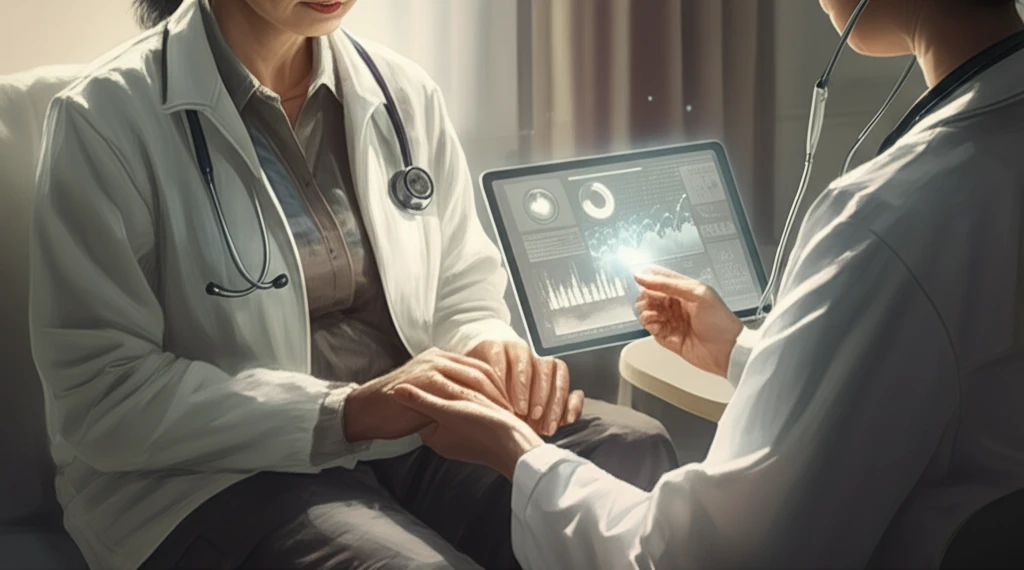
Real-Time Feedback: Revolutionizing End-of-Life Care

"Discover how real-time reporting is transforming end-of-life care, enhancing patient and family experiences through timely insights and compassionate responsiveness."
In the realm of healthcare, few areas demand as much sensitivity and responsiveness as end-of-life care. Ensuring comfort, dignity, and peace for patients and their families during these critical moments requires not only medical expertise but also a deep understanding of their emotional and psychological needs. Traditional methods of gathering feedback often fall short, lagging behind the real-time experiences of patients and caregivers. This is where the concept of real-time reporting steps in, offering a transformative approach to enhancing the quality of end-of-life care.
Real-time reporting, in the context of healthcare, involves the immediate collection and analysis of feedback from patients, families, and care providers. This approach contrasts sharply with traditional surveys and assessments, which typically occur after a significant time lag. By capturing insights as they happen, healthcare teams can promptly address concerns, adjust care plans, and provide more personalized support. This immediacy is particularly crucial in end-of-life care, where every moment counts and the needs of patients can change rapidly.
The shift towards real-time feedback is driven by a growing recognition that patient-centered care must be proactive and adaptive. As healthcare systems strive to improve patient outcomes and satisfaction, real-time reporting emerges as a powerful tool for achieving these goals. It enables care providers to continuously monitor the patient experience, identify areas for improvement, and ensure that every individual receives the compassionate and comprehensive care they deserve. In the following sections, we will delve into the practical applications of real-time reporting in end-of-life care, exploring its benefits, challenges, and potential for future growth.
The Scale of Unmet Need
End-of-life care encompasses support for a person's mental, emotional, physical, spiritual, and practical needs in the hours, days, or months before death. A commonly cited statistic held that one in four people did not receive the end-of-life care they need, but this figure was based on broad assumptions. A more rigorous study found that almost one in three people in England die without the basic end-of-life care they need, providing a clearer and more accurate assessment to inform policy and practice.
A System in Need of Overhaul
A 2014 report by a 21-member nonpartisan panel appointed by the Institute of Medicine concluded that the country's system for handling end-of-life care is largely broken and should be overhauled at almost every level. Medical Aid in Dying has emerged as one accepted method, with New York becoming the 13th state, along with the District of Columbia, to authorize it for terminally ill adults with less than six months to live. However, these options remain limited in scope; in England, for example, both euthanasia and assisted suicide remain illegal under current law.
Classifying End-of-Life Choices
Euthanasia has historically been classified in several ways based on how and whether consent is given. Active euthanasia involves a deliberate action to end life, while passive euthanasia allows death to occur by withholding or withdrawing treatment. These foundational distinctions continue to shape legal, ethical, and clinical debates around end-of-life decisions today.
The Power of Immediate Insights
The cornerstone of real-time reporting lies in its ability to provide immediate insights into the patient and family experience. Traditional feedback mechanisms, such as post-care surveys, often suffer from recall bias and delayed actionability. Real-time systems, on the other hand, capture feedback as events unfold, offering a more accurate and timely representation of the care experience. This immediacy allows healthcare teams to identify and address issues promptly, improving patient comfort and satisfaction.
- Enhanced Patient Comfort
- Improved Family Support
- Proactive Care Adjustments
- Increased Trust and Security
Barriers and Gaps in Current Practice
Optimal end-of-life care in acute hospitals is often challenged by barriers including lack of nursing time and capacity, lack of training, and a focus on cure and recovery over comfort. Research has also identified significant gaps in understanding the experiences of homecare workers providing care for people with dementia up to the end of life. For family carers supporting someone who chooses to die at home, the daily demands can be high, and there is a recognized need for short, focused tools to assess carers' needs so this assessment can be embedded in routine practice.
When Planning and Protection Fail
Advance care planning tools such as living wills and POLST forms are designed to ensure patient wishes are honored, yet they function very differently: a living will is a legal document created as part of estate planning, while a POLST form translates those wishes into actionable medical orders. Despite these frameworks, systemic failures persist. In one documented case, a disabled young man with cancer was sent home to die without being offered treatment, a failure described by charities as a shocking example of health inequalities.
Global Perspectives on Palliative Care
Palliative care as a specialist professional practice is becoming increasingly influential worldwide, though its development is affected by global health inequalities and cultural dimensions of approaching death. Practices and policies vary significantly across diverse socio-cultural contexts. Medical advances that can transform end-of-life care, combined with lessons from the COVID-19 pandemic where many people died alone, have underscored the importance of ensuring no one faces death without adequate support.
Looking Ahead: The Future of Real-Time Care
As healthcare continues to evolve, the role of real-time reporting in end-of-life care is poised to expand. Technological advancements, such as wearable sensors and AI-powered analytics, offer new opportunities to monitor patient well-being and personalize care plans. By integrating these tools with real-time feedback systems, healthcare providers can gain a more comprehensive understanding of the patient experience and deliver truly patient-centered care. Ultimately, the goal is to create a healthcare ecosystem that is responsive, compassionate, and dedicated to improving the quality of life for all individuals, especially during their final moments.
Voices From the Field
Palliative care expert Ira Byock has been described as a compassionate leader who believes the health system needs to do better and that dying must be recognized as a part of life. End-of-life care experts have noted that doctors commonly struggle to identify when a patient is nearing the end of life, and that specialist palliative care is best equipped to pull things together in those final stages.
Technology and the Future of Dignity
The integration of emerging technologies such as virtual reality and artificial intelligence promises more immersive and personalized memorial experiences in end-of-life planning. There is also an urgent recognized need to reform current care models so that dignified care improving quality of life and spiritual well-being for dying patients and their families is not confined to designated palliative care units. Evidence suggests that much of the care seniors receive at the end of life, including late hospice referral and intensive ICU use in the final months, often goes beyond what they would actually desire.
Cost, Culture, and Communication
One-fourth of Medicare spending occurs in the final year of life, but behind this oft-cited statistic are real families making agonizing decisions with irreversible outcomes. Hospice care provides emotional and spiritual support to both patients and families coping with terminal illness, focusing on comfort and quality of life rather than curing disease. Cultural perspectives on pain expression and end-of-life care preferences also play a significant role in shaping unequal health outcomes across communities.
Where Research Meets Reality
A study of comfort and satisfaction with care among home-dwelling dementia patients dying at home identified modifiable factors that can improve outcomes for both patients and their families. The research, a prospective cohort study conducted from 2014 to 2019, underscores the importance of understanding real-world care experiences. Impact-focused research at institutions such as the University of Liverpool's Organisational and Employee Wellbeing centre is working to bridge the gap between academic findings and practical improvements in care settings.