
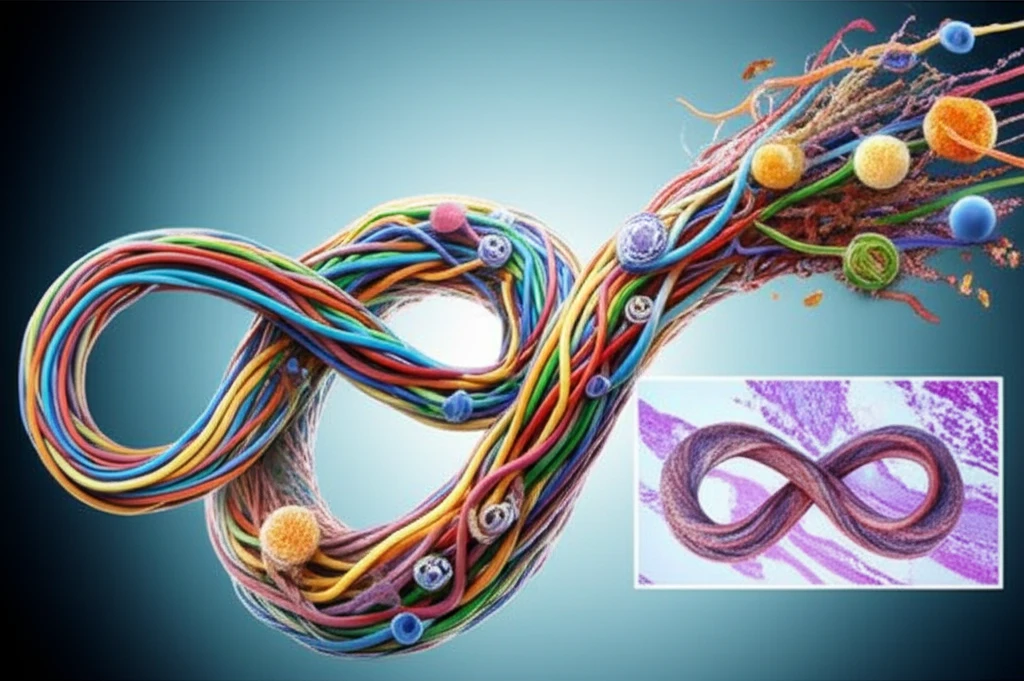
Illustration of immune cells and spermatic cord interwoven, representing IgG4-related disease.

Rare Case Study: Spermatic Vein Inflammation Linked to IgG4-Related Disease

"A 47-year-old man's abdominal pain and hypertension led to a surprising diagnosis, highlighting the challenges and complexities of rare autoimmune conditions."


Navigating the labyrinth of medical diagnostics, physicians often encounter atypical presentations that demand thorough investigation and a keen eye for rare conditions. A recent case study illuminates such a scenario, detailing the diagnostic journey of a 47-year-old man presenting with seemingly nonspecific symptoms: recurrent abdominal pain and recent-onset hypertension. What began as a pursuit to identify secondary hypertension evolved into the diagnosis of a rare systemic condition: Immunoglobulin G4-related disease (IgG4-RD) affecting an unusual site—the spermatic vein.

Hypertension, a common ailment often linked to lifestyle factors or primary kidney disease, can sometimes be a red flag for underlying, less common conditions. In this case, the patient's hypertension, coupled with abdominal discomfort, prompted a series of investigations. Initial laboratory findings revealed renal impairment, evidenced by elevated creatinine levels. Further imaging studies, including abdominal ultrasound and computed tomography (CT) scans, unveiled a complex interplay of anatomical abnormalities. These included left hydronephrosis, a soft tissue mass encasing the pancreatic tail and affecting major abdominal vessels, and, notably, involvement of the left spermatic vein.

The involvement of the spermatic vein is an atypical manifestation of IgG4-RD, an immune-mediated condition characterized by tissue infiltration with IgG4-positive plasma cells, leading to fibrosis and organ damage. This case underscores the protean nature of IgG4-RD and the importance of considering it in the differential diagnosis of unusual clinical presentations. By delving into the specifics of the patient's journey, we can gain insights into the diagnostic process, the clinical features of IgG4-RD, and the implications for management and long-term outcomes.

Unraveling the Diagnostic Puzzle: From Symptoms to Diagnosis

Illustration of immune cells and spermatic cord interwoven, representing IgG4-related disease.

The patient's clinical picture was complex, with hypertension and abdominal pain serving as the initial clues. The diagnostic process was initiated to rule out common causes of secondary hypertension. However, the constellation of findings from laboratory and imaging studies steered the medical team toward a more unusual diagnosis.

The CT scan was pivotal, revealing an extensive soft tissue mass in the left anterior pararenal and perirenal space, affecting the pancreatic tail, inferior mesenteric vessels, splenic vein, and renal vein. The involvement of the left spermatic vein was a particularly striking observation.

  • Elevated Creatinine Levels: Indicated renal impairment.
  • Uncontrolled Hypertension: Despite normal blood glucose and complement levels, ambulatory blood pressure monitoring revealed uncontrolled arterial hypertension.
  • Imaging Abnormalities: Ultrasound and CT scans showed left hydronephrosis and a soft tissue mass affecting multiple abdominal structures.
A CT-guided core biopsy of the pancreatic mass provided crucial histological evidence. The biopsy revealed pancreatic fibrous tissue with a storiform pattern, lymphoplasmacytic inflammatory infiltrate, and eosinophils. Immunohistochemistry confirmed numerous CD138-positive plasma cells and an elevated number of IgG4+ plasma cells, with more than 50% of plasma cells staining for IgG4. This finding was consistent with the diagnostic criteria for IgG4-RD.

Implications and Future Directions

This case report highlights the importance of considering rare conditions like IgG4-RD in patients with atypical presentations. Early diagnosis and treatment are crucial to prevent irreversible organ damage. Although vascular involvement in IgG4-RD is well-documented, spermatic vein involvement is an exceedingly rare manifestation. This case expands our understanding of the disease's potential spectrum and underscores the need for heightened clinical awareness.

About this Article -

This article was crafted using a human-AI hybrid and collaborative approach. AI assisted our team with initial drafting, research insights, identifying key questions, and image generation. Our human editors guided topic selection, defined the angle, structured the content, ensured factual accuracy and relevance, refined the tone, and conducted thorough editing to deliver helpful, high-quality information.See our About page for more information.

This article is based on research published under:

DOI-LINK: 10.1097/rhu.0000000000000783, Alternate LINK

Title: Inflammatory Involvement Of Spermatic Vein In A Patient With Immunoglobulin 4–Related Disease

Subject: Rheumatology

Journal: JCR: Journal of Clinical Rheumatology

Publisher: Ovid Technologies (Wolters Kluwer Health)

Authors: Diego Federico Baenas, Maira Johanna Orozco, Francisco Bernabeu, Emanuel José Saad, Domingo César Balderramo, Alejandro Alvarellos, Patricia Calafat, Verónica Saurit, Francisco Caeiro

Published: 2018-04-06

Everything You Need To Know

1

What is Immunoglobulin G4-related disease (IgG4-RD) and how did it relate to this case?

IgG4-RD, or Immunoglobulin G4-related disease, is a systemic condition where the body's immune system mistakenly attacks its own tissues. This leads to the infiltration of tissues with IgG4-positive plasma cells, which causes inflammation, fibrosis, and potentially organ damage. In this instance, it affected the spermatic vein.

2

What is the spermatic vein, and why was its involvement noteworthy in this scenario?

The spermatic vein is a blood vessel in the male reproductive system that drains blood from the testicles. Its involvement in this case of IgG4-RD is considered atypical, as this condition more commonly affects other organs. The inflammation in the spermatic vein, a result of the IgG4-RD, led to the observed complications in this case.

3

What were the key steps in diagnosing the patient's condition?

The diagnostic journey involved several steps. Initial investigations focused on the patient's symptoms of abdominal pain and hypertension. Laboratory tests revealed elevated creatinine levels, suggesting renal impairment. Imaging studies, including ultrasound and CT scans, showed abnormalities like left hydronephrosis and a soft tissue mass affecting various abdominal structures, including the spermatic vein. A CT-guided biopsy of the pancreatic mass was performed. The biopsy confirmed the diagnosis of IgG4-RD, based on the presence of a storiform pattern, lymphoplasmacytic inflammatory infiltrate, eosinophils, and high levels of IgG4-positive plasma cells.

4

What role did the elevated creatinine and hypertension play in the diagnostic process?

The elevated creatinine levels indicated renal impairment, meaning the kidneys were not functioning correctly. This was one of the early clues that something was wrong. The hypertension, coupled with abdominal discomfort, prompted doctors to look for an underlying cause, eventually leading them to the diagnosis of IgG4-RD. The findings of left hydronephrosis and a soft tissue mass, as seen in the CT scans, provided additional evidence of the disease's impact.

5

Why is this case considered important or significant?

This case is significant because it highlights the importance of considering rare conditions such as IgG4-RD in patients with unusual symptoms and atypical presentations. Early diagnosis and treatment are crucial to prevent irreversible organ damage. While vascular involvement in IgG4-RD is recognized, the spermatic vein involvement is rare, expanding our understanding of the disease's potential manifestations. This case underscores the need for heightened clinical awareness to ensure timely intervention and improved patient outcomes.

Newsletter Subscribe

Subscribe to get the latest articles and insights directly in your inbox.