
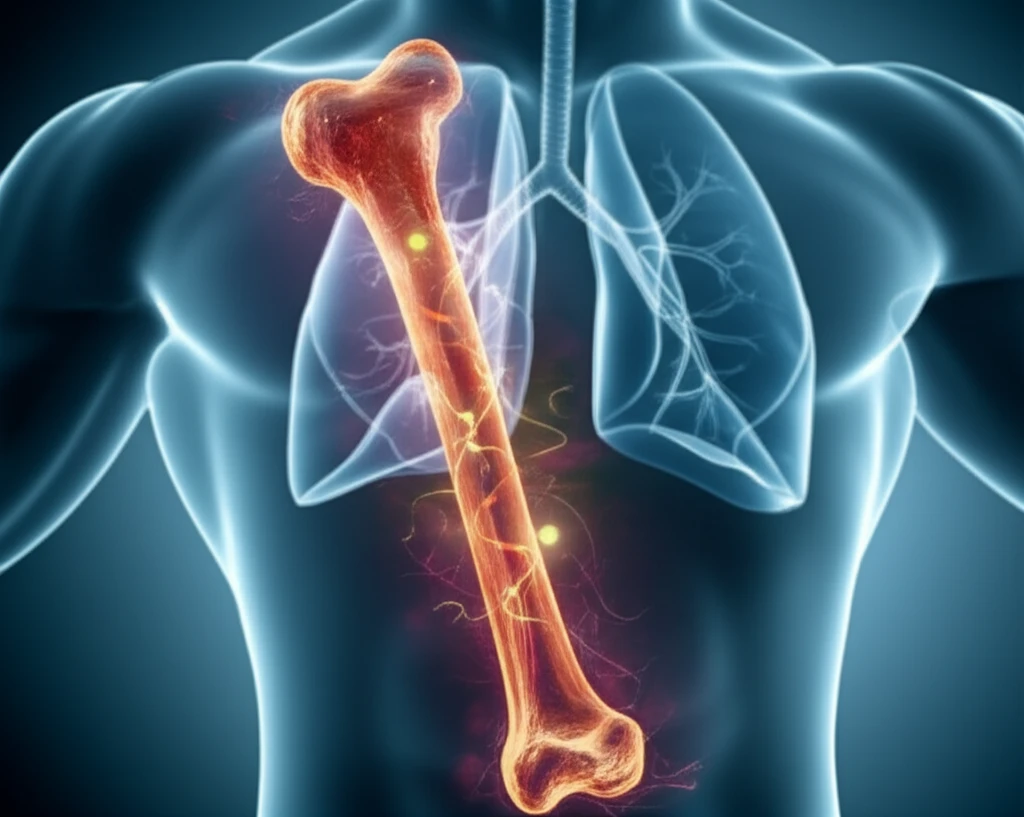
Rare Bone Infection Mystery: A Nocardia Osteomyelitis Case

"Unveiling a successful treatment for a rare tibial infection caused by Nocardia cyriacigeorgica, offering insights into diagnosis and management."
Osteomyelitis, a bone infection, is increasingly common. While Staphylococcus aureus is a frequent culprit, other opportunistic pathogens are also on the rise, especially in those with weakened immune systems or other health issues. These less common infections can be tricky to diagnose and treat because their symptoms aren't always typical.
Nocardia infections, caused by aerobic actinomycetes, are rare and often show up as lung problems or bone lesions. Diagnosing them can be difficult because the symptoms are usually mild and nonspecific, which can lead to delayed or incorrect treatment. Typically, treating Nocardia osteomyelitis involves surgery to remove infected tissue, followed by a long course of antibiotics, initially given intravenously.
Now, a fascinating case has emerged involving Nocardia cyriacigeorgica, a specific type of Nocardia. This article explores the successful, non-surgical treatment of an 81-year-old woman with tibial osteomyelitis caused by this species, offering valuable insights into how such rare infections can be managed effectively.
Decoding Nocardia cyriacigeorgica Osteomyelitis
An 81-year-old woman, already being treated for hypertension, was admitted to the hospital due to recurring fever, breathlessness (sometimes with bloody sputum), abdominal discomfort, and unexplained weight loss. Doctors initially suspected lung issues and started her on antibiotics. However, her condition also included pain and redness in her right shin, which led to suspicion of a bone infection.
- MALDI-TOF MS: The bacteria was identified using matrix-assisted laser desorption/ionization time of flight mass spectrometry (MALDI-TOF MS) with a high identification score of 1.9.
- E Test: Sensitivity testing revealed the bacteria were susceptible to trimethoprim/sulfamethoxazole, amikacin, imipenem, and linezolid but resistant to ciprofloxacin.
Key Takeaways: Insights for Future Cases
This case highlights the importance of considering rare pathogens like Nocardia cyriacigeorgica in osteomyelitis, especially when initial symptoms are nonspecific. Early and accurate diagnosis, using methods like MALDI-TOF MS, is crucial for effective treatment.
While surgical debridement is often the standard approach, this case demonstrates that conservative antibiotic therapy can be successful, even in complex cases involving both lung and bone infections. This is particularly relevant for patients who may not be suitable for surgery or when the infection is identified early.
The successful outcome underscores the need for clinicians to remain vigilant, consider atypical pathogens, and tailor treatment strategies based on comprehensive diagnostic testing and patient-specific factors. It also suggests that continuous monitoring and adjustment of antibiotic regimens are essential for optimal results.