
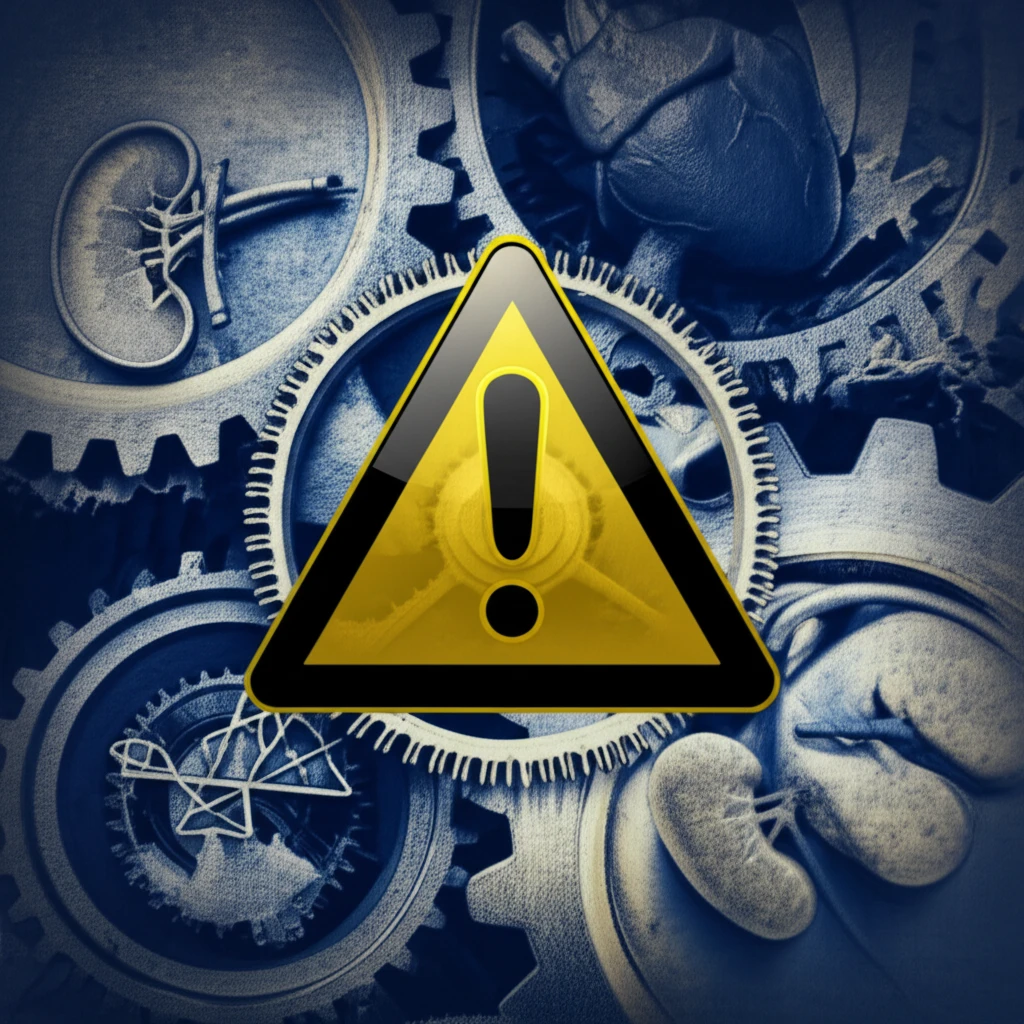
Caution symbol overlaid on interconnected gears representing the digestive system, heart, and kidneys to symbolize risks associated with PPIs.

PPIs: Are Your Heart and Kidneys at Risk?

"Emerging research suggests proton pump inhibitors might impact more than just your stomach."


Proton pump inhibitors (PPIs) are widely used medications for reducing stomach acid, providing relief from heartburn and acid reflux. But what if these seemingly harmless pills had effects reaching far beyond your digestive system?

Recent research is shedding light on potential links between long-term PPI use and increased risks of cardiovascular and kidney-related problems. While more studies are needed to confirm these findings, it's crucial to understand the possible connections and make informed decisions about your health.

This article explores the emerging concerns surrounding PPIs, diving into the science behind these potential risks and offering practical advice on how to use these medications safely.

The PPI-Kidney Connection: What the Studies Show

Caution symbol overlaid on interconnected gears representing the digestive system, heart, and kidneys to symbolize risks associated with PPIs.

Several population-based studies have indicated a possible association between chronic PPI use and adverse effects on renal physiology, including the development and progression of chronic kidney disease (CKD). It's important to remember that these studies are observational, meaning they can't definitively prove that PPIs cause kidney problems, but they do raise a flag for further investigation.

One potential mechanism behind this connection lies in how PPIs interact with a critical enzyme called dimethylarginine dimethylaminohydrolase (DDAH), found in various parts of the kidney. Researchers have found that PPIs can inhibit DDAH activity, disrupting the delicate balance of nitric oxide (NO) production.

  • DDAH and Nitric Oxide: DDAH regulates the levels of asymmetrical dimethylarginine (ADMA), which in turn affects nitric oxide synthase (NOS). Nitric oxide is vital for healthy blood vessel function in the kidneys.
  • The Downward Spiral: When PPIs interfere with DDAH, it can lead to elevated ADMA levels and reduced nitric oxide production.
  • Renal Consequences: This disruption can contribute to glomerular hypertension, ischemia, proteinuria, tubulointerstitial injury, renal fibrosis, and ultimately, the progression of CKD and end-stage renal disease (ESRD).
Experimental studies in animals support these findings, showing that decreased ADMA levels correlate with a greater number of capillaries around kidney tubules and glomeruli, enhancing kidney function. Overexpression of DDAH, on the other hand, improved creatinine clearance, reduced tubulointerstitial fibrosis, and decreased protein excretion in nephrectomized animals.

Weighing the Risks and Benefits: Using PPIs Responsibly

While the research raises concerns, it's important to emphasize that PPIs can be highly effective and necessary for many people. However, like any medication, they should be used judiciously and under the guidance of a healthcare professional.

The key takeaway is to avoid unauthorized or excessive use of PPIs. If you're taking PPIs without a clear indication or for a prolonged period, discuss your situation with your doctor. They can assess your individual risks and benefits, explore alternative treatments, and ensure you're using the lowest effective dose for the shortest possible time.

Ultimately, further research, particularly randomized prospective studies, is needed to fully understand the impact of PPIs on cardiovascular and renal health. In the meantime, be proactive in managing your health, staying informed, and working closely with your healthcare provider to make the best decisions for your specific needs.

About this Article -

This article was crafted using a human-AI hybrid and collaborative approach. AI assisted our team with initial drafting, research insights, identifying key questions, and image generation. Our human editors guided topic selection, defined the angle, structured the content, ensured factual accuracy and relevance, refined the tone, and conducted thorough editing to deliver helpful, high-quality information.See our About page for more information.

This article is based on research published under:

DOI-LINK: 10.1093/qjmed/hcx022, Alternate LINK

Title: Response To Letter Regarding Article, ‘Proton Pump Inhibitors In Ipf: Beyond Mere Suppression Of Gastric Acidity’

Subject: General Medicine

Journal: QJM: An International Journal of Medicine

Publisher: Oxford University Press (OUP)

Authors: Y.T. Ghebre, G. Raghu

Published: 2017-02-02

Everything You Need To Know

1

What are proton pump inhibitors, and what are the newly discovered health risks?

Proton pump inhibitors, or PPIs, primarily reduce stomach acid and alleviate heartburn and acid reflux. However, emerging research suggests potential links between long-term PPI use and increased risks of cardiovascular and kidney problems, highlighting that their effects might extend beyond the digestive system. Further studies are needed to solidify these findings.

2

How might proton pump inhibitors affect my kidneys?

Studies suggest a connection between chronic PPI use and adverse effects on kidney function, including the development of chronic kidney disease or CKD. While these studies are observational and don't prove causation, they do highlight an increased risk for further investigation. More research is needed.

3

How exactly do proton pump inhibitors interfere with kidney function at a biological level?

PPIs might affect kidney health by interfering with an enzyme called dimethylarginine dimethylaminohydrolase, or DDAH, found in the kidneys. DDAH regulates the levels of asymmetrical dimethylarginine, or ADMA, which affects nitric oxide synthase, or NOS. Nitric oxide is crucial for healthy blood vessel function in the kidneys. Disruption of DDAH can lead to elevated ADMA levels and reduced nitric oxide production, potentially contributing to kidney damage and the progression of CKD.

4

If proton pump inhibitors disrupt DDAH and nitric oxide, what are the specific renal consequences I should be aware of?

When PPIs interfere with DDAH, leading to elevated ADMA levels and reduced nitric oxide production, this can contribute to glomerular hypertension, ischemia, proteinuria, tubulointerstitial injury, renal fibrosis, and the progression of CKD and end-stage renal disease. Experimental studies in animals support these findings, where decreased ADMA levels correlate with enhanced kidney function.

5

Given the potential risks, how should I responsibly use proton pump inhibitors to protect my health?

The research suggests potential risks associated with PPIs, these medications can be highly effective and necessary for many people. PPIs should be used judiciously and under the guidance of a healthcare professional. Weighing the risks and benefits of any treatment including PPIs is important when considering treatment options.

Newsletter Subscribe

Subscribe to get the latest articles and insights directly in your inbox.