
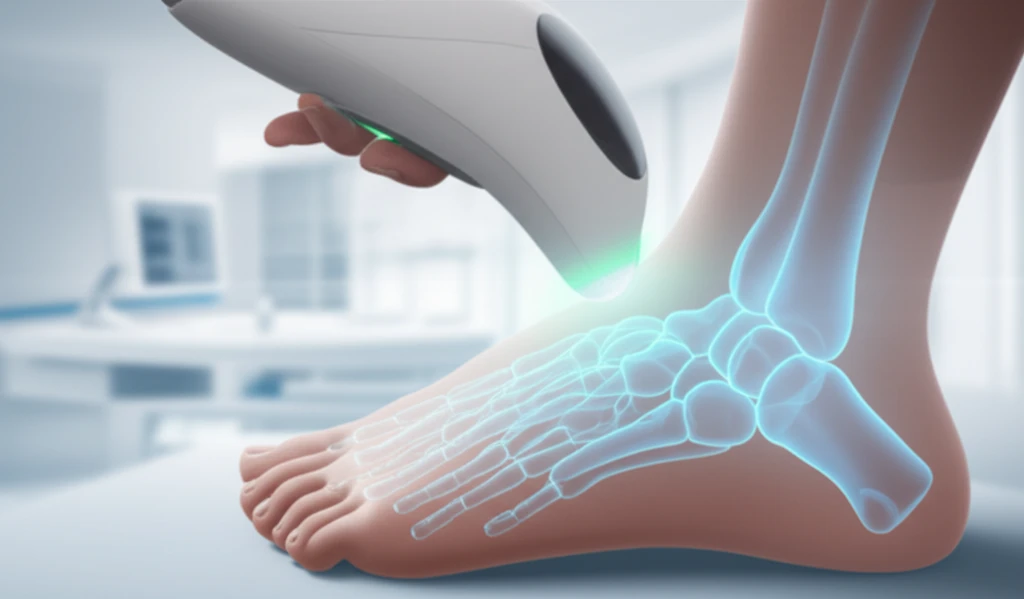
Illustration of nerve regeneration with a nerve scanning device.

Point-of-Care Nerve Conduction Device: A New Tool in the Fight Against Diabetic Neuropathy?

"Could a portable nerve conduction device offer a faster, easier way to detect diabetic neuropathy and protect those at risk?"


Diabetic polyneuropathy (DPN), a common complication of diabetes, can lead to foot ulcers, limb amputations, and a significantly reduced quality of life. Early detection is key to preventing these devastating outcomes, but traditional diagnostic methods like nerve conduction studies (NCS) are often time-consuming, expensive, and not easily accessible to everyone.

Imagine a world where DPN could be diagnosed quickly and easily in a primary care setting, allowing for earlier intervention and better patient outcomes. Researchers have been working to make this a reality, and a promising new tool has emerged: the point-of-care device (POCD) for sural nerve conduction studies. This portable, hand-held device offers the potential to streamline the diagnostic process and improve access to care for individuals with diabetes.

A recent cross-sectional study investigated the utility of a POCD in detecting DPN in a large cohort of individuals with type 2 diabetes. The results of this study, published in Muscle & Nerve, offer valuable insights into the potential role of POCDs in the early diagnosis and management of DPN. This article dives into the study's findings, exploring the device's accuracy, benefits, and limitations, and what it could mean for the future of diabetes care.

What is Diabetic Polyneuropathy (DPN)?

Illustration of nerve regeneration with a nerve scanning device.

Diabetic polyneuropathy is a type of nerve damage that occurs in people with diabetes, resulting from prolonged high blood sugar levels, which can damage nerves throughout the body. The most commonly affected are the nerves in the feet and legs. Symptoms can range from mild tingling or numbness to intense pain and muscle weakness. In severe cases, DPN can lead to foot ulcers, infections, and even amputation.

The gold standard for diagnosing DPN has traditionally been nerve conduction studies (NCS), performed in a specialized clinical neurophysiology laboratory. However, NCS can be time-consuming, require specialized equipment and trained personnel, and may not be readily available in all healthcare settings. This has led to a need for more accessible and efficient diagnostic tools.

  • Time-Consuming and Expensive: Traditional NCS require appointments with specialists and can involve significant costs.
  • Limited Access: Not all healthcare facilities have the equipment or trained personnel to perform NCS.
  • Patient Burden: The process can be uncomfortable and inconvenient for patients.
Enter the point-of-care device (POCD), a portable and easy-to-use tool designed to assess sural nerve function in a primary care or point-of-care setting. The POCD offers the potential to overcome the limitations of traditional NCS, making DPN diagnosis more accessible and timely.

The Future of DPN Detection

The study's findings suggest that the POCD holds promise as a valuable screening tool for DPN in individuals with type 2 diabetes. Its ease of use and portability could make it particularly useful in primary care settings, allowing for earlier detection and intervention. While the POCD may not replace traditional NCS entirely, it can help identify individuals who are at higher risk for DPN and who may benefit from further evaluation. Further research is needed to optimize the use of POCDs and to determine their long-term impact on patient outcomes. However, this innovative technology offers a glimpse into a future where DPN is detected earlier, managed more effectively, and its devastating consequences are prevented.

About this Article -

This article was crafted using a human-AI hybrid and collaborative approach. AI assisted our team with initial drafting, research insights, identifying key questions, and image generation. Our human editors guided topic selection, defined the angle, structured the content, ensured factual accuracy and relevance, refined the tone, and conducted thorough editing to deliver helpful, high-quality information.See our About page for more information.

This article is based on research published under:

DOI-LINK: 10.1002/mus.26361, Alternate LINK

Title: The Utility Of A Point-Of-Care Sural Nerve Conduction Device For Detection Of Diabetic Polyneuropathy: A Cross-Sectional Study

Subject: Physiology (medical)

Journal: Muscle & Nerve

Publisher: Wiley

Authors: Mustafa A. Kural, Signe T. Andersen, Niels T. Andersen, Henning Andersen, Morten Charles, Nanna B. Finnerup, Troels S. Jensen, Hatice Tankisi

Published: 2018-12-24

Everything You Need To Know

1

What is Diabetic Polyneuropathy?

Diabetic polyneuropathy (DPN) is a type of nerve damage that occurs in people with diabetes. It results from prolonged high blood sugar levels damaging nerves throughout the body, with the feet and legs being the most commonly affected. Symptoms can include tingling, numbness, pain, and muscle weakness, potentially leading to severe complications like foot ulcers and amputation. It is a significant complication of diabetes and early detection is crucial for preventing these outcomes.

2

How is Diabetic Polyneuropathy (DPN) traditionally diagnosed?

The traditional method for diagnosing Diabetic polyneuropathy (DPN) is through nerve conduction studies (NCS). These studies are performed in specialized clinical neurophysiology laboratories. The studies evaluate the function of the nerves to identify the damage. However, NCS can be time-consuming, expensive, and may not always be readily accessible, limiting early detection and timely intervention.

3

What is a point-of-care device (POCD) and how does it work?

A point-of-care device (POCD) is a portable, hand-held device designed to assess sural nerve function. It offers a faster and easier way to screen for Diabetic polyneuropathy (DPN) in primary care settings. The POCD is intended to overcome the limitations of traditional nerve conduction studies (NCS) by being more accessible, easier to use, and providing quicker results. This can lead to earlier detection and better patient outcomes, by improving timely intervention.

4

Why is a point-of-care device (POCD) important?

The significance of the point-of-care device (POCD) lies in its potential to revolutionize the early detection and management of Diabetic polyneuropathy (DPN). By providing a more accessible and efficient diagnostic tool, the POCD can help identify individuals at risk for DPN earlier. This allows for timely interventions, potentially preventing severe complications such as foot ulcers and amputations, and ultimately improving the quality of life for individuals with diabetes.

5

What are the potential implications of using a point-of-care device (POCD)?

The implications of using the point-of-care device (POCD) for detecting Diabetic polyneuropathy (DPN) are far-reaching. It could lead to earlier diagnoses, allowing for quicker interventions like lifestyle adjustments, medication, and specialized foot care. Earlier detection can prevent the progression of DPN and the development of severe complications. While the POCD may not completely replace traditional nerve conduction studies (NCS), it offers a promising step towards more effective diabetes management by making DPN detection more accessible and improving patient outcomes.

Newsletter Subscribe

Subscribe to get the latest articles and insights directly in your inbox.