
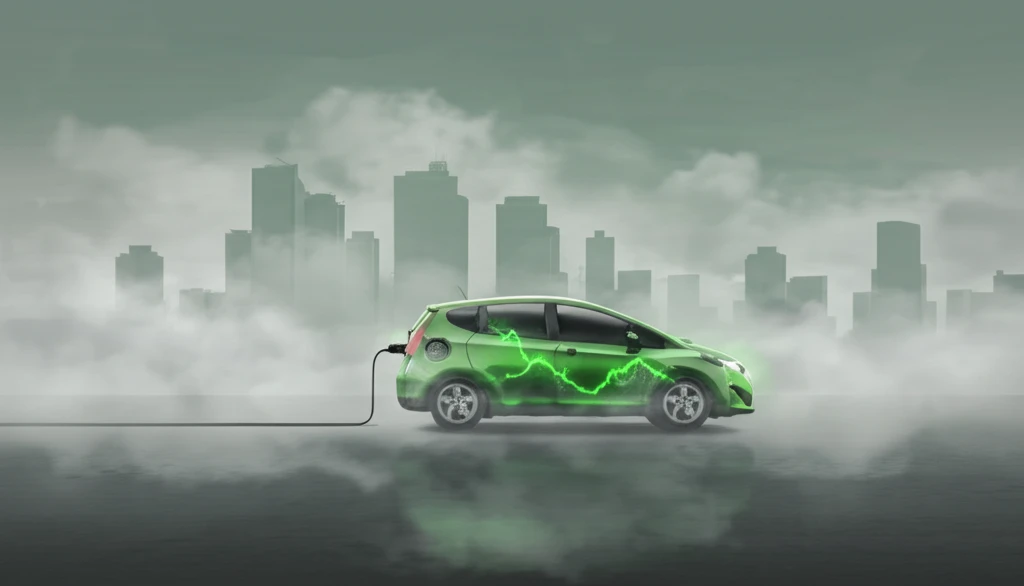
Plug-in hybrid vehicle emitting carbon in smoggy city.

Plug-In Hybrid Vehicles: Are They Really as Green as We Think?

"Uncovering the truth about PHEV emissions and efficiency in China and how it impacts the future of sustainable transportation."


In a world increasingly focused on sustainability, plug-in hybrid vehicles (PHEVs) have emerged as a popular choice for eco-conscious consumers. Combining the benefits of both electric and gasoline power, PHEVs seem like the perfect stepping stone towards a fully electric future. But are these vehicles really as green as we've been led to believe?

While PHEVs are often touted as environmentally friendly, recent research suggests that their real-world performance may not always align with official claims. Factors such as driving habits, road conditions, and regional differences in electricity generation can significantly impact their actual emissions and fuel efficiency. Understanding these nuances is crucial for making informed decisions about sustainable transportation.

A groundbreaking study conducted in China sheds light on the operational carbon emissions of PHEVs, revealing surprising insights into their energy consumption and environmental impact. This article delves into the key findings of this research, exploring the challenges and opportunities for optimizing PHEV performance and paving the way for a truly sustainable automotive industry.

The Shocking Truth About PHEV Energy Consumption

Plug-in hybrid vehicle emitting carbon in smoggy city.

The study, which analyzed data from the top-selling PHEV models in China between 2020 and 2022, uncovered a significant discrepancy between official energy efficiency ratings and real-world performance. Researchers found that the actual electricity intensity of PHEVs was 30-40% higher than the New European Driving Cycle (NEDC) values, while gasoline intensity was a staggering 3-6 times greater.

What does this mean for the average driver? In essence, PHEVs are consuming far more energy, particularly gasoline, than official tests suggest. This not only increases their carbon footprint but also raises questions about the accuracy of current testing standards and the information available to consumers.

  • Real-World vs. Official Data: Actual electricity use was 30-40% higher than official ratings.
  • Gasoline Consumption: Gasoline use was 3-6 times higher than official ratings.
  • Regional Impact: Energy use varied significantly across different regions of China.
These findings highlight the need for greater transparency and more realistic testing procedures to accurately reflect the true environmental impact of PHEVs. Consumers deserve to have access to reliable data that reflects real-world driving conditions.

Driving Towards a Greener Future: What Can We Do?

The study's findings underscore the importance of continuous innovation and policy adjustments to ensure that PHEVs truly contribute to a more sustainable future. By addressing the challenges and embracing the opportunities, we can pave the way for a cleaner, more efficient transportation system that benefits both consumers and the planet.

About this Article -

This article was crafted using a human-AI hybrid and collaborative approach. AI assisted our team with initial drafting, research insights, identifying key questions, and image generation. Our human editors guided topic selection, defined the angle, structured the content, ensured factual accuracy and relevance, refined the tone, and conducted thorough editing to deliver helpful, high-quality information.See our About page for more information.

This article is based on research published under:

DOI-LINK: https://doi.org/10.48550/arXiv.2405.07308,

Title: China'S Plug-In Hybrid Electric Vehicle Transition: An Operational Carbon Perspective

Subject: econ.gn q-fin.ec

Authors: Yanqiao Deng, Minda Ma, Nan Zhou, Zhili Ma, Ran Yan, Xin Ma

Published: 12-05-2024

Everything You Need To Know

1

What are plug-in hybrid vehicles (PHEVs) and why are they considered a stepping stone to a greener future?

Plug-in hybrid vehicles (PHEVs) combine electric and gasoline power, aiming to offer the benefits of both. They're seen as a transition because they allow drivers to use electric power for shorter trips while having the gasoline engine for longer distances, potentially reducing emissions compared to traditional gasoline cars. This dual functionality is intended to bridge the gap towards a fully electric future by providing a familiar driving experience while gradually reducing reliance on fossil fuels. However, as the study from China suggests, their real-world impact may differ from initial expectations.

2

How does the real-world performance of plug-in hybrid vehicles (PHEVs) in China differ from official ratings?

The study conducted in China revealed significant discrepancies. The actual electricity intensity of plug-in hybrid vehicles (PHEVs) was found to be 30-40% higher than the New European Driving Cycle (NEDC) values. Furthermore, gasoline use was 3-6 times greater than the official ratings. This suggests that PHEVs are consuming significantly more energy, especially gasoline, than what official tests indicate, which impacts their carbon footprint and the accuracy of information available to consumers.

3

Why is there a discrepancy between the official ratings and real-world performance of plug-in hybrid vehicles (PHEVs)?

The discrepancy arises because official testing standards, like the New European Driving Cycle (NEDC), may not accurately reflect real-world driving conditions. Factors such as driving habits, road conditions, and regional differences in electricity generation significantly influence the actual energy consumption of plug-in hybrid vehicles (PHEVs). These variables are often not fully accounted for in standardized tests, leading to a gap between the claimed efficiency and the actual performance experienced by drivers.

4

What are the implications of the study's findings on plug-in hybrid vehicles (PHEVs) for consumers?

The findings highlight that consumers may not be getting the environmental benefits they expect from plug-in hybrid vehicles (PHEVs). The higher-than-expected gasoline consumption increases their carbon footprint, potentially offsetting the environmental gains from using electric power. This also raises concerns about the accuracy of information provided to consumers regarding fuel efficiency and emissions. It underscores the importance of more transparent and realistic testing procedures to ensure that consumers have reliable data to make informed decisions about sustainable transportation options.

5

What actions can be taken to ensure plug-in hybrid vehicles (PHEVs) genuinely contribute to a sustainable future?

Continuous innovation and policy adjustments are crucial. This includes developing more accurate testing standards that reflect real-world driving conditions, promoting the use of renewable energy sources for electricity generation, and encouraging driving behaviors that maximize the use of electric power. Moreover, improving the design and efficiency of plug-in hybrid vehicles (PHEVs), and providing consumers with transparent and reliable information about their environmental impact, are essential steps in paving the way for a cleaner and more sustainable transportation system. Addressing the challenges and embracing the opportunities will allow plug-in hybrid vehicles (PHEVs) to fulfill their potential in contributing to a greener future.

Newsletter Subscribe

Subscribe to get the latest articles and insights directly in your inbox.