
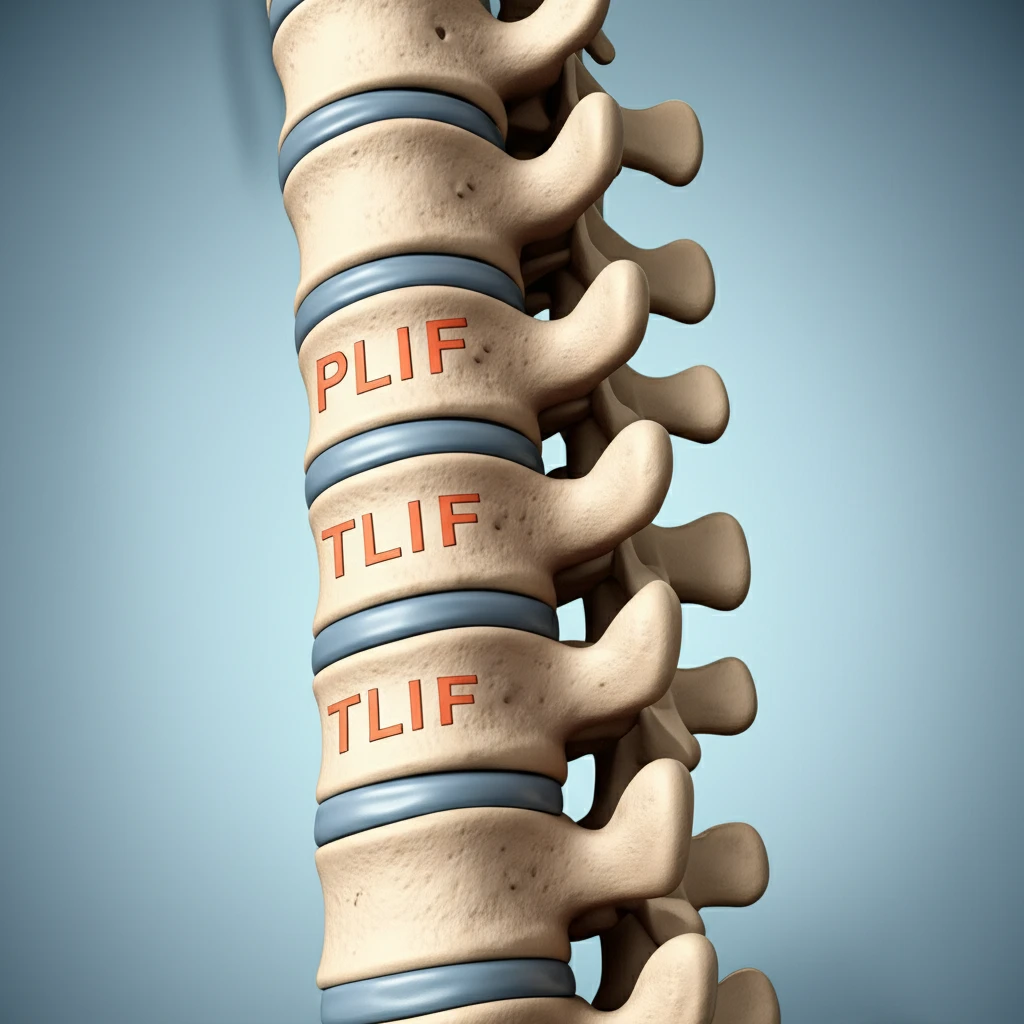
Illustration comparing PLIF and TLIF spinal fusion techniques

PLIF vs. TLIF: Choosing the Right Spinal Fusion for Your Back Pain

"Understanding Posterior Lumbar Interbody Fusion (PLIF) and Transforaminal Lumbar Interbody Fusion (TLIF) for Effective Back Pain Relief"


Chronic back pain can significantly impact your daily life, limiting your ability to work, enjoy hobbies, and even perform simple tasks. When conservative treatments like physical therapy and pain medication fail to provide adequate relief, spinal fusion surgery may be considered. Posterior Lumbar Interbody Fusion (PLIF) and Transforaminal Lumbar Interbody Fusion (TLIF) are two common surgical techniques used to stabilize the spine and reduce pain. Understanding the differences between these procedures can help you make informed decisions about your treatment options.

PLIF and TLIF both aim to achieve spinal fusion by placing a bone graft or cage between two vertebrae, encouraging them to grow together over time. This process stabilizes the spine, reduces motion, and alleviates pain caused by conditions such as degenerative disc disease, spondylolisthesis, and spinal stenosis. While the ultimate goal is the same, PLIF and TLIF differ in their surgical approach and the way the interbody space is accessed.

This article will delve into the details of PLIF and TLIF, explaining the surgical techniques, advantages, and disadvantages of each approach. We'll also explore the factors that surgeons consider when determining the most appropriate procedure for individual patients, helping you navigate the complexities of spinal fusion surgery.

PLIF: A Direct Approach to Interbody Fusion

Illustration comparing PLIF and TLIF spinal fusion techniques

Posterior Lumbar Interbody Fusion (PLIF) involves accessing the spine through a posterior incision, directly over the affected vertebrae. The surgeon removes a portion of the lamina (the back part of the vertebra) to create a window into the spinal canal. This allows for direct decompression of the neural elements and access to the interbody space.

In PLIF, the nerve roots are carefully retracted medially (towards the center of the body) to allow for the insertion of interbody cages. Typically, two cages are placed side-by-side within the disc space to provide optimal support and stability. The cages are packed with bone graft material to promote fusion.

  • Advantages of PLIF:
    • Direct decompression of the spinal canal.
    • Placement of two interbody cages for enhanced stability.
    • Suitable for patients with significant spinal stenosis requiring extensive decompression.
  • Disadvantages of PLIF:
    • Greater retraction of nerve roots, potentially increasing the risk of nerve injury.
    • Wider exposure of the spinal canal, which some surgeons believe may increase the risk of epidural scarring.
PLIF is often considered for patients with conditions that necessitate a wide decompression of the spinal canal, such as severe spinal stenosis or spondylolisthesis with significant nerve compression. The ability to place two cages provides a larger surface area for fusion and may be beneficial in certain cases.

Making the Right Choice: Consulting with Your Spine Surgeon

Choosing between PLIF and TLIF depends on a variety of factors, including the specific condition being treated, the patient's anatomy, and the surgeon's experience. A thorough evaluation, including a physical exam, review of imaging studies, and discussion of your individual needs and goals, is essential for determining the most appropriate surgical approach. Consulting with a qualified spine surgeon is crucial to make an informed decision and achieve the best possible outcome.

About this Article -

This article was crafted using a human-AI hybrid and collaborative approach. AI assisted our team with initial drafting, research insights, identifying key questions, and image generation. Our human editors guided topic selection, defined the angle, structured the content, ensured factual accuracy and relevance, refined the tone, and conducted thorough editing to deliver helpful, high-quality information.See our About page for more information.

Everything You Need To Know

1

What are the primary differences between PLIF and TLIF in spinal fusion surgery?

Both Posterior Lumbar Interbody Fusion (PLIF) and Transforaminal Lumbar Interbody Fusion (TLIF) are surgical techniques for spinal fusion, aiming to stabilize the spine and reduce pain. The key difference lies in their surgical approach. PLIF involves a direct posterior incision with the surgeon accessing the spine directly over the vertebrae, requiring retraction of nerve roots for interbody cage placement. TLIF, while not detailed in the provided text, likely differs in its approach to the interbody space, potentially minimizing nerve retraction. Both procedures use bone grafts or cages to encourage vertebral fusion, but they differ in how they access and work within the spinal area.

2

What are the benefits of undergoing PLIF surgery?

PLIF, or Posterior Lumbar Interbody Fusion, offers several advantages. It allows for direct decompression of the spinal canal, which is beneficial for conditions involving spinal stenosis. The ability to place two interbody cages enhances spinal stability, providing a larger surface area for fusion. It is often suitable for patients with severe spinal stenosis needing significant decompression. These benefits contribute to pain reduction and improved spinal stability.

3

What are the potential drawbacks or risks associated with PLIF surgery?

While PLIF offers several benefits, it also carries some potential risks. One disadvantage is the greater retraction of nerve roots required during the procedure. This increased manipulation can potentially elevate the risk of nerve injury. Additionally, the wider exposure of the spinal canal in PLIF might increase the risk of epidural scarring, according to some surgeons. These factors should be carefully considered when evaluating PLIF as a treatment option.

4

For what types of conditions is PLIF commonly recommended?

PLIF is often considered for patients suffering from conditions that necessitate extensive decompression of the spinal canal. Common conditions include severe spinal stenosis, where the spinal canal is narrowed, compressing the spinal cord and nerves, and spondylolisthesis, where one vertebra slips forward over another, leading to nerve compression. The ability of PLIF to provide direct access and the option to place two cages makes it a suitable choice for these complex situations, promoting stability and pain relief.

5

How does a spine surgeon determine whether PLIF or TLIF is the most appropriate surgical option?

The decision between PLIF and TLIF is highly individualized and depends on several factors. The specific condition being treated is paramount, including the severity and location of the problem. The patient's unique anatomy, revealed through imaging studies, also plays a crucial role. Furthermore, the surgeon's experience and preferences influence the choice. A thorough evaluation, including a physical examination and review of imaging, along with a discussion of the patient's needs and goals, is essential in this decision-making process. Consulting a qualified spine surgeon is crucial for an informed decision and the best possible outcome.

Newsletter Subscribe

Subscribe to get the latest articles and insights directly in your inbox.