
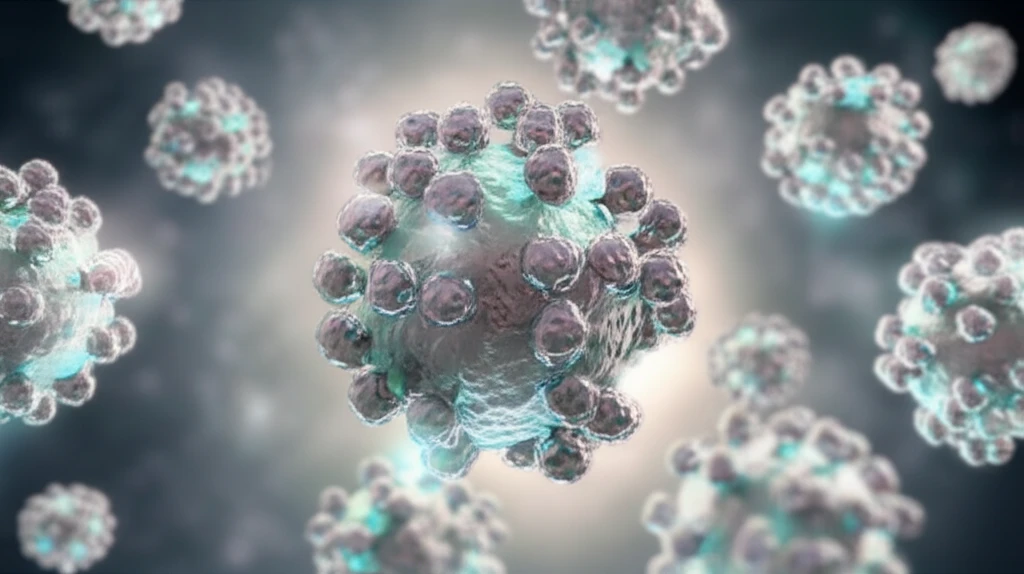
Illustration of platinum nanoparticles entering a cancer cell, symbolizing the potential for overcoming radioresistance.

Platinum Power: Can Nanoparticles Revolutionize Cancer Treatment?

"Tiny Particles, Big Impact: Exploring How Platinum Nanoparticles Could Change the Future of Radioresistance in Cancer Therapy"


Cancer treatment is a battlefield, and for many, the fight continues even after initial therapies. One of the biggest challenges in defeating this relentless foe is radioresistance – the ability of cancer cells to withstand radiation therapy. But what if there was a way to turn the tables, to make cancer cells more vulnerable? Enter the world of nanotechnology, where scientists are harnessing the power of incredibly small particles to revolutionize cancer care.

This article delves into a fascinating area of research, spotlighting the use of platinum nanoparticles as a potential tool to overcome radioresistance. These minuscule particles, far smaller than the width of a human hair, are showing remarkable abilities in laboratory settings. We will explore the science behind these nanoparticles, how they interact with cancer cells, and the exciting possibilities they unlock for the future of cancer treatment.

Prepare to be amazed as we unravel the potential of platinum nanoparticles. From understanding the problem of radioresistance to exploring the innovative solutions offered by nanotechnology, we embark on a journey through cutting-edge science. Join us as we uncover how these tiny particles could pave the way for more effective and targeted cancer therapies, offering new hope to patients worldwide.

Radioresistance: The Nemesis of Cancer Treatment

Illustration of platinum nanoparticles entering a cancer cell, symbolizing the potential for overcoming radioresistance.

Radioresistance is a significant hurdle in cancer treatment. It's why some cancers return after initially responding to radiation. Understanding this phenomenon is crucial. Many factors contribute, from the cancer cells’ ability to repair damage to the environment within the tumor. In the face of radiation, some cells adapt, becoming resilient and able to survive doses that would eliminate others. This resilience is a primary cause of treatment failure and recurrence.

Conventional treatments often struggle to overcome this resistance, leading to a cycle of therapies and potential setbacks. The need for new strategies is clear. Researchers are constantly seeking ways to enhance the effectiveness of radiation therapy, making cancer cells more susceptible to treatment.

  • Cellular Repair Mechanisms: Cancer cells can quickly repair DNA damage.
  • Tumor Microenvironment: Factors such as oxygen levels influence radiation sensitivity.
  • Genetic Mutations: Changes within cancer cells that make them resistant.
The goal is to find solutions that target radioresistance, improving patient outcomes. This research on platinum nanoparticles offers a promising path toward this goal. These nanoparticles provide a targeted approach to radiation therapy, aiming to overcome cancer's defenses and improve treatment effectiveness.

The Future is Nano: Platinum Nanoparticles and the Fight Against Cancer

The journey of platinum nanoparticles in cancer treatment is just beginning. Although early results are exciting, more research is needed. Clinical trials are essential to evaluate the safety and efficacy of this approach in humans. If successful, these tiny particles could significantly change how we treat cancer, offering more targeted and effective therapies. The potential to overcome radioresistance marks a new chapter in cancer treatment, and platinum nanoparticles may play a starring role.

About this Article -

This article was crafted using a human-AI hybrid and collaborative approach. AI assisted our team with initial drafting, research insights, identifying key questions, and image generation. Our human editors guided topic selection, defined the angle, structured the content, ensured factual accuracy and relevance, refined the tone, and conducted thorough editing to deliver helpful, high-quality information.See our About page for more information.

This article is based on research published under:

DOI-LINK: 10.1186/s12645-017-0028-y, Alternate LINK

Title: Platinum Nanoparticles: An Exquisite Tool To Overcome Radioresistance

Subject: Physical and Theoretical Chemistry

Journal: Cancer Nanotechnology

Publisher: Springer Science and Business Media LLC

Authors: Sha Li, Erika Porcel, Hynd Remita, Sergio Marco, Matthieu Réfrégiers, Murielle Dutertre, Fabrice Confalonieri, Sandrine Lacombe

Published: 2017-07-11

Everything You Need To Know

1

What is radioresistance, and why is it such a problem in cancer treatment?

Radioresistance is the ability of cancer cells to withstand the effects of radiation therapy. This is a significant problem because it allows cancer cells to survive radiation treatment, leading to treatment failure, recurrence, and the need for more aggressive therapies. Cancer cells develop this resistance through various mechanisms, including enhanced DNA repair, adaptations to the tumor microenvironment, and genetic mutations that make them less susceptible to radiation damage. Overcoming radioresistance is vital for improving cancer treatment outcomes.

2

How could platinum nanoparticles potentially help in cancer therapy, especially with radioresistance?

Platinum nanoparticles are being explored as a means to overcome radioresistance by making cancer cells more vulnerable to radiation. These tiny particles can interact with cancer cells in ways that disrupt their defense mechanisms, potentially enhancing the effectiveness of radiation therapy. By targeting the cellular repair mechanisms and other factors contributing to radioresistance, platinum nanoparticles could lead to more effective and targeted cancer therapies, improving patient outcomes. However, this is early research and requires a lot more testing.

3

What are some of the specific mechanisms that allow cancer cells to develop radioresistance?

Cancer cells develop radioresistance through several mechanisms. These include enhanced cellular repair mechanisms that quickly fix DNA damage caused by radiation, adaptations to the tumor microenvironment (such as low oxygen levels), and genetic mutations that make them inherently resistant to radiation. Understanding these mechanisms is crucial for developing strategies to overcome radioresistance, such as using platinum nanoparticles to disrupt these defenses.

4

What is the current status of research on platinum nanoparticles for cancer treatment, and what are the next steps?

Research on platinum nanoparticles for cancer treatment is still in its early stages, with initial results showing great promise in laboratory settings. The next steps involve conducting clinical trials to evaluate the safety and efficacy of platinum nanoparticles in humans. If these trials are successful, platinum nanoparticles could become a significant tool in cancer therapy, offering more targeted and effective treatments, especially for cancers exhibiting radioresistance. More research is required.

5

Beyond radioresistance, what are some other potential applications of nanotechnology, specifically platinum nanoparticles, in cancer treatment?

While platinum nanoparticles are being explored for their ability to overcome radioresistance, nanotechnology offers a broad range of potential applications in cancer treatment. This includes targeted drug delivery, where nanoparticles are used to deliver chemotherapy drugs directly to cancer cells while sparing healthy tissue. Nanoparticles can also be used for imaging and diagnostics, allowing for earlier and more accurate detection of cancer. Additionally, they can be engineered to stimulate the immune system to attack cancer cells. The versatility of nanotechnology makes platinum nanoparticles a promising avenue for revolutionizing cancer care beyond just addressing radioresistance. The research article focuses on radioresistance.

Newsletter Subscribe

Subscribe to get the latest articles and insights directly in your inbox.