
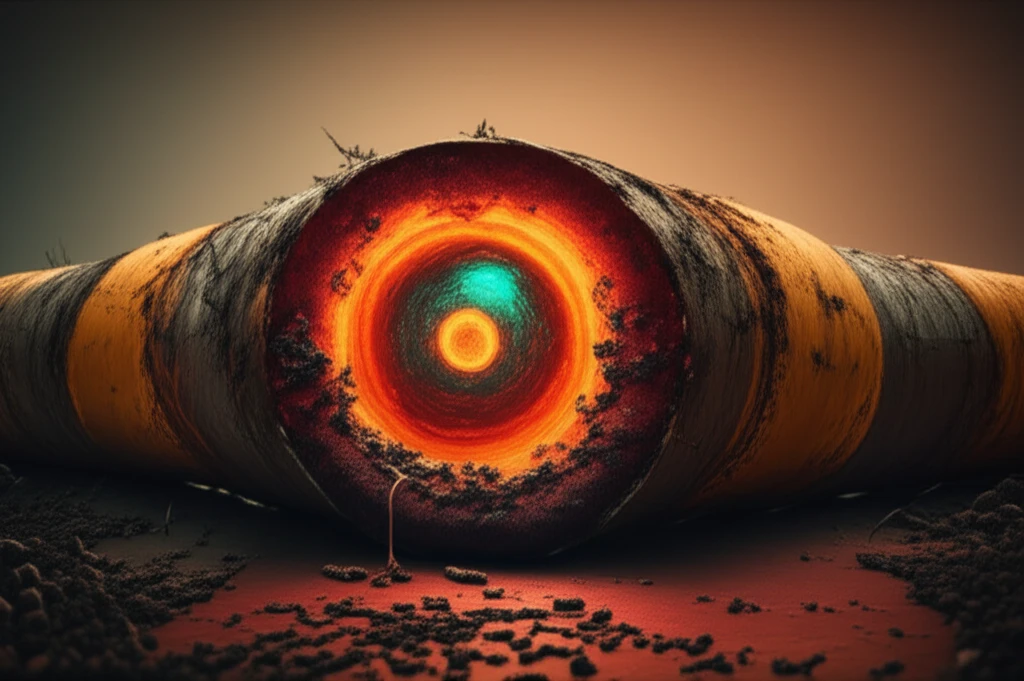
Cross-section of a repaired oil pipeline with epoxy grout.

Pipeline Rehab: Can Epoxy Grouts Save the Day?

"Exploring how material science and strategic repairs keep our energy flowing safely."


Oil and gas pipelines are the unsung heroes of modern infrastructure, silently transporting vital resources across vast distances. Yet, these critical arteries of industry face constant threats from corrosion, natural disasters, and accidental damage, leading to potential failures that can disrupt supply chains and endanger communities.

The integrity of these pipelines isn't just an engineering concern; it's an economic and environmental imperative. Damaged pipelines can lead to costly shutdowns, environmental contamination, and, in worst-case scenarios, devastating accidents. That's why the science of pipeline repair is a constantly evolving field, seeking innovative solutions to extend the lifespan and enhance the resilience of this essential infrastructure.

Enter epoxy grouts – a versatile class of materials gaining traction as key players in pipeline rehabilitation. These specially formulated compounds offer a powerful means to reinforce weakened sections, fill voids caused by corrosion, and provide a protective barrier against future degradation. But how effective are they, and what properties make them suitable for this demanding task? Let's dive into the world of epoxy grouts and explore their potential to revolutionize pipeline repair.

Epoxy Grouts: The Science Behind the Seal

Cross-section of a repaired oil pipeline with epoxy grout.

At their core, epoxy grouts are a blend of epoxy resin, a hardening agent, and various fillers designed to enhance specific properties. When these components mix, they create a chemical reaction that results in a strong, durable, and chemically resistant material. The beauty of epoxy grouts lies in their versatility; by adjusting the formulation, engineers can tailor the grout's characteristics to meet the unique demands of each repair scenario.

The selection of appropriate epoxy grout depends on a number of factors that includes compression, tensile, and flexural strength. Researchers are carrying out extensive testing to understand how different epoxy grouts behave under stress, and how they interact with existing pipeline materials. Here's a breakdown of the key properties they're investigating:

  • Compressive Strength: Essential for withstanding external pressures and loads.
  • Tensile Strength: Indicates the grout's ability to resist pulling forces and prevent cracking.
  • Flexural Strength: Measures the grout's resistance to bending and deformation.
  • Bonding Strength: Determines how well the grout adheres to the existing pipe material.
  • Chemical Resistance: Ensures the grout can withstand exposure to hydrocarbons, water, and other substances commonly found in pipelines.
The goal is to identify grout formulations that not only provide structural support but also create a long-lasting barrier against corrosion and environmental factors. This involves rigorous laboratory testing, as well as sophisticated computer modeling to predict the grout's performance over time.

The Future of Pipeline Repair: Smarter Materials, Safer Transport

Epoxy grouts represent a significant step forward in pipeline repair technology. By understanding their mechanical properties and optimizing their application, engineers can enhance the safety, extend the lifespan, and minimize the environmental impact of these critical infrastructure assets. As research continues and new formulations emerge, epoxy grouts are poised to play an even greater role in ensuring the reliable and sustainable transport of energy resources.

About this Article -

This article was crafted using a human-AI hybrid and collaborative approach. AI assisted our team with initial drafting, research insights, identifying key questions, and image generation. Our human editors guided topic selection, defined the angle, structured the content, ensured factual accuracy and relevance, refined the tone, and conducted thorough editing to deliver helpful, high-quality information.See our About page for more information.

Everything You Need To Know

1

What are epoxy grouts and why are they important for pipeline repair?

Epoxy grouts are specialized materials composed of epoxy resin, a hardening agent, and fillers. They are crucial in pipeline repair because they reinforce weakened sections, fill voids caused by corrosion, and act as a protective barrier against future degradation. Their use is driven by the need to maintain the integrity of pipelines, ensuring the safe and efficient transport of oil and gas, and preventing potential economic and environmental disasters associated with pipeline failures.

2

How do epoxy grouts work, and what makes them suitable for pipeline rehabilitation?

Epoxy grouts function through a chemical reaction when their components mix, resulting in a strong, durable, and chemically resistant material. Their suitability for pipeline rehabilitation comes from their versatility. Engineers can tailor the grout's characteristics by adjusting the formulation to meet specific repair needs. Factors like compressive, tensile, and flexural strength, as well as bonding strength and chemical resistance, are crucial in determining the grout's effectiveness and suitability for the demanding environment of a pipeline.

3

What key properties of epoxy grouts are being investigated to ensure their effectiveness in pipeline repair?

Researchers are primarily investigating several key properties of epoxy grouts to ensure their effectiveness. These include compressive strength, which helps withstand external pressures; tensile strength, which resists pulling forces; flexural strength, which measures resistance to bending; bonding strength, which determines how well the grout adheres to the pipe material; and chemical resistance, which ensures the grout can endure exposure to hydrocarbons and other substances. The goal is to create long-lasting protection and structural support for pipelines.

4

Can you explain the significance of Compressive, Tensile, and Flexural Strength in the context of epoxy grouts for pipelines?

Compressive strength is essential because pipelines face significant external pressures. Tensile strength is vital because it indicates the grout's capacity to resist cracking under pulling forces. Flexural strength is important as it measures the grout's ability to withstand bending and deformation. These properties collectively determine the grout's structural integrity and its capacity to maintain the pipeline's functionality and safety over time, especially in challenging operational environments.

5

What is the future outlook for epoxy grouts in pipeline repair, and what benefits do they offer?

Epoxy grouts represent a significant advancement in pipeline repair technology. Their future involves ongoing research and the development of new formulations to enhance their performance. By understanding their mechanical properties and optimizing their application, engineers can improve safety, extend the lifespan of pipelines, and minimize their environmental impact. The benefits include the reliable and sustainable transport of energy resources, reduced risks of failure, and lower maintenance costs, ultimately contributing to a more resilient infrastructure.

Newsletter Subscribe

Subscribe to get the latest articles and insights directly in your inbox.