
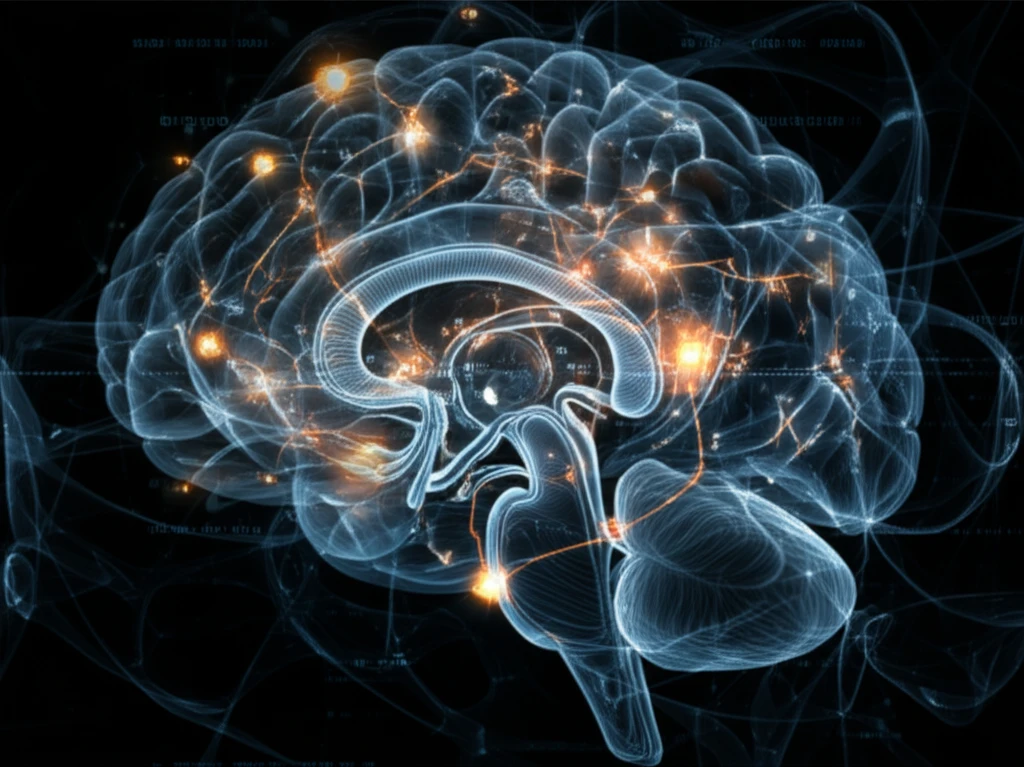
Brain network with inflammation and genetic patterns, Parkinson's disease research

Parkinson's Puzzle: Unlocking Inflammation's Role in Brain Health

"New research sheds light on how inflammation and genetics interplay in Parkinson's disease, offering potential pathways for future treatments."


Parkinson's disease (PD) is often recognized by its motor-related symptoms, but a growing body of evidence highlights the significant role of non-motor issues like anxiety, depression, and cognitive decline. Mutations in the leucine-rich repeat kinase 2 (LRRK2) gene have been linked to both familial and sporadic forms of PD, suggesting this gene plays a crucial role in the disease's development.

The LRRK2 gene is highly expressed in immune cells and brain regions affected by PD, making it a key suspect in the intersection of inflammation and neurodegeneration. While previous research has explored the role of LRRK2 in inflammatory processes within the brain, the specifics of how LRRK2 mutations impact the brain's response to inflammatory challenges remain unclear.

A recent study delves into how a specific LRRK2 mutation, G2019S, affects the body's response to inflammation. This mutation is a common culprit in Parkinson's disease, and understanding its effects could lead to new treatments. The study focuses on behavioral, neuroendocrine, and immune responses in mice with the G2019S mutation when exposed to inflammatory stimuli.

Decoding the LRRK2-G2019S Mutation and Inflammatory Responses

Brain network with inflammation and genetic patterns, Parkinson's disease research

The study investigated how the LRRK2 G2019S mutation influences the body's response to inflammatory challenges. Researchers examined behavioral, neuroendocrine, and immune responses in mice overexpressing the G2019S mutation after exposure to interferon-gamma (IFN-γ) or lipopolysaccharide (LPS), both of which trigger inflammation.

Researchers analyzed various factors, including:

  • Cytokine and corticosterone levels (indicators of inflammation and stress)
  • Behavioral changes (sickness and activity levels)
  • Brain microglia activity (immune cells in the brain)
  • Neurotransmitter levels in key brain regions
The results indicated that while LPS significantly increased cytokine and corticosterone levels and induced sickness behaviors, the G2019S mutation didn't significantly alter these responses. This suggests that the mutation doesn't have a major impact on the overall inflammatory response or sickness behavior.

Implications for Future Parkinson's Research

While the G2019S mutation didn't affect the overall inflammatory response, it did influence dopamine levels and turnover in the striatum, a brain region crucial for motor control and reward. The mutation was also linked to changes in serotonin and norepinephrine activity in the hippocampus, an area involved in mood and cognition. These findings suggest that the LRRK2 G2019S mutation primarily impacts specific neurotransmitter systems, potentially contributing to the non-motor symptoms of Parkinson's disease.

About this Article -

This article was crafted using a human-AI hybrid and collaborative approach. AI assisted our team with initial drafting, research insights, identifying key questions, and image generation. Our human editors guided topic selection, defined the angle, structured the content, ensured factual accuracy and relevance, refined the tone, and conducted thorough editing to deliver helpful, high-quality information.See our About page for more information.

Everything You Need To Know

1

What is Parkinson's disease, and what are its key features?

Parkinson's disease (PD) is a neurodegenerative disorder primarily recognized by motor-related symptoms. However, it also encompasses non-motor symptoms such as anxiety, depression, and cognitive decline. The mentioned article focuses on the interplay between inflammation, genetics, and PD's development.

2

What is the significance of the LRRK2 gene in the context of Parkinson's disease?

The LRRK2 gene plays a crucial role in both familial and sporadic forms of PD. The study specifically focuses on the G2019S mutation, which is a common variant associated with the disease. The significance of this lies in understanding how the LRRK2 G2019S mutation influences the body's response to inflammation, potentially leading to the development of targeted therapies.

3

What was the methodology used in the study to investigate the LRRK2 G2019S mutation?

The study investigates how the LRRK2 G2019S mutation influences the body's response to inflammatory challenges. Researchers exposed mice with the G2019S mutation to interferon-gamma (IFN-γ) or lipopolysaccharide (LPS), which are inflammatory triggers. They then analyzed various factors, including cytokine and corticosterone levels, behavioral changes, brain microglia activity, and neurotransmitter levels in key brain regions.

4

What were the key findings of the study regarding the LRRK2 G2019S mutation and its impact?

The G2019S mutation didn't significantly alter the overall inflammatory response or sickness behavior in the study. However, the study found that the LRRK2 G2019S mutation influenced dopamine levels and turnover in the striatum, a brain region crucial for motor control and reward. It was also linked to changes in serotonin and norepinephrine activity in the hippocampus, an area involved in mood and cognition.

5

What are the implications of this research for future Parkinson's disease research and treatment?

The study's findings suggest that the LRRK2 G2019S mutation primarily impacts specific neurotransmitter systems. This could contribute to the non-motor symptoms of Parkinson's disease. Further research into the role of the LRRK2 gene and its mutations in the context of brain inflammation offers potential pathways for future treatments, potentially helping to protect against neurodegeneration and alleviate the symptoms of PD.

Newsletter Subscribe

Subscribe to get the latest articles and insights directly in your inbox.