
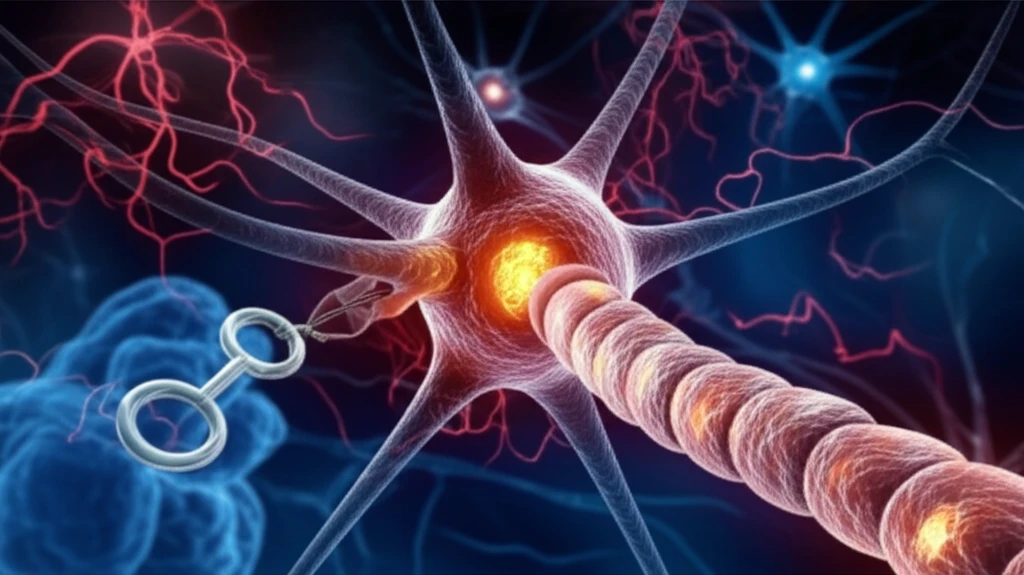
P2X4 Receptor: Unlocking the Secrets of This Key Player in Pain and Inflammation

"A deep dive into how targeting the P2X4 receptor could revolutionize treatments for neuropathic pain, neuroinflammation, and even alcohol-related disorders."
In the ever-evolving world of medical research, scientists are constantly seeking new ways to understand and treat a myriad of conditions. One promising avenue lies in the study of P2X receptors (P2XRs), a family of ionotropic receptors activated by extracellular ATP. These receptors are expressed in numerous excitable and non-excitable cells and play a crucial role in various physiological and pathological processes.
Among the P2X receptor subtypes, the P2X4 receptor (P2X4R) has garnered significant attention due to its involvement in neuropathic pain, neuroinflammation, and even alcohol-related disorders. This article delves into the fascinating world of the P2X4 receptor, exploring its functions, its potential as a therapeutic target, and the development of novel antagonists like 5-(3-bromophenyl)-1,3-dihydro-2H-benzofuro[3,2-e]-1,4-diazepin-2-one (5-BDBD) that could revolutionize the treatment of these debilitating conditions.
Imagine a future where chronic pain is no longer a life-altering burden, where neuroinflammation can be effectively managed, and where the grip of alcohol addiction can be loosened. This future may be closer than we think, thanks to the groundbreaking research on the P2X4 receptor and its potential to unlock new therapeutic possibilities.
What Exactly is the P2X4 Receptor?
P2X receptors (P2XRs) are essentially a family of gates on the surface of cells that open when they encounter ATP (adenosine triphosphate), a molecule that serves as the primary energy carrier in cells. When ATP binds to these receptors, it triggers a cascade of events that can influence a wide range of bodily functions. Among these, P2X4 receptors are particularly interesting due to their unique characteristics and involvement in several key processes.
- Synaptic Plasticity: Contributing to learning and memory processes.
- Microglia Activation: Mediating neuroinflammation in conditions like epilepsy.
- Pain Processing: Playing a crucial role in neuropathic pain pathways.
- Alcohol-Related Disorders: Emerging as a potential therapeutic target.
The Future of P2X4R-Targeted Therapies
The journey to fully understand and harness the therapeutic potential of the P2X4 receptor is still ongoing. However, the development of novel antagonists like 5-BDBD and the ongoing research into its specific mechanisms of action offer a beacon of hope for individuals suffering from neuropathic pain, neuroinflammation, and alcohol-related disorders. As scientists continue to unravel the complexities of this fascinating receptor, we can anticipate a future where targeted therapies offer more effective and personalized solutions for these debilitating conditions. By unlocking the secrets of the P2X4 receptor, we may be on the cusp of a new era in the treatment of neurological and psychiatric disorders.