
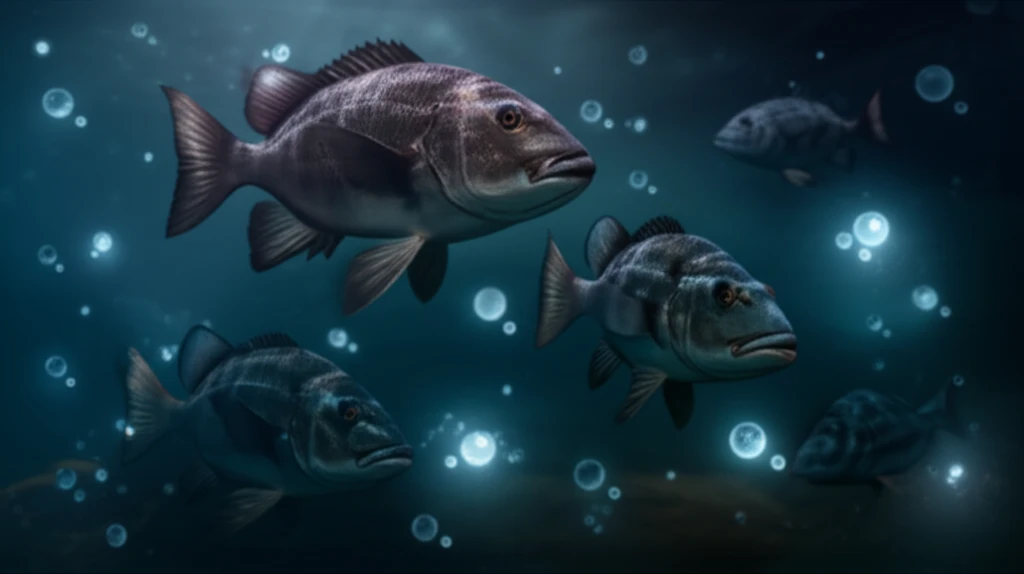
Ozone in Aquaculture: Is It Safe for Black Porgy?

"Balancing water quality and fish health in recirculating systems."
Marine finfish aquaculture in South Korea increasingly relies on recirculating aquaculture systems (RAS) to ensure stable production. RAS offers better control over environmental conditions, extending the optimal culture period and reducing the impact of external factors like temperature fluctuations and coastal contamination. However, the success of RAS hinges on effective water treatment, and ozone is emerging as a key tool.
Ozone's strong oxidation properties make it attractive for controlling pathogens, reducing solids, and improving overall water quality in aquaculture. But, while ozone can enhance water quality, it can also produce harmful byproducts known as total residual oxidants (TRO). The challenge lies in finding the right ozone dose that maximizes benefits without harming the fish.
This article breaks down a study on how different ozone doses affect black porgy (Acanthopagrus schlegeli) in RAS. The goal is to understand the impact of ozone on fish health, growth, and overall well-being, providing insights into safer and more sustainable aquaculture practices.
The Ozone Balancing Act: Benefits vs. Risks
The study evaluated black porgy in RAS with varying ozone doses: no ozone (control), 20 g ozone/kg feed/day, and 40 g ozone/kg feed/day. The 44-day trial monitored the fish for behavioral changes, growth, blood parameters, and histological alterations in their gills and livers. This comprehensive approach provides a detailed picture of ozone's effects.
- Behavior and Mortality: No significant behavioral changes or mortalities were observed in the ozonated systems.
- Growth and Blood: The ozone treatments didn't affect growth or blood parameters.
- Histological Changes: Both ozone treatments caused histological changes in the gills and livers, with more pronounced cellular damage at the higher dose.
Optimizing Ozone Use in Aquaculture: Future Directions
The study underscores the need for careful ozone management in aquaculture. While ozone offers benefits like pathogen control and improved water quality, it's crucial to minimize potential harm to fish. Histological changes in the gills and livers of black porgy indicate that even seemingly safe ozone doses can have adverse effects.
To safely harness ozone's benefits in seawater RAS, future studies should focus on:
<ul><li><b>Long-term effects of TRO:</b> Evaluating the cumulative impact of total residual oxidants on fish health over extended periods.</li><li><b>Optimal ozone doses for different species and life stages:</b> Determining the specific ozone requirements for various aquaculture species and their developmental stages.</li><li><b>Mitigation strategies:</b> Exploring methods to reduce TRO formation or minimize their toxicity in RAS.</li></ul>