
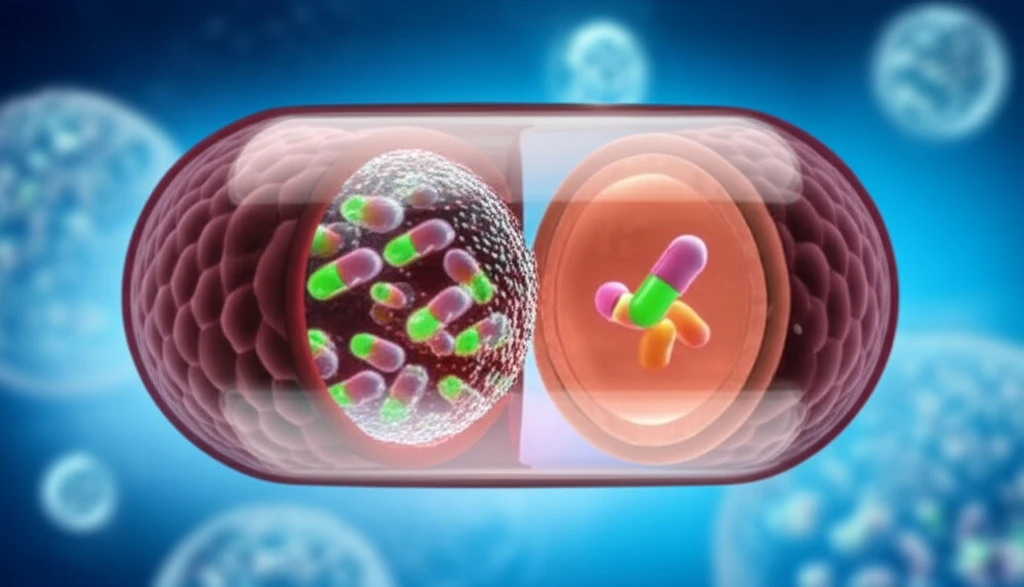
Microscopic graphene quantum dots releasing medication inside the human digestive system

Oral Drug Delivery: How Nanotechnology Can Make Pills More Effective

"Explore the future of medicine with pH-responsive bio-nanocomposites that promise targeted and efficient oral drug administration."


Imagine a world where taking medication is as precise as using a guided missile, targeting only the affected areas in your body. Oral drug delivery, the most common way we take medicine, is getting a major upgrade thanks to nanotechnology. For many, pills, capsules, and tablets are a daily part of life. While generally safe, these conventional methods come with their own set of limitations. Issues such as potential side effects, the need for frequent dosages, and the drug's impact on healthy tissues have driven researchers to seek more refined approaches.

Traditional oral medications often face a tough journey through the body. As soon as a pill is swallowed, it encounters the harsh, acidic environment of the stomach, which can degrade the drug's active ingredients before they even have a chance to work. This can lead to inconsistent absorption and reduced effectiveness. After surviving the stomach, the drug moves into the intestines, where absorption can still be unpredictable, influenced by factors like gut motility and interactions with food.

But what if we could protect the drug from the stomach’s acid, release it exactly where it’s needed in the intestines, and ensure it stays effective longer? This is where the innovative approach of bio-nanocomposites comes into play. Scientists are now exploring microscopic materials to create drug carriers that respond to specific pH levels, ensuring that medications are released precisely when and where they're most effective. This method promises to revolutionize oral drug delivery, offering greater control, reduced side effects, and improved patient outcomes.

What Are Graphene Quantum Dots and How Do They Improve Drug Delivery?

Microscopic graphene quantum dots releasing medication inside the human digestive system

At the heart of this technological advancement are graphene quantum dots (GQDs), tiny particles derived from graphene that are smaller than 10 nanometers. Think of graphene as a single layer of carbon atoms arranged in a honeycomb pattern, and GQDs as minuscule, highly functional pieces of this structure. These quantum dots possess unique optical and electronic properties that make them ideal for biomedical applications.

Researchers have found that GQDs can act as effective cross-linkers for chitosan, a natural polymer derived from the shells of crustaceans. When GQDs are combined with chitosan, they create a robust network that can encapsulate and protect drugs. One of the key advantages of using GQDs is their ability to respond to changes in pH levels, making them perfect for targeted drug delivery in the gastrointestinal tract.

  • Protection from Stomach Acid: GQDs help protect drugs from the harsh acidic environment of the stomach, preventing premature degradation.
  • Controlled Release: These nanoparticles can be designed to release their cargo in response to specific pH levels, ensuring delivery at the intended site in the intestines.
  • Enhanced Stability: The combination of GQDs and chitosan enhances the stability of the drug, allowing for a longer-lasting effect.
To further enhance this delivery system, scientists have incorporated carboxymethylcellulose (CMC), a pH-sensitive biopolymer that acts as an additional protective layer. The CMC hydrogel beads encapsulate the GQD-chitosan complex, providing a shield that responds to the varying pH levels in the digestive system. This ensures that the drug is only released when it reaches the less acidic environment of the intestines, maximizing its effectiveness and minimizing potential side effects.

The Future of Medication: Safer, More Effective, and More Targeted

This innovative approach to oral drug delivery represents a significant leap forward in pharmaceutical science. By harnessing the unique properties of graphene quantum dots and pH-responsive materials, scientists are paving the way for medications that are not only more effective but also safer and more targeted. As research continues, we can expect to see even more sophisticated drug delivery systems that improve patient outcomes and transform the way we think about medication.

About this Article -

This article was crafted using a human-AI hybrid and collaborative approach. AI assisted our team with initial drafting, research insights, identifying key questions, and image generation. Our human editors guided topic selection, defined the angle, structured the content, ensured factual accuracy and relevance, refined the tone, and conducted thorough editing to deliver helpful, high-quality information.See our About page for more information.

This article is based on research published under:

DOI-LINK: 10.1016/j.ijbiomac.2018.11.118, Alternate LINK

Title: Encapsulation Of Graphene Quantum Dot-Crosslinked Chitosan By Carboxymethylcellulose Hydrogel Beads As A Ph-Responsive Bio-Nanocomposite For The Oral Delivery Agent

Subject: Molecular Biology

Journal: International Journal of Biological Macromolecules

Publisher: Elsevier BV

Authors: Siamak Javanbakht, Ahmad Shaabani

Published: 2019-02-01

Everything You Need To Know

1

What are the primary limitations of traditional oral drug delivery methods, and how does nanotechnology aim to address them?

Traditional oral drug delivery methods often suffer from limitations such as potential side effects, the necessity for frequent dosages, and the impact of the drug on healthy tissues. Nanotechnology addresses these issues by creating targeted drug carriers like bio-nanocomposites. These carriers, utilizing materials like graphene quantum dots (GQDs) and chitosan, protect the drug from premature degradation in the stomach's acidic environment and ensure it is released precisely where needed in the intestines, enhancing effectiveness and reducing side effects. The use of carboxymethylcellulose (CMC) hydrogel beads further ensures pH-sensitive, targeted delivery.

2

How do graphene quantum dots (GQDs) enhance oral drug delivery, and what are their key advantages in this process?

Graphene quantum dots (GQDs) enhance oral drug delivery by acting as effective cross-linkers for chitosan, creating a robust network that encapsulates and protects drugs. GQDs possess unique optical and electronic properties and respond to changes in pH levels, enabling targeted drug release in the gastrointestinal tract. Key advantages include protection from stomach acid, controlled release at specific pH levels, and enhanced drug stability, leading to a longer-lasting effect. Furthermore, GQDs combined with pH-sensitive biopolymers like carboxymethylcellulose (CMC) provide an additional layer of protection, ensuring targeted release in the intestines.

3

What role does pH sensitivity play in the innovative bio-nanocomposite approach to oral drug delivery?

pH sensitivity is crucial in the bio-nanocomposite approach because it allows for targeted drug release in the gastrointestinal tract. The bio-nanocomposites, incorporating materials like graphene quantum dots (GQDs) and carboxymethylcellulose (CMC), are designed to respond to specific pH levels. This ensures that the drug is protected from the harsh, acidic environment of the stomach and is only released in the less acidic environment of the intestines, where it can be most effective. This targeted release maximizes the drug's efficacy while minimizing potential side effects.

4

Can you explain how carboxymethylcellulose (CMC) hydrogel beads contribute to the targeted delivery of drugs using bio-nanocomposites?

Carboxymethylcellulose (CMC) hydrogel beads play a pivotal role by acting as an additional protective layer within the bio-nanocomposite system. These pH-sensitive biopolymer beads encapsulate the graphene quantum dots (GQD)-chitosan complex. The CMC hydrogel responds to the varying pH levels in the digestive system, ensuring that the drug is only released when it reaches the less acidic environment of the intestines. This targeted release enhances the drug's effectiveness and reduces potential side effects by preventing premature degradation in the stomach.

5

What are the potential long-term implications of using nanotechnology, specifically graphene quantum dots (GQDs) and pH-responsive materials, for oral drug delivery?

The long-term implications of using nanotechnology, such as graphene quantum dots (GQDs) and pH-responsive materials, for oral drug delivery are significant. This approach promises to make medications safer, more effective, and more targeted. The development of sophisticated drug delivery systems can lead to improved patient outcomes and transform how medications are administered. Future research and development could lead to even more precise targeting, personalized medicine, and reduced side effects, marking a substantial advancement in pharmaceutical science. However, the long-term effects of these nanomaterials within the body still require thorough investigation.

Newsletter Subscribe

Subscribe to get the latest articles and insights directly in your inbox.