
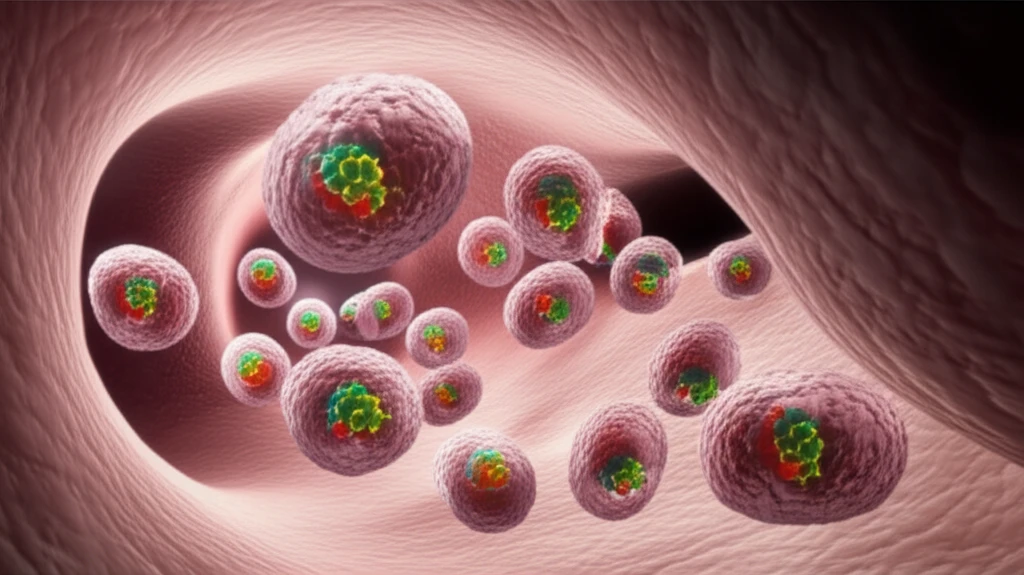
Nanocapsules delivering medication in the digestive system.

Oral Drug Delivery Breakthrough: Nanocapsules Enhance Lopinavir Bioavailability for HIV Treatment

"New research explores how nanocapsules embedded in microparticles can significantly improve the oral absorption and effectiveness of Lopinavir, a key anti-AIDS drug."


The fight against HIV/AIDS has seen remarkable progress, yet challenges persist in delivering effective treatments, particularly in resource-limited settings. One major hurdle is the limited oral bioavailability of certain antiretroviral drugs, such as Lopinavir, which is crucial for managing HIV infections. Lopinavir's effectiveness is often hampered by its poor absorption in the body, leading to inconsistent therapeutic outcomes.

Lopinavir, while potent, faces significant obstacles in the body. It is susceptible to pre-systemic metabolism and efflux, meaning it is broken down or expelled from the body before it can exert its full effect. This is largely due to factors like P-glycoprotein (P-gp) efflux and CYP3A metabolism, which reduce the amount of Lopinavir that reaches the bloodstream. To combat these issues, Lopinavir is often co-administered with Ritonavir, which inhibits CYP3A and improves Lopinavir's bioavailability. However, Ritonavir can cause side effects and drug interactions, prompting the need for alternative delivery methods.

Recent research has focused on novel drug delivery systems to enhance Lopinavir's oral bioavailability without relying on Ritonavir. One promising approach involves encapsulating Lopinavir within nanocapsules embedded in microparticles. This innovative method aims to protect the drug from degradation and efflux, ensuring it reaches the target sites more effectively. A new study published in the Journal of Drug Targeting explores the potential of this nanocapsule-microparticle system to improve Lopinavir's efficacy and reduce potential side effects.

How Nanocapsules Enhance Lopinavir Delivery

Nanocapsules delivering medication in the digestive system.

The core of this innovative approach lies in the creation of biodegradable nanocapsules made from PLGA, a biocompatible polymer. Lopinavir is carefully incorporated into these nanocapsules, which are then embedded within larger microparticles. This dual-layer system offers several advantages:

Protection from Metabolism: The nanocapsules shield Lopinavir from CYP3A metabolism in the gut and liver, preventing its premature breakdown.

  • Bypassing Efflux: The microparticles help Lopinavir evade P-gp efflux, ensuring it is not pumped out of cells before being absorbed.
  • Sustained Release: The system allows for a controlled release of Lopinavir, maintaining therapeutic levels in the bloodstream over a longer period.
  • Targeted Delivery: The microparticles can be designed to adhere to the intestinal mucosa, increasing the drug's absorption at the intended site.
The researchers used a spray-drying technique to create these specialized microparticles. They then conducted in vitro and in vivo studies to assess the effectiveness of the delivery system. In vitro release studies showed that Lopinavir was released from the microparticles at a controlled rate, particularly at a pH of 7.4, which mimics the conditions in the small intestine. In vivo studies in rats demonstrated a significant improvement in Lopinavir's bioavailability compared to traditional oral administration.

Implications for Future HIV Treatment

This research offers a promising avenue for improving the oral delivery of Lopinavir and potentially other antiretroviral drugs. By enhancing bioavailability and reducing the need for Ritonavir, this nanocapsule-microparticle system could lead to more effective, less toxic, and more convenient HIV treatments. Further studies are needed to evaluate the long-term efficacy and safety of this approach in human clinical trials. If successful, this innovative drug delivery system could significantly impact the lives of millions living with HIV/AIDS, particularly in underserved communities where access to advanced medical care is limited.

About this Article -

This article was crafted using a human-AI hybrid and collaborative approach. AI assisted our team with initial drafting, research insights, identifying key questions, and image generation. Our human editors guided topic selection, defined the angle, structured the content, ensured factual accuracy and relevance, refined the tone, and conducted thorough editing to deliver helpful, high-quality information.See our About page for more information.

Everything You Need To Know

1

Why is Lopinavir difficult to deliver effectively as an oral medication?

Lopinavir is an antiretroviral drug crucial for managing HIV infections, but its effectiveness is limited by its poor oral bioavailability. This means that when taken orally, much of the drug is not absorbed into the bloodstream, reducing its ability to combat the virus. Its limited oral bioavailability is due to factors like P-glycoprotein (P-gp) efflux and CYP3A metabolism, which reduce the amount of Lopinavir that reaches the bloodstream. This is significant because it directly impacts the drug's ability to control the HIV virus, often requiring higher doses or the addition of other drugs like Ritonavir to enhance its absorption.

2

How do nanocapsules improve the effectiveness of Lopinavir?

Nanocapsules, specifically those made from PLGA, a biocompatible polymer, enhance Lopinavir delivery by encapsulating the drug within a protective layer. These nanocapsules are then embedded within microparticles. This system shields Lopinavir from CYP3A metabolism, preventing its breakdown in the gut and liver, and helps it evade P-gp efflux, ensuring it is not pumped out of cells before being absorbed. This is important because it allows more Lopinavir to reach the bloodstream, improving its effectiveness at lower doses and potentially reducing side effects.

3

What specific problem does using nanocapsules solve regarding Lopinavir's journey through the body?

The use of nanocapsules addresses the issue of Lopinavir's susceptibility to pre-systemic metabolism and efflux. By encapsulating Lopinavir within nanocapsules embedded in microparticles, the drug is protected from being broken down or expelled from the body before it can exert its full effect. The microparticles are designed to adhere to the intestinal mucosa, increasing the drug's absorption at the intended site and allowing for a controlled release of Lopinavir. This sustained release maintains therapeutic levels in the bloodstream over a longer period. This is a significant advantage over traditional oral administration, where Lopinavir's bioavailability is often inconsistent.

4

What is Ritonavir's role in HIV treatment with Lopinavir, and how do nanocapsules change this?

Ritonavir is often co-administered with Lopinavir to inhibit CYP3A metabolism and improve Lopinavir's bioavailability. However, Ritonavir can cause side effects and drug interactions. The nanocapsule-microparticle system aims to enhance Lopinavir's oral bioavailability without relying on Ritonavir. By protecting Lopinavir from degradation and efflux, the nanocapsules ensure it reaches the target sites more effectively. This is important because it could lead to more effective, less toxic, and more convenient HIV treatments.

5

What are the potential impacts of using nanocapsules for Lopinavir delivery in the future?

The potential implications include more effective HIV treatments with fewer side effects and improved convenience for patients. If the nanocapsule-microparticle system proves successful in human clinical trials, it could significantly impact the lives of millions living with HIV/AIDS, particularly in underserved communities where access to advanced medical care is limited. This innovative drug delivery system could also be applied to other antiretroviral drugs with similar bioavailability challenges. However, long-term efficacy and safety must be evaluated in clinical trials.

Newsletter Subscribe

Subscribe to get the latest articles and insights directly in your inbox.