
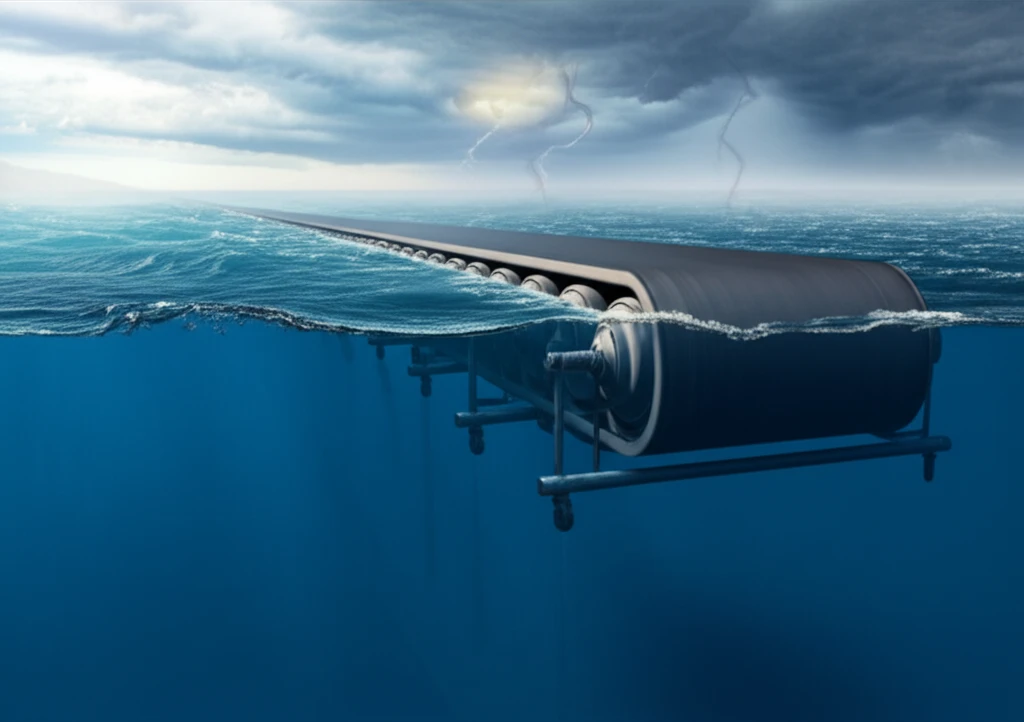
Surreal illustration of AMOC slowdown and weather chaos

Ocean's Warning: How a 30% AMOC Slowdown Could Change Your Weather

"Uncover the surprising link between a major ocean current slowdown and extreme weather, from European winters to hurricane seasons."


The Atlantic Meridional Overturning Circulation (AMOC) is a critical system that drives global climate. Like a giant conveyor belt, it transports warm surface waters northward and returns cold, deep waters southward. This process distributes heat and influences regional weather patterns across the globe.

Scientists have been monitoring the AMOC for years, keenly aware of its potential instability. A significant disruption in this circulation could trigger cascading effects, leading to unexpected and severe weather events. This makes understanding the AMOC and its fluctuations paramount.

A study published in Ocean Science details a concerning event: a 30% slowdown in the AMOC that occurred during 2009-2010. This slowdown resulted in a redistribution of heat in the Atlantic Ocean, with far-reaching consequences.

What Happened During the 2009-2010 AMOC Slowdown?

Surreal illustration of AMOC slowdown and weather chaos

Between 2009 and 2010, researchers observed a dramatic decrease in the AMOC's strength. This 30% slowdown meant a significant reduction in the amount of heat transported northward across 25° N latitude. The impact on ocean heat transport was around 0.4PW, which is substantial.

The event was marked by specific shifts in ocean flow:

  • Weakening Warm Water Flow: The northward flow of warm water above 1000 meters decreased significantly.
  • Reduced Cold Water Return: The southward flow of cold water below 1000 meters also diminished.
  • Gulf Stream and Ekman Transports Weakened: These key components of the AMOC also experienced a reduction in strength.
To define the impact, scientists compared the AMOC during the period of the slowdown to a baseline established over the first five years of observation, from April 2004 to December 2008. Cumulative effects reached a maximum deficit by June 2010, showing how long and deeply these changes resonated.

A Changing Ocean, A Changing Climate

The AMOC is a critical component of Earth's climate system, and disruptions like the 2009-2010 slowdown have significant implications. While the exact causes of this event are still under investigation, its impact serves as a stark reminder of the interconnectedness of ocean currents, weather patterns, and global climate. Continued monitoring and research are essential to understanding and predicting future changes in this vital ocean circulation.

About this Article -

This article was crafted using a human-AI hybrid and collaborative approach. AI assisted our team with initial drafting, research insights, identifying key questions, and image generation. Our human editors guided topic selection, defined the angle, structured the content, ensured factual accuracy and relevance, refined the tone, and conducted thorough editing to deliver helpful, high-quality information.See our About page for more information.

This article is based on research published under:

DOI-LINK: 10.5194/os-10-683-2014, Alternate LINK

Title: Impact Of A 30% Reduction In Atlantic Meridional Overturning During 2009–2010

Subject: Cell Biology

Journal: Ocean Science

Publisher: Copernicus GmbH

Authors: H. L. Bryden, B. A. King, G. D. Mccarthy, E. L. Mcdonagh

Published: 2014-08-06

Everything You Need To Know

1

What is the Atlantic Meridional Overturning Circulation (AMOC) and why is it important?

The Atlantic Meridional Overturning Circulation (AMOC) is a vital ocean current system, often described as a giant conveyor belt. It transports warm surface waters northward and returns cold, deep waters southward. This process is crucial for distributing heat around the globe, significantly influencing regional and global weather patterns. A disruption to the AMOC can lead to cascading effects, triggering unexpected and severe weather events. Its stability is paramount for maintaining predictable climate conditions, and changes in its behavior can have far-reaching consequences. Further research into the AMOC also considers salinity and its density impacts on ocean stratification.

2

What happened during the 2009-2010 slowdown of the Atlantic Meridional Overturning Circulation (AMOC)?

During 2009-2010, a 30% slowdown in the Atlantic Meridional Overturning Circulation (AMOC) was observed. This significant reduction meant a substantial decrease in the amount of heat transported northward across 25° N latitude. The impact on ocean heat transport was around 0.4PW. Specifically, the northward flow of warm water above 1000 meters weakened, and the southward flow of cold water below 1000 meters diminished. Key components of the AMOC, such as the Gulf Stream and Ekman transports, also experienced a reduction in strength. The cumulative effects reached a maximum deficit by June 2010, highlighting the duration and intensity of these changes.

3

How was the 2009-2010 Atlantic Meridional Overturning Circulation (AMOC) slowdown measured and compared?

Scientists defined the impact of the 2009-2010 Atlantic Meridional Overturning Circulation (AMOC) slowdown by comparing the AMOC's behavior during the slowdown period to a baseline. This baseline was established using observations from April 2004 to December 2008, representing the AMOC's state before the event. By comparing the AMOC during the slowdown to this baseline, researchers could quantify the specific changes in heat transport and water flow, providing a clear understanding of the slowdown's magnitude and impact. The maximum cumulative deficit was observed by June 2010, indicating the peak of the slowdown's effects.

4

What are the potential implications of a significant slowdown in the Atlantic Meridional Overturning Circulation (AMOC) for global climate?

A significant slowdown in the Atlantic Meridional Overturning Circulation (AMOC) can have far-reaching implications for global climate. Because the AMOC redistributes heat around the planet, a slowdown can lead to cooler temperatures in regions that rely on the current's warmth, such as Europe, and can alter precipitation patterns worldwide. This can affect agriculture, water resources, and overall weather stability. Changes in the AMOC can also impact hurricane seasons, potentially leading to more intense or frequent storms due to altered ocean temperatures and atmospheric conditions. The interconnectedness of ocean currents and global climate means that disruptions to the AMOC can trigger a cascade of effects, making it crucial to monitor and understand its behavior.

5

What factors are believed to contribute to the instability of the Atlantic Meridional Overturning Circulation (AMOC), and what further research is needed?

The instability of the Atlantic Meridional Overturning Circulation (AMOC) is thought to be influenced by a combination of factors, including changes in ocean temperature, salinity, and density. Melting ice sheets and increased precipitation can introduce freshwater into the North Atlantic, reducing the density of surface waters and potentially slowing down the sinking of cold, salty water that drives the AMOC. Changes in wind patterns and atmospheric conditions can also play a role. Further research is needed to fully understand the complex interactions that govern the AMOC's stability and to improve climate models' ability to predict future changes in this vital ocean circulation. Specifically, more data is needed on deep-sea temperatures and salinity levels to better understand water density dynamics.

Newsletter Subscribe

Subscribe to get the latest articles and insights directly in your inbox.