
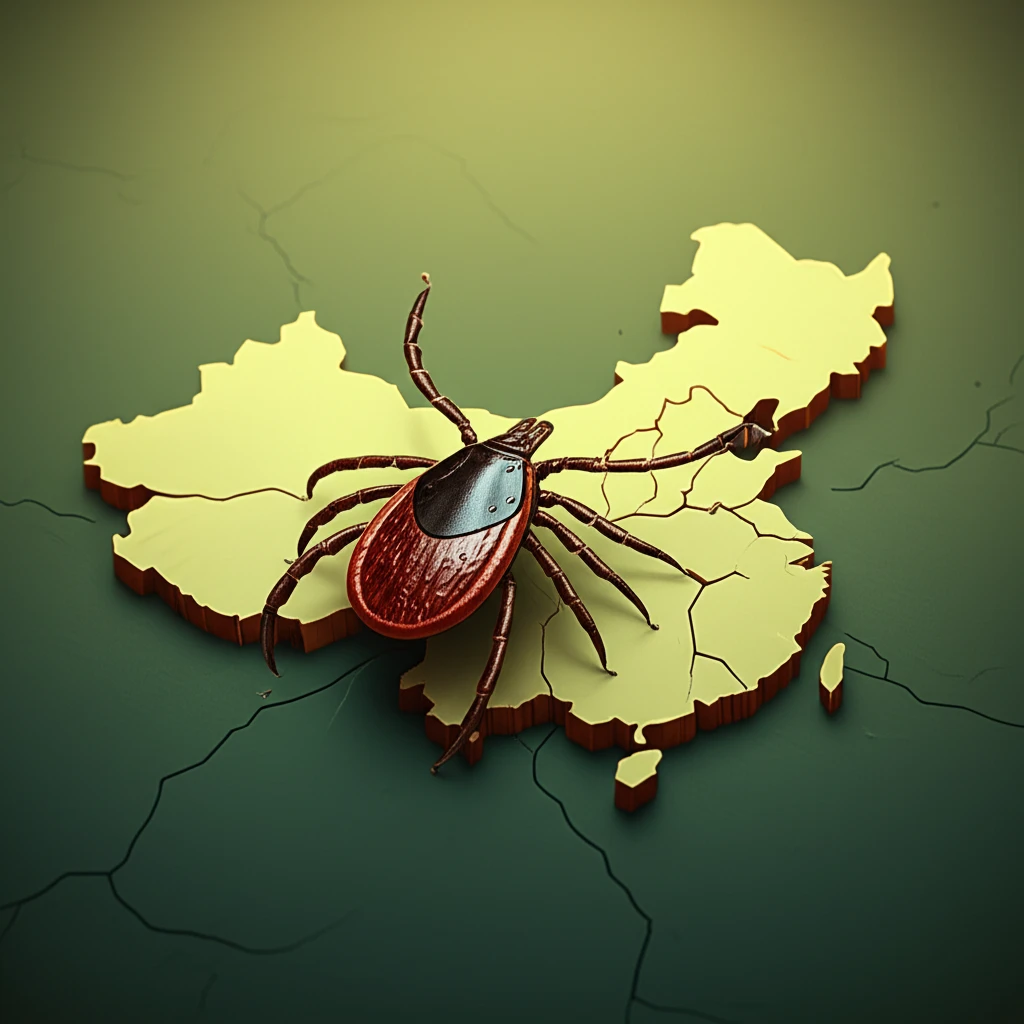
New Spotted Fever Rickettsia Discovered in China: What You Need to Know

"A novel strain of spotted fever group Rickettsia, designated Rickettsia sp. XY99, has been identified in China, raising concerns about emerging infectious diseases and the importance of tick-borne illness awareness."
Spotted fever group (SFG) rickettsiae are a family of bacteria transmitted globally through tick bites. While some SFG rickettsiae are well-known, others, once considered non-harmful, are now emerging as human pathogens. This evolving landscape of tick-borne illnesses presents a growing concern for public health.
In China, awareness of SFG rickettsioses is increasing, with a few species already identified in human blood samples. A recent study sheds light on a novel SFG Rickettsia, designated Rickettsia sp. XY99, discovered in patients from the eastern central region of the country.
This article explores the discovery of Rickettsia sp. XY99, detailing its unique characteristics, clinical presentation, and implications for public health. Understanding this emerging infectious disease is crucial for healthcare professionals and individuals living in or traveling to affected areas.
Rickettsia sp. XY99: A Novel Threat
In 2015, researchers in China investigated patients presenting with acute fever and potential tick-borne illness. Blood samples were analyzed to detect SFG rickettsiae, leading to the identification of Rickettsia sp. XY99. Genetic analysis revealed that this strain is distinct from previously known SFG rickettsiae, warranting its classification as a novel genotype.
- All patients resided in the Xinyang City area of Henan Province and were farmers.
- Most patients experienced illness onset between June and July 2015.
- Two patients reported a history of tick bites, while the remaining three had contact with livestock.
- Common symptoms included fever, asthenia, anorexia, nausea, leukopenia, thrombocytopenia, and elevated hepatic aminotransferase levels.
- Notably, none of the patients presented with the classic rash or eschar often associated with spotted fever rickettsioses.
Implications and Future Directions
The discovery of Rickettsia sp. XY99 highlights the ongoing threat of emerging tick-borne diseases. The absence of rash or eschar in these patients underscores the importance of considering SFG rickettsiae in differential diagnoses, even when classic symptoms are absent.
Further research is needed to fully characterize Rickettsia sp. XY99, including its geographic distribution, vector specificity (which ticks transmit it), and optimal treatment strategies. Isolation of the bacteria and comprehensive genetic analysis are crucial for a deeper understanding.
Public health initiatives focused on tick-borne disease prevention are essential. These include educating the public about tick bite prevention measures, promoting early diagnosis and treatment, and enhancing surveillance efforts to detect and monitor emerging Rickettsia species.