
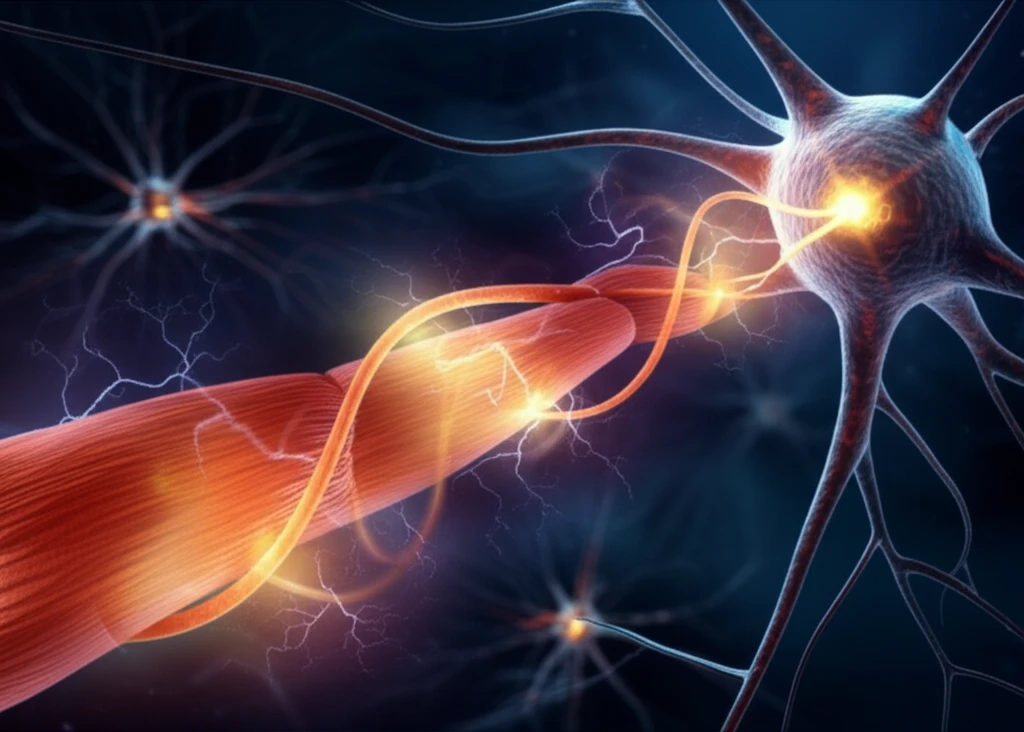
Muscle Velocity Recovery Cycles: A New Window into Nerve Damage?

"Exploring MVRC as a diagnostic tool for neurogenic muscle conditions."
Neuromuscular disorders, impacting both nerves and muscles, present complex diagnostic challenges. Electromyography (EMG) is a cornerstone in assessing these conditions, but researchers are continually exploring novel techniques to refine diagnostic accuracy and understanding.
One such promising technique is the Muscle Velocity Recovery Cycle (MVRC). MVRC assesses the muscle membrane's properties, offering a unique perspective beyond traditional EMG measures. While previously studied in myopathies (muscle diseases), its application to neurogenic conditions (nerve-related muscle impairments) is now under investigation.
A recent study delved into the potential of MVRC in diagnosing neurogenic muscle conditions, specifically examining its ability to differentiate between healthy and nerve-damaged muscles. The research also investigated the relationship between MVRC variables and spontaneous electrical activity, a common indicator of nerve damage.
MVRC: Unveiling Muscle Membrane Dynamics
Muscle Velocity Recovery Cycles (MVRC) offer a sophisticated method for evaluating the responsiveness and health of muscle cell membranes. Unlike standard EMG, which primarily captures electrical activity related to muscle contraction, MVRC probes the intrinsic properties of the muscle membrane itself.
- Muscle Relative Refractory Period (MRRP): This measures the time it takes for the muscle membrane to regain its full excitability after an initial stimulus. A prolonged MRRP might suggest membrane dysfunction.
- Supernormality (Early, Late, and Residual): Supernormality refers to periods where the muscle membrane exhibits heightened excitability following conditioning stimuli. Analyzing early, late, and residual supernormality phases can reveal subtle changes in membrane properties indicative of underlying pathology.
The Future of MVRC in Neuromuscular Diagnostics
The study's findings suggest that MVRC holds promise as a complementary diagnostic tool for neurogenic muscle conditions. The observed correlations between MVRC parameters, spontaneous activity, and the differences between neurogenic and healthy muscles highlight the potential of this technique.
However, further research is needed to fully validate and refine the use of MVRC in clinical practice. Larger studies, incorporating diverse patient populations and comparing MVRC results with established diagnostic methods, are crucial.
Ultimately, MVRC could contribute to earlier and more accurate diagnoses of neuromuscular disorders, facilitating timely interventions and improved patient outcomes. As research progresses, MVRC may become an integral part of the diagnostic armamentarium for neuromuscular specialists.