
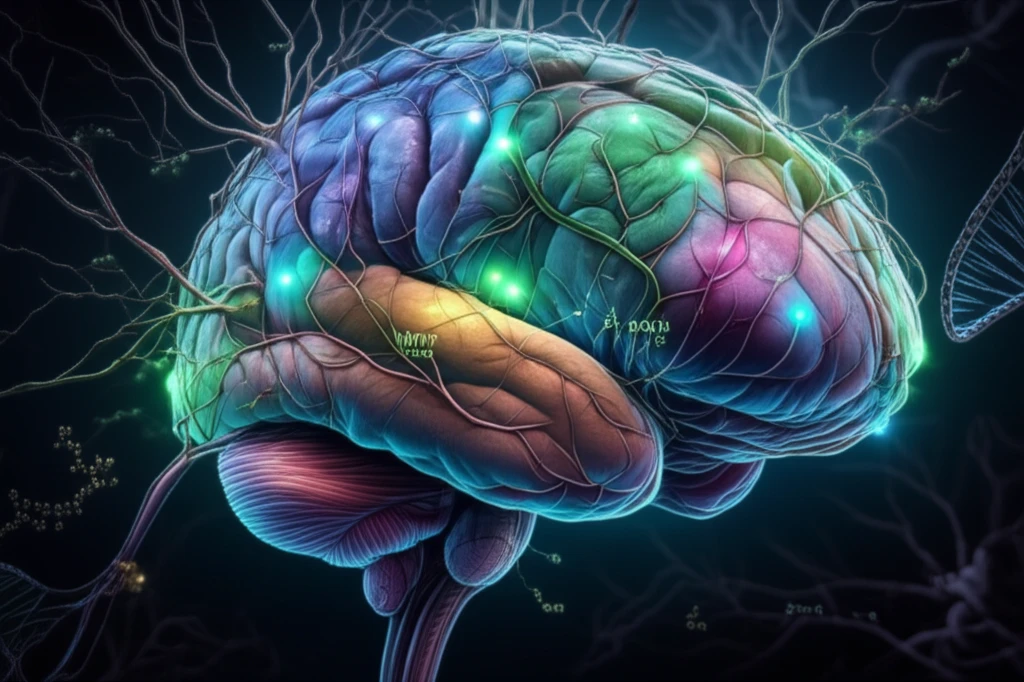
Illustration of a brain with glowing methyl groups representing DNA methylation, symbolizing health and healing.

MS and Memory: Unlocking the Epigenetic Secrets of Brain Demyelination

"Could DNA methylation be the key to understanding and treating memory loss in multiple sclerosis patients?"


Multiple Sclerosis (MS), a debilitating autoimmune disease, doesn't just attack the body; it often targets the mind. Cognitive impairments, especially memory loss, are common in MS patients, significantly impacting their quality of life. What if we could understand, and ultimately reverse, these cognitive declines?

Groundbreaking research is beginning to unravel the intricate link between demyelination (the stripping of protective insulation from nerve fibers in the brain), altered gene expression, and memory impairment in MS. One promising area of study focuses on epigenetics – specifically, DNA methylation, a process that can switch genes on or off. Understanding how DNA methylation patterns change in the brains of MS patients could unlock new therapeutic strategies.

This article explores a recent study investigating DNA methylation in the hippocampus, a critical brain region for memory, in individuals with MS. By examining changes in DNA methylation, researchers hope to identify potential targets for future treatments to protect memory and cognitive function in those living with MS.

Decoding DNA Methylation in the Demyelinated Hippocampus

Illustration of a brain with glowing methyl groups representing DNA methylation, symbolizing health and healing.

The study delved into the hippocampus of MS patients, comparing myelinated (healthy) and demyelinated (damaged) tissue. The core question: Does demyelination alter DNA methylation patterns, and if so, how?

Here’s what the research revealed:

  • Increased DNA Methylation Enzymes: The researchers found elevated levels of DNA methyltransferases (DNMTs), enzymes that add methyl groups to DNA, in demyelinated hippocampi.
  • Decreased De-methylation Enzymes: Conversely, levels of ten-eleven translocation (TET) enzymes, which remove methyl groups, were reduced.
  • Specific Gene Targets: Comparative methylation profiling identified specific genes with altered methylation patterns in demyelinated tissue. Some genes showed hypo-methylation (decreased methylation), while others showed hyper-methylation (increased methylation).
  • Validation: The identified genes were validated in independent datasets, strengthening the findings.
  • Inverse Correlation: DNA methylation changes inversely correlated with mRNA levels of the target genes, suggesting that methylation was indeed influencing gene expression.
  • Cell-Specific Expression: Many of the identified genes are expressed by astrocytes and neurons, key cells in the central nervous system.
These findings suggest that demyelination triggers a cascade of epigenetic changes, altering the expression of genes critical for neuronal function and survival in the hippocampus.

The Future of Memory Preservation in MS

This study provides crucial insights into the epigenetic mechanisms underlying memory impairment in MS. By identifying specific genes affected by DNA methylation, researchers have opened new avenues for therapeutic development.

Imagine a future where targeted therapies can correct these methylation imbalances, restoring normal gene expression and protecting neurons from damage. This could translate to improved memory, enhanced cognitive function, and a better quality of life for individuals with MS.

While much work remains, this research represents a significant step towards understanding and ultimately combating the cognitive challenges posed by MS. Further studies are needed to fully elucidate the role of DNA methylation in different brain regions and cell types, paving the way for personalized epigenetic therapies.

About this Article -

This article was crafted using a human-AI hybrid and collaborative approach. AI assisted our team with initial drafting, research insights, identifying key questions, and image generation. Our human editors guided topic selection, defined the angle, structured the content, ensured factual accuracy and relevance, refined the tone, and conducted thorough editing to deliver helpful, high-quality information.See our About page for more information.

This article is based on research published under:

DOI-LINK: 10.1038/s41598-017-08623-5, Alternate LINK

Title: Dna Methylation In Demyelinated Multiple Sclerosis Hippocampus

Subject: Multidisciplinary

Journal: Scientific Reports

Publisher: Springer Science and Business Media LLC

Authors: Anthony M. Chomyk, Christina Volsko, Ajai Tripathi, Sadie A. Deckard, Bruce D. Trapp, Robert J. Fox, Ranjan Dutta

Published: 2017-08-18

Everything You Need To Know

1

How does demyelination in the brains of Multiple Sclerosis patients affect DNA methylation?

Research indicates that demyelination in the hippocampus of individuals with Multiple Sclerosis leads to alterations in DNA methylation patterns. Specifically, there's an increase in DNA methyltransferases (DNMTs), which add methyl groups to DNA, and a decrease in ten-eleven translocation (TET) enzymes, responsible for removing these methyl groups. These changes influence gene expression, particularly in astrocytes and neurons, affecting neuronal function and survival.

2

What exactly is DNA methylation, and how is it relevant to Multiple Sclerosis-related memory loss?

DNA methylation is an epigenetic process where methyl groups are added to DNA, influencing gene expression. Increased DNA methylation, or hyper-methylation, generally silences genes, while decreased methylation, or hypo-methylation, can activate them. In the context of Multiple Sclerosis, changes in DNA methylation patterns in the hippocampus, mediated by enzymes like DNA methyltransferases (DNMTs) and ten-eleven translocation (TET) enzymes, are associated with memory impairment.

3

Did the study identify any specific genes impacted by changes in DNA methylation in Multiple Sclerosis patients, and what are the implications?

The research identified that specific genes in the hippocampus of Multiple Sclerosis patients exhibit altered methylation patterns due to demyelination. The study highlights that DNA methylation changes inversely correlated with mRNA levels of the target genes, meaning that changes in DNA methylation influenced gene expression. These genes are expressed by astrocytes and neurons, indicating their importance in central nervous system function. The implication is that by targeting these specific genes with future therapies, memory and cognitive functions could potentially be improved.

4

How does this research advance our understanding of cognitive impairment in Multiple Sclerosis?

This research enhances the understanding of cognitive decline in Multiple Sclerosis by pinpointing epigenetic mechanisms, specifically DNA methylation, that contribute to memory loss. By identifying how demyelination affects DNA methylation patterns and, in turn, influences gene expression in the hippocampus, it opens avenues for developing targeted therapies. The study also validates identified genes in independent datasets strengthening the findings.

5

Based on the findings about DNA methylation, what potential therapeutic strategies could be developed to combat memory loss in Multiple Sclerosis?

The study suggests that by modulating DNA methylation in the hippocampus, it might be possible to improve memory and cognitive function in Multiple Sclerosis patients. Future therapies could target DNA methyltransferases (DNMTs) or ten-eleven translocation (TET) enzymes to restore normal DNA methylation patterns. However, further research is needed to fully understand the long-term effects and safety of such interventions. Other epigenetic mechanisms, such as histone modification and non-coding RNA, could also be explored for a more comprehensive understanding of cognitive decline in Multiple Sclerosis.

Newsletter Subscribe

Subscribe to get the latest articles and insights directly in your inbox.