
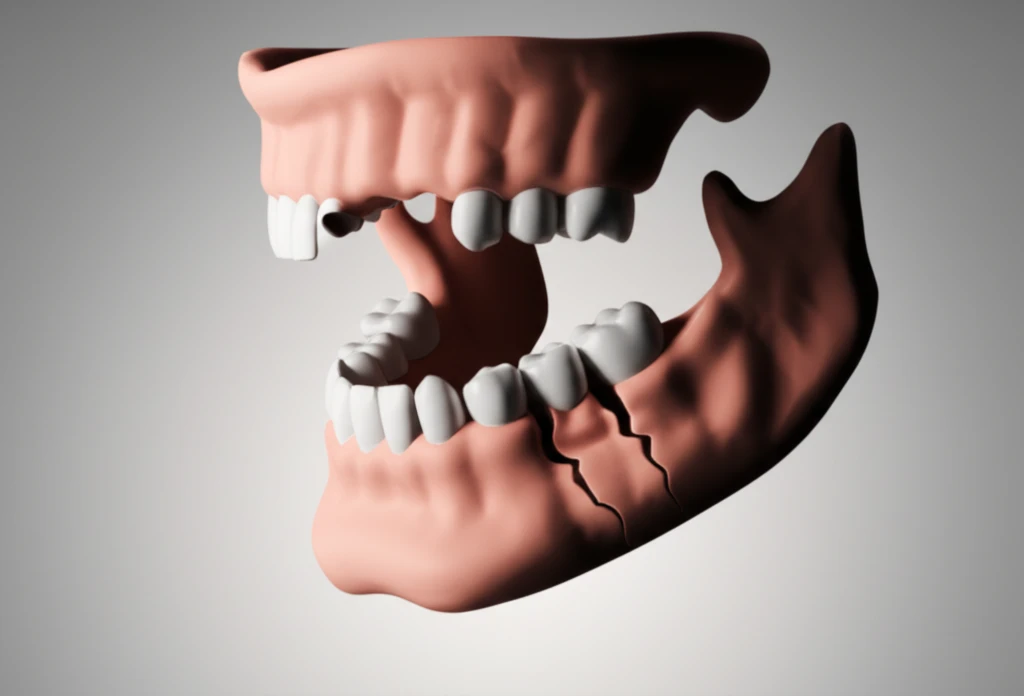
Illustration of a jaw with missing molars and a cracked TMJ, symbolizing the impact of tooth loss on jaw joint health.

Missing Molars: How Tooth Loss Affects Your Jaw Joint and Overall Health

"Uncover the surprising link between missing molars, TMJ disorders, and long-term dental health. Learn preventative strategies and treatment options to protect your smile and jaw."


The temporomandibular joint (TMJ) is a critical hinge connecting your jaw to your skull, essential for everyday functions like chewing and speaking. Maintaining its health is closely tied to the alignment and condition of your teeth. When key teeth, such as molars, are lost and not replaced, it can disrupt the TMJ's function and lead to various complications.

Molars, especially the first molars, play a vital role in maintaining the stability of your bite. When these teeth are missing, it can lead to a cascade of issues, including the shifting of adjacent teeth, over-eruption of opposing teeth, and changes in your bite's vertical dimension. While these changes may seem minor at first, they can have significant long-term effects on your TMJ.

This article explores how the loss of mandibular molars can lead to temporomandibular joint dysfunction (TMD). By understanding the connection between missing molars and TMJ health, you can take proactive steps to protect your smile and overall well-being.

The Domino Effect: How Missing Molars Trigger TMJ Problems

Illustration of a jaw with missing molars and a cracked TMJ, symbolizing the impact of tooth loss on jaw joint health.

When molars are lost and not promptly replaced, several changes can occur in the mouth. These changes, although gradual, can significantly impact the alignment and function of the jaw joint. These changes include:

These shifts can create uneven pressure on the jaw joint, leading to discomfort and dysfunction. The TMJ is designed to distribute forces evenly during chewing and other activities. When teeth are missing, this balance is disrupted, potentially leading to pain, clicking, and other TMJ-related symptoms.

  • Tooth Shifting: Teeth adjacent to the gap may drift or tilt into the empty space, altering the bite.
  • Supraeruption: The opposing teeth in the upper arch can over-erupt, extending beyond the natural occlusal plane.
  • Changes in Vertical Dimension: The distance between the upper and lower jaws can decrease, leading to a collapsed bite.
  • Deep Bite: An increased overbite, where the upper front teeth excessively overlap the lower front teeth, can develop.
A study included 174 participants with missing mandibular first molars. The results indicated that changes like the supra eruption of opposing molars and the drifting of adjacent teeth were significantly associated with asymptomatic clicking of the TMJ. Additionally, patients with deep bites showed radiographic evidence of condylar flattening, a sign of TMJ remodeling due to the altered bite.

Protecting Your Jaw: Why Replacing Missing Molars Matters

Missing molars can have far-reaching consequences, affecting not only your dental health but also the health of your TMJ. Recognizing the connection between tooth loss and TMJ disorders is the first step toward protecting your smile and jaw function. If you have missing molars, talk to your dentist about replacement options to restore your bite and prevent potential TMJ problems. Early intervention can help maintain your oral health and overall well-being.

About this Article -

This article was crafted using a human-AI hybrid and collaborative approach. AI assisted our team with initial drafting, research insights, identifying key questions, and image generation. Our human editors guided topic selection, defined the angle, structured the content, ensured factual accuracy and relevance, refined the tone, and conducted thorough editing to deliver helpful, high-quality information.See our About page for more information.

Everything You Need To Know

1

How can missing molars specifically lead to temporomandibular joint (TMJ) problems?

The loss of molars, particularly mandibular first molars, can trigger a cascade of dental issues that impact the temporomandibular joint (TMJ). Specifically, tooth shifting occurs as adjacent teeth drift into the empty space, supraeruption happens when opposing teeth over-erupt, and the vertical dimension changes, leading to a collapsed bite or deep bite. These changes create uneven pressure on the temporomandibular joint (TMJ), disrupting its ability to evenly distribute forces during chewing and leading to discomfort, clicking, and other temporomandibular joint (TMJ) related symptoms. The absence of molars leads to bite instability and jaw joint disfunction. Replacing missing mandibular first molars is important for ensuring bite stability.

2

What are the initial signs that missing molars are affecting my temporomandibular joint (TMJ)?

Initial signs that missing molars are affecting the temporomandibular joint (TMJ) may include asymptomatic clicking of the temporomandibular joint (TMJ), which can be detected through radiographic evidence of condylar flattening. This flattening indicates temporomandibular joint (TMJ) remodeling due to the altered bite from tooth shifting and supraeruption of opposing molars. While clicking might not initially cause pain, it's a sign of uneven pressure and potential dysfunction in the temporomandibular joint (TMJ). Additionally, the development of a deep bite where upper front teeth excessively overlap the lower front teeth can also be an early indicator of temporomandibular joint (TMJ) issues related to missing molars.

3

What is the role of molars, especially first molars, in maintaining overall dental health and preventing temporomandibular joint (TMJ) issues?

Molars, especially the first molars, are vital for maintaining bite stability, acting as a cornerstone for proper alignment and force distribution during chewing. When these teeth are missing, the stability of the bite is compromised, leading to tooth shifting, supraeruption, changes in vertical dimension, and potentially a deep bite. These changes disrupt the even distribution of forces on the temporomandibular joint (TMJ), leading to dysfunction and potentially temporomandibular joint (TMJ) disorders. Replacing missing molars helps restore the bite's stability, preventing uneven pressure on the temporomandibular joint (TMJ) and maintaining long-term dental health.

4

Besides tooth shifting, what other specific dental changes occur when molars are missing, and how do these contribute to temporomandibular joint (TMJ) dysfunction?

Beyond tooth shifting, other dental changes that occur due to missing molars include supraeruption of opposing teeth, changes in vertical dimension (leading to a collapsed bite), and the development of a deep bite. Supraeruption causes the opposing teeth to extend beyond the natural occlusal plane, creating uneven contact points. Changes in vertical dimension alter the distance between the upper and lower jaws, leading to bite instability. A deep bite, where upper front teeth excessively overlap the lower front teeth, further exacerbates the misalignment. All these changes contribute to uneven pressure on the temporomandibular joint (TMJ), leading to dysfunction and potential disorders.

5

What treatment options are available for individuals who have experienced temporomandibular joint (TMJ) problems due to missing molars, and how effective are they?

Treatment options for temporomandibular joint (TMJ) problems resulting from missing molars typically focus on addressing both the dental and temporomandibular joint (TMJ) components of the issue. Replacing missing molars through dental implants, bridges, or partial dentures is crucial to restore bite stability and prevent further tooth shifting and supraeruption. For the temporomandibular joint (TMJ) itself, treatments may include physical therapy, occlusal splints (night guards) to reduce teeth grinding and clenching, medications for pain and inflammation, and in some cases, surgery. The effectiveness of these treatments varies depending on the severity of the temporomandibular joint (TMJ) disorder and individual patient factors. Early intervention and a comprehensive treatment plan addressing both the bite and the temporomandibular joint (TMJ) are essential for optimal outcomes.

Newsletter Subscribe

Subscribe to get the latest articles and insights directly in your inbox.