
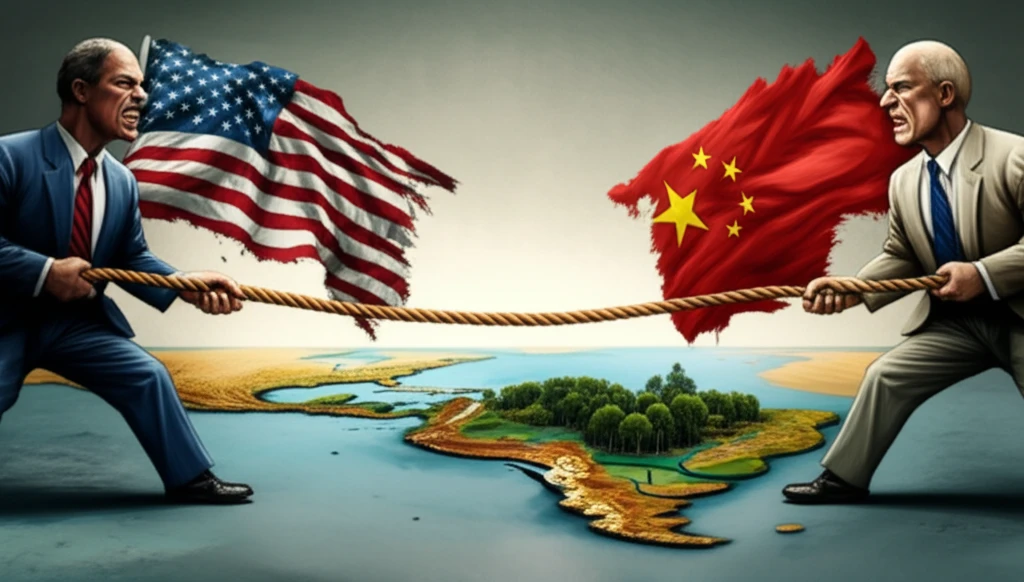
Mercosur's Shifting Trade Winds: Can the US Compete with China?

"A deep dive into how China's growing influence is reshaping trade relationships in South America, and what it means for US businesses."
For decades, the United States has been a key trading partner for the Mercosur trade alliance, a South American bloc of six full member countries: Argentina, Bolivia, Brazil, Paraguay, Uruguay, and Venezuela. However, the winds of change are blowing, and China is rapidly emerging as a dominant player in the region, fueled by increased foreign direct investment and a hunger for natural resources.
This shift raises critical questions about the future of trade in South America. Can US businesses continue to compete effectively in Mercosur countries? What strategies must they adopt to navigate this evolving landscape? And what are the broader implications for the economic and political balance of power in the region?
This article analyzes the changing trade relationships between Mercosur countries, the United States, and China, drawing on a comprehensive study that examines trade data from 2000 to 2015. We'll delve into the specific challenges and opportunities facing US businesses, explore the factors driving China's growing influence, and discuss the potential pathways for the US to maintain its competitive edge.
China's Ascent: A Challenge to US Dominance
The study reveals a clear trend: while trade between Mercosur countries and the United States has seen steady growth, China's economic footprint in the region has expanded exponentially. This surge began in the early 2000s, marked by increased investment and trade missions led by Chinese leaders. Chinese enterprises are now formidable competitors in nearly all Mercosur member countries.
- Strategic Investments: China's foreign direct investment (FDI) in Mercosur countries has increased significantly, providing capital for infrastructure and development projects.
- Resource Acquisition: China's growing economy requires vast amounts of raw materials, making Mercosur's resource-rich nations attractive trade partners.
- Political Engagement: High-level visits and diplomatic initiatives have strengthened ties between China and Mercosur governments.
- Competitive Pricing: Chinese enterprises often offer competitive pricing on manufactured goods, appealing to consumers in Mercosur countries.
The Future of Trade: Navigating a Shifting Landscape
The rise of China as a major trading partner in South America presents both challenges and opportunities for the United States. To remain competitive, US businesses must adapt their strategies to address the changing dynamics of the Mercosur region. This may involve focusing on high-value goods and services, building stronger relationships with local partners, and promoting sustainable and responsible business practices.
Policymakers in Mercosur countries also face critical decisions. They must develop clear strategies for managing their trade relationships with both China and the United States, ensuring that these partnerships contribute to sustainable economic growth and development. This requires promoting diversification, investing in education and innovation, and strengthening regulatory frameworks.
Ultimately, the future of trade in South America will depend on the ability of all stakeholders to navigate this shifting landscape effectively. By embracing innovation, fostering collaboration, and prioritizing sustainability, the United States, China, and Mercosur countries can create a mutually beneficial trade environment that promotes prosperity and stability in the region.