
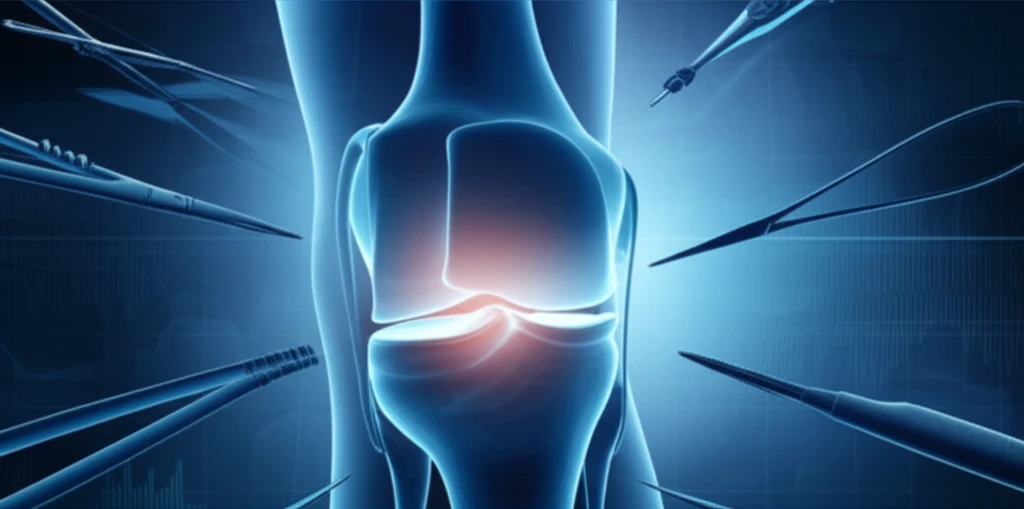
Illustration of a healthy knee joint with glowing meniscus.

Meniscus Repair Revolution: Is All-Inside Surgery Right for You?

"Discover the latest advancements in all-inside meniscus repair for posterior third tears, offering a potentially safer and more efficient alternative to traditional methods."


Knee arthroscopy is a common procedure, but research increasingly highlights the importance of preserving the meniscus. Removing even part of it can lead to osteoarthritis, making repair the preferred option when possible.

There's a growing shift towards meniscus repair, with a significant increase in repair procedures performed by surgeons in recent years. This reflects a broader understanding of the long-term benefits of keeping the meniscus intact.

All-inside repair techniques are rapidly changing how surgeons approach complex meniscus issues. These modern methods often provide a safer, more efficient, and less invasive alternative to traditional inside-out repair, especially for those tricky posterior third tears.

All-Inside vs. Inside-Out: What's the Difference?

Illustration of a healthy knee joint with glowing meniscus.

Traditional inside-out repair involves passing sutures through the meniscus and out the back of the knee, requiring an additional incision. This can be challenging for posterior horn tears, where precise access and safe suture placement are critical.

The inside-out method also carries risks, including potential nerve damage and increased post-operative pain. It often requires assistance for retraction, leading to a more extensive surgical approach.

  • All-Inside Repair: Aims to minimize invasiveness, often using standard anterior portals, and a 30° arthroscope.
  • Inside-Out Repair: Requires an accessory posteromedial or posterolateral incision to retrieve and tie the sutures.
  • Risks: All-Inside techniques often reduce risk of nerve damage.
  • Recovery: All-Inside may result in less post-operative pain.
  • Effectiveness: Both methods have shown equal success rates in recent studies, but all-inside offers distinct advantages in certain situations.
All-inside repair, pioneered in 1991, has seen continuous innovation in devices and techniques. Modern all-inside methods strive to achieve the same fixation strength as inside-out repair while minimizing risks and recovery time.

Is All-Inside Meniscus Repair Right for You?

If you're facing a meniscus tear, especially in the posterior third, discuss all-inside repair with your orthopedic surgeon. This advanced technique offers a potentially safer, less invasive path to recovery, helping you preserve your knee's natural function and get back to your active life.

About this Article -

This article was crafted using a human-AI hybrid and collaborative approach. AI assisted our team with initial drafting, research insights, identifying key questions, and image generation. Our human editors guided topic selection, defined the angle, structured the content, ensured factual accuracy and relevance, refined the tone, and conducted thorough editing to deliver helpful, high-quality information.See our About page for more information.

This article is based on research published under:

DOI-LINK: 10.1053/j.otsm.2018.10.005, Alternate LINK

Title: Meniscus Repair In The Posterior Third: The All-Inside Option

Subject: Orthopedics and Sports Medicine

Journal: Operative Techniques in Sports Medicine

Publisher: Elsevier BV

Authors: Ryan Nixon, Spencer M. Stein, Nicholas A. Sgaglione

Published: 2018-12-01

Everything You Need To Know

1

What are the primary advantages of undergoing an all-inside meniscus repair, particularly for posterior third tears?

All-inside meniscus repair offers several key advantages, particularly for posterior third tears. It is a minimally invasive technique which can lead to reduced risk of nerve damage, and potentially less post-operative pain compared to traditional inside-out repair. All-inside repair aims to preserve the knee's natural function and facilitate a faster return to activity. While the success rates are similar to inside-out repair, all-inside methods provide a safer and more efficient approach in many situations, focusing on minimizing invasiveness and recovery time.

2

How does the all-inside meniscus repair technique differ from the traditional inside-out repair method?

The primary difference lies in the surgical approach. Traditional inside-out repair involves passing sutures through the meniscus and out the back of the knee via an additional incision. This poses challenges for posterior horn tears, potentially increasing the risk of nerve damage and post-operative pain. All-inside repair, however, minimizes invasiveness, often utilizing standard anterior portals and a 30° arthroscope without requiring additional incisions. This reduces the risk of nerve damage and potentially leads to a less painful recovery.

3

Why is meniscus preservation considered so important, and what are the potential consequences of removing even a portion of it?

Meniscus preservation is crucial because removing even a part of the meniscus can lead to osteoarthritis. The meniscus plays a vital role in knee function, including shock absorption and load distribution. By preserving the meniscus through repair techniques like all-inside repair, surgeons aim to maintain the knee's natural biomechanics, prevent long-term joint degeneration and minimize the risk of developing osteoarthritis.

4

In what situations might an orthopedic surgeon recommend all-inside meniscus repair over other methods, and what factors contribute to this decision?

An orthopedic surgeon might recommend all-inside meniscus repair, especially for posterior third tears due to the technique's minimally invasive nature. The decision is based on several factors, including tear location, patient anatomy, and the surgeon's expertise. All-inside repair is favored when minimizing risks, such as nerve damage and reducing post-operative pain, are primary concerns. The advancement of all-inside techniques offer comparable fixation strength to inside-out repair, making it a preferable option in many scenarios where a less invasive approach is desired.

5

What innovations have occurred in all-inside meniscus repair since its initial development, and how do these advancements improve patient outcomes?

Since its initial development in 1991, all-inside repair has undergone continuous innovation, primarily in devices and techniques. Modern all-inside methods focus on achieving fixation strength comparable to inside-out repair, while minimizing risks and recovery time. These advancements include improved suture materials and delivery systems, refined arthroscopic techniques, and better understanding of meniscus biomechanics. These innovations translate to improved patient outcomes through reduced invasiveness, decreased post-operative pain, faster rehabilitation, and enhanced long-term knee function.

Newsletter Subscribe

Subscribe to get the latest articles and insights directly in your inbox.