
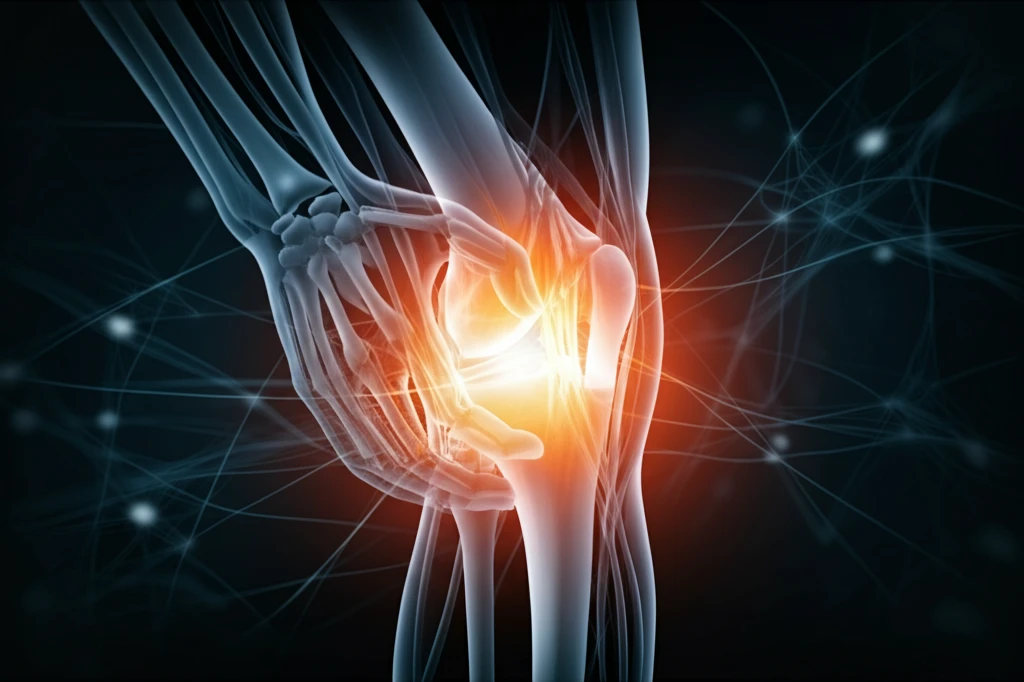
Ehlers-Danlos and Knee Replacements: What You Need to Know

"Navigating Total Knee Arthroplasty with Ehlers-Danlos Syndrome: A comprehensive guide to outcomes, considerations, and expert insights for patients and caregivers."
Ehlers-Danlos Syndrome (EDS) is a group of inherited disorders that affect connective tissues, primarily impacting the skin, joints, and blood vessel walls. These tissues provide strength and elasticity to the body, and when affected by EDS, can lead to a range of symptoms, most notably joint hypermobility, chronic pain, and an increased risk of dislocations.
For individuals with EDS, daily activities can be significantly impacted by joint instability and pain. When conservative treatments like physical therapy and pain management are no longer sufficient, total knee arthroplasty (TKA), or knee replacement surgery, may be considered. However, due to the underlying connective tissue disorder, TKA in EDS patients presents unique challenges and considerations.
Recent research has shed light on the outcomes of TKA in patients with EDS, providing valuable insights for both patients and surgeons. This article will delve into the findings of a key study, explore the specific considerations for TKA in the context of EDS, and offer guidance on navigating this complex decision.
EDS and Joint Replacement: By the Numbers
The overall prevalence of Ehlers-Danlos syndromes (EDS) is estimated at approximately 1 in 5,000 people, though some estimates suggest rates as high as 1 in 3,100. A 2025 study analyzing 1,769 EDS patients who underwent total joint arthroplasty (TJA)—1,011 hip replacements and 758 knee replacements—confirmed the rarity of the condition in surgical populations. Research shows that the pooled all-cause rate for follow-up surgery after knee procedures was 8.4% in EDS patients compared to 5.7% in non-EDS patients, indicating a higher revision burden. An earlier study identified 16 patients (20 knees) with EDS who underwent total knee arthroplasty between 2001 and 2016, matched 1:2 on age, gender, and BMI for comparison.
Surgical Challenges in EDS Patients
Orthopaedic problems occur in 80%–90% of patients with hypermobile Ehlers-Danlos syndrome, making musculoskeletal issues the primary clinical manifestation. When surgery is considered, there is a notable lack of consensus about the optimal approach—whether arthroscopic or open techniques should be preferred remains debated. Surgeons must exercise particular care regarding the fragility of skin and soft tissues, limiting unnecessary retraction during procedures. For acute pain management, participants with EDS have reported that opioids were among the most helpful methods, highlighting the difficulty of standard pain protocols in this population.
The Origins of EDS Recognition
Ehlers-Danlos syndrome is a group of inherited connective tissue disorders that primarily affects the skin, joints, and blood vessel walls. The probable first description of EDS dates to Hippocrates in 400 BC, who noted that Nomads and Scythians were lax in the joints and had distinctive scarring patterns. A more formal description emerged in 1657 from a Dutch physician, marking an early milestone in recognizing the condition as a distinct clinical entity. These foundational observations established the triad of joint hypermobility, skin fragility, and tissue weakness that characterizes EDS to this day.
What Does the Research Say About Knee Replacement and EDS?
A recent study published in The Journal of Arthroplasty investigated the outcomes of primary total knee arthroplasty in patients with Ehlers-Danlos Syndrome. The researchers compared 16 patients (20 knees) with EDS who underwent TKA to a matched control group of 40 patients (osteoarthritis patients) who had TKA for osteoarthritis (OA). The study meticulously analyzed various factors, including surgical interventions, component types, reoperation rates, and clinical outcomes.
- Constrained Components: Patients with EDS were more likely to require constrained knee components (VVC), which provide greater stability.
- Prior Surgeries: EDS patients had significantly more prior surgical interventions on their knees before undergoing TKA.
- Reoperation Rates: There was no significant difference in reoperation rates between the EDS and OA groups.
- Knee Society Scores: Both groups demonstrated statistically significant improvements in Knee Society Scores (KSS) after surgery, with no significant difference between the groups at the latest follow-up.
- Survival Rates: Overall survival rates of the knee replacements were similar between the EDS and OA groups.
Recent Findings on TJA Outcomes in EDS
A 2025 study of 1,769 EDS patients undergoing total joint arthroplasty concluded that patients with Ehlers-Danlos have an increased risk of implant-related complications following TJA. The research, encompassing both hip and knee replacements, represents one of the largest analyses of surgical outcomes in this population. These findings suggest that EDS patients undergoing arthroplasty may require enhanced monitoring and potentially modified surgical protocols. The study adds to a growing evidence base indicating that while joint replacement can be beneficial, the connective tissue differences in EDS create distinct surgical challenges.
Risks and Complications in EDS Joint Replacement
A 2026 study found that patients with EDS undergoing total joint arthroplasty face substantially increased risks of mechanical complications, notably instability and revision surgery. These complications highlight the inherent challenges of placing prosthetic joints in connective tissue that differs structurally from the general population. Real-world patient experiences reflect these concerns—one individual reported that knee replacement surgery extended and fully bent the knee, damaging previously tightened muscles and tendons, with particularly problematic scarring due to EDS. Such accounts underscore the gap between clinical findings and patient-reported outcomes, suggesting that surgical success metrics may not fully capture the recovery experience.
TKA as a Treatment Option for EDS
A comparative study examining primary total knee arthroplasty in EDS patients concluded that TKA appears to be a durable option, providing pain relief and functional improvement in this population. The research suggests that despite the elevated complication risks identified in other studies, knee replacement can deliver meaningful clinical benefits for EDS patients with severe knee pathology. However, the study emphasized that longer follow-up is needed to determine if these outcomes persist over time and to fully characterize the long-term durability of implants in EDS tissue. This finding provides a counterpoint to purely risk-focused narratives, positioning TKA as a viable intervention when appropriately indicated.
Making Informed Decisions About Your Knee Health
If you're considering TKA and have EDS, a thorough discussion with your orthopedic surgeon is paramount. Share your medical history, specific concerns, and expectations for surgery. Your surgeon can assess your individual needs, explain the potential risks and benefits, and develop a personalized treatment plan. Remember, with proper planning and a collaborative approach, TKA can be a positive step towards improving your quality of life.
Weighing Benefits Against Risks
The evidence presents a nuanced picture: while a 2003 study indicated that TKA can be an effective treatment for knee pain and instability in EDS patients, more recent research consistently identifies increased implant-related complication rates. Patients who have Ehlers-Danlos face elevated risks following total joint arthroplasty, yet the procedure can still provide meaningful pain relief and functional improvement when conservative measures have failed. The clinical challenge lies in balancing these competing realities—benefits are achievable but come with heightened vigilance requirements. Surgeons and patients must engage in thorough shared decision-making that accounts for both the potential gains and the documented complication risks.
Growing Demand and Emerging Challenges
Global projections indicate that joint arthroplasty volumes will continue to rise dramatically, with TKA expected to increase by at least 130% across all regions by 2050. As these numbers grow, the proportion of EDS patients seeking joint replacements is likely to increase correspondingly, amplifying the need for specialized surgical approaches. Joint instability remains a major challenge for many EDS patients, leading to pain, dislocations, and progressive damage over time—issues that current arthroplasty techniques may not fully address. Future research will need to focus on implant design modifications, surgical technique refinements, and rehabilitation protocols specifically tailored to the unique connective tissue characteristics of EDS.
Understanding EDS in Surgical Context
According to the 2017 International Classification, EDS is generally characterized by hyperextensible skin, hypermobile joints, and tissue fragility—a triad that creates distinct challenges for any surgical intervention. These connective tissue differences mean that standard orthopaedic approaches may not translate directly to EDS patients, requiring adaptation of techniques and expectations. The rarity of the condition, estimated at 1 in 5,000, means that many surgeons have limited experience with EDS-specific considerations, potentially contributing to variable outcomes. Addressing these systemic challenges will require increased education, specialized training, and the development of EDS-specific clinical guidelines for joint replacement surgery.
Living with EDS and Joint Replacement Decisions
For individuals with Ehlers-Danlos considering knee replacement, the decision involves weighing clinical evidence against personal circumstances and values. While research provides important data on complication rates and outcomes, each patient's EDS presentation, severity of knee pathology, and life goals are unique factors that influence the decision-making process. The human experience of navigating chronic pain, surgical recovery, and long-term joint management extends beyond what clinical studies can fully capture. Patient support communities and multidisciplinary care teams play vital roles in helping individuals make informed choices that align with their specific needs and priorities.