
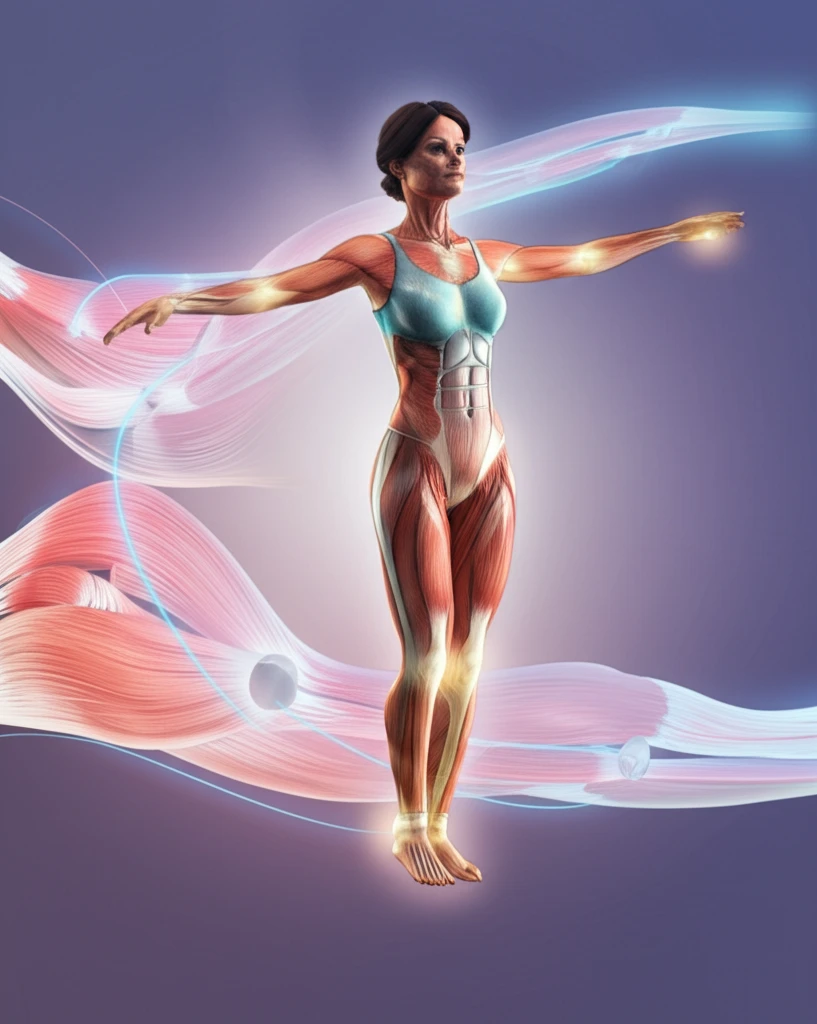
Unlocking the Secrets of Joint Hypermobility: Can Strength and Balance Training Make a Difference?

"Exploring the Link Between Muscle Activity, Stability, and Joint Flexibility in Women"
Generalized joint hypermobility (GJH) is a condition where joints are more flexible than normal. It affects people differently; some experience no issues, while others deal with pain, instability, and related complications. Often underestimated, GJH's impact can range from mild inconvenience to significantly affecting daily life. This article explores the nuances of GJH, aiming to shed light on how targeted interventions like strength and balance training can make a tangible difference, particularly for women, who are often more affected.
Understanding GJH is crucial for anyone experiencing symptoms like recurrent joint dislocations, soft tissue injuries, or chronic pain. While some might dismiss hypermobility as simply being 'flexible,' it's important to recognize its potential to impact musculoskeletal health and overall well-being. Accurate diagnosis and appropriate management strategies are key to mitigating symptoms and improving quality of life.
This article will focus on the findings of a recent study investigating the relationship between GJH, muscle strength, balance, and muscle activation. By examining these factors in women with and without symptomatic hypermobility, we aim to provide insights into potential therapeutic approaches. Discover how understanding the connection between these elements can lead to more effective strategies for managing GJH and promoting joint stability.
Current Statistics & Impact
The positive correlation observed between the Beighton score and various measures of physical strength, such as grip strength, suggests that individuals with higher joint hypermobility may exhibit differing strength patterns. Generalized Joint Hypermobility (GJH) is characterized by increased joint mobility and may lead to proprioceptive deficits and altered muscle function, with studies investigating the relationship between Beighton scores and grip strength, elbow and knee measures. Twelve-week resistance-training programs have been evaluated for their effects on muscle properties and function in women with generalized joint hypermobility, though evidence for physiotherapy management remains sparse.
Standard Approach & Limitations
Evidence-based strategies and proper techniques are essential for safely engaging in strength training with hypermobility, with key considerations for long-term progress. Strength training can absolutely help with joint hypermobility symptoms, but the approach needs to be appropriate and modified for hypermobility. A principle-based approach emphasizes improving stability, strength, and alignment (posture) as particularly important and helpful for those with hypermobility due to increased joint instability.
Historical Perspective
The understanding of joint hypermobility has evolved from early descriptions of excessive joint range-of-motion toward recognizing its relationship with muscle function, proprioception, and functional impairment, though specific historical milestones are not well-documented in the available sources.
Decoding the Connection: Strength, Balance, and Muscle Activity in Hypermobility
The study aimed to uncover differences in strength, balance, and muscle activity among women with normal joint mobility, those with asymptomatic GJH, and those with symptomatic GJH. Researchers measured peak force (Fmax) and rate of force development (RFD) during isometric contractions of knee extensor and flexor muscles. Balance was assessed via force plate measurements, analyzing anterior-posterior and medio-lateral sway during single-leg stance. Electromyography (EMG) was used to monitor muscle activity in key leg muscles.
- Participants: The study included 195 women: 67 with normal mobility (NM) and 128 with hypermobility (HM). The HM group was further divided into those with symptomatic (HM-s, n=56) and asymptomatic (HM-as, n=47) hypermobility.
- Strength Measurement: Peak force (Fmax) and rate of force development (RFD) were measured during single-leg maximal voluntary isometric contractions of the knee extensor and flexor muscles in a seated position.
- Balance Assessment: Balance was assessed using a force plate to measure anterior-posterior and medio-lateral sway during a 15-second single-leg stance.
- Muscle Activity: Muscle activity was recorded using surface electromyography (EMG) in six leg muscles during sway measurements.
Latest Research and Reviews
Research objectives investigate the short-term effectiveness of high-load versus low-load strengthening exercise in patients with generalized joint hypermobility (GJH) and shoulder complaints. Generalized Joint Hypermobility (GJH), assessed using the Beighton scoring system, is characterized by increased joint mobility and is often associated with proprioceptive deficits, reduced muscle strength, and functional impairments. A new study shedding light on how generalized joint hypermobility (GJH) affects strength, proprioception, and functional performance challenged assumptions about weakness and instability in people with highly flexible joints, evaluating 83 healthy adults.
Counter Arguments & Failures
Generalized Joint Hypermobility (GJH), assessed using the Beighton scoring system, is characterized by increased joint mobility and is often associated with proprioceptive deficits, reduced muscle strength, and functional impairments, with understanding its impact on physical performance being essential for developing targeted interventions. This association between GJH and reduced strength forms a counter argument to the assumption that hypermobility necessarily equates to muscular advantage.
Comparative Analysis
Previous research has found that young adults without pain or hypermobility can experience strength gains much greater than 40% (upwards of 150%) over 12 weeks. Strength exercise enhances muscles, ligaments, tendons and bones, with being stronger reducing the risk of injuries and providing additional benefits. Strength training recommendations advise skipping super-heavy weights that can put too much strain on loose joints, instead opting for light weights or resistance exercises. Traditional strength training alone doesn't fix a hypermobile body, with a blunt look at why it falls short for hypermobility and Ehlers-Danlos.
Moving Forward: Practical Implications and Future Directions
While the study didn't find substantial differences, it highlights the complexity of GJH and the need for more sensitive assessment methods. Further research should explore more dynamic and challenging tasks to better reveal neuromuscular differences. Additionally, investigating proprioception, reflex activity, and the impact of targeted exercise interventions could provide valuable insights for managing GJH effectively. Ultimately, a personalized approach that considers individual symptoms and neuromuscular profiles is crucial for optimizing treatment strategies and improving the lives of those with joint hypermobility.
Synthesis & Expert Commentary
Between 2010 and 2012, a total of 195 women were examined, 128 of whom had generalized hypermobility. In addition to strength, standing balance, anterior translation of the tibia, and an analysis of walking and stair climbing, the subjects' complaints were also questioned and further documented over six months. This comprehensive assessment resulted in, among four other papers, key findings on the effects of resistance training on disability and function in this population.
Future Outlook
For individuals with joint hypermobility or Ehlers-Danlos Syndrome (EDS), strength training is not merely a fitness pursuit but the single most important medical intervention for preventing chronic joint dislocations, pain, and instability. Because hypermobile ligaments cannot hold joints rigid, developing dense, coordinated muscular stiffness is vital for lifelong structural protection against joint damage and dysfunction.
Broader Context
The broader contextual factors surrounding joint hypermobility management involve complex interactions between clinical practice, research limitations, and patient experiences that require further exploration, though specific systemic challenges are not detailed in the available source material.
Human Element & Impact
The primary aim was to evaluate the effects of a 12-week resistance training program on muscle properties, muscle strength and functional movements, as well as pain and disability in individuals with joint hypermobility. This research addresses the real-world question of whether structured resistance training can meaningfully improve outcomes for people living with hypermobility-related symptoms.