
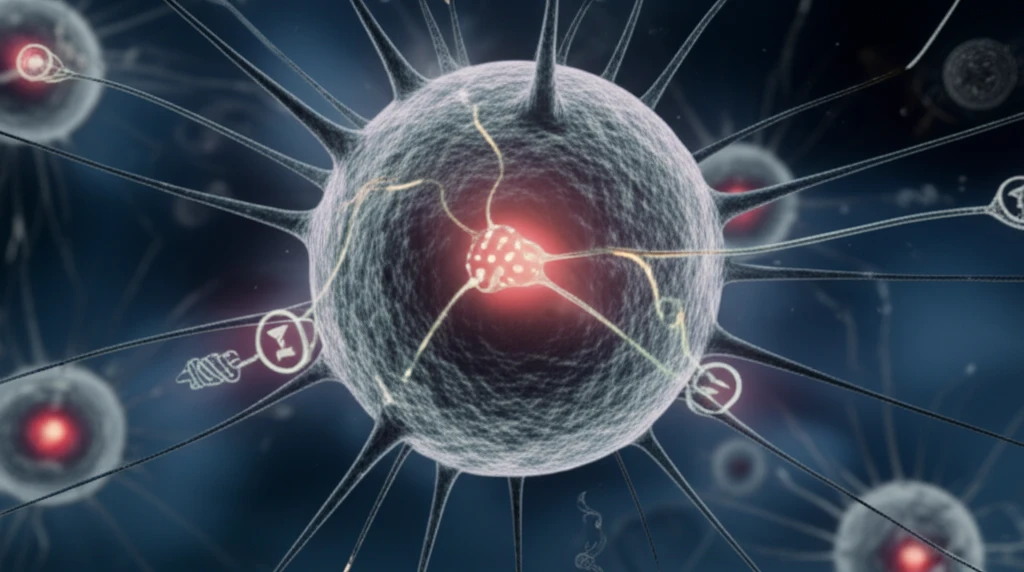
Melanoma cell with intertwined beta-adrenoceptor pathways, symbolizing the connection between stress hormones and tumor growth.

Melanoma's Hidden Achilles Heel: How Stress Pathways Could Revolutionize Treatment

"Unlocking the potential of beta-adrenoceptor targeting for melanoma therapy: A new perspective on stress hormones, tumor growth, and innovative treatment strategies."


Melanoma, the most dangerous form of skin cancer, continues to pose a significant challenge despite advancements in treatment. While genetics and UV radiation are known risk factors, emerging research highlights the profound influence of stress and its related hormonal pathways on melanoma development and progression. This article delves into the exciting new findings exploring how stress hormones, acting through receptors called beta-adrenoceptors, can fuel melanoma growth.

Scientists are increasingly recognizing that our bodies' responses to stress can inadvertently create a favorable environment for cancer cells. Catecholamines, hormones released during stress, interact with beta-adrenoceptors found on melanoma cells, potentially promoting tumor growth, blood vessel formation (angiogenesis), and even influencing the surrounding environment to support cancer progression.

This article will explore the intricate relationship between stress, beta-adrenoceptors, and melanoma, highlighting preclinical evidence suggesting that targeting these receptors could offer a novel approach to treating this challenging disease. We'll examine the potential of beta-adrenoceptor blockers, already used for other conditions, as a new weapon in the fight against melanoma, focusing particularly on the emerging role of beta3-adrenoceptors.

The Stress-Melanoma Connection: Unraveling the Role of Beta-Adrenoceptors

Melanoma cell with intertwined beta-adrenoceptor pathways, symbolizing the connection between stress hormones and tumor growth.

Stress triggers the release of catecholamines, such as norepinephrine and epinephrine, which then bind to beta-adrenoceptors on various cells, including melanoma cells. This interaction can kickstart a cascade of events that promote tumor growth and protect cancer cells from death. Specifically, beta-adrenoceptor activation can:

  • Stimulate cell proliferation: Encouraging melanoma cells to divide and multiply more rapidly.
  • Promote angiogenesis: Helping tumors form new blood vessels to supply themselves with nutrients and oxygen.
  • Modulate the tumor microenvironment: Influencing the surrounding cells and factors to create a supportive environment for cancer growth.

Preclinical studies have shown that blocking beta-adrenoceptors with drugs like propranolol can effectively slow melanoma growth and reduce metastasis in animal models. Meta-analysis of human studies also suggests a link between beta-adrenoceptor blocker use and reduced melanoma progression. However, research is ongoing to fully understand the specific roles of the different beta-adrenoceptor subtypes (beta1, beta2, and beta3) in melanoma.

Beta3-Adrenoceptors: A Promising New Target

While beta1- and beta2-adrenoceptors have been extensively studied in melanoma, the role of beta3-adrenoceptors is just beginning to emerge. Research indicates that beta3-adrenoceptors are expressed in melanoma cells and may contribute to tumor growth, angiogenesis, and the creation of a supportive microenvironment. However, developing drugs that specifically target beta3-adrenoceptors has been challenging due to the lack of highly specific tools.

Despite these challenges, the potential of targeting beta3-adrenoceptors in melanoma is significant. Studies have shown that blocking beta3-adrenoceptors can reduce melanoma cell proliferation, decrease blood vessel formation, and alter the tumor microenvironment. Further research is needed to fully elucidate the role of beta3-adrenoceptors in melanoma and to develop effective and selective inhibitors.

The finding that beta3-adrenoceptors play a role in the pathophysiology of melanoma may open the door for further clinical assays trying to explore ẞ3-adrenoceptor blockers as novel alternatives for treating melanoma and other tumors. In this respect, accelerating the development of more selective pharmacological tools to be used in clinical studies is urgently required.

About this Article -

This article was crafted using a human-AI hybrid and collaborative approach. AI assisted our team with initial drafting, research insights, identifying key questions, and image generation. Our human editors guided topic selection, defined the angle, structured the content, ensured factual accuracy and relevance, refined the tone, and conducted thorough editing to deliver helpful, high-quality information.See our About page for more information.

This article is based on research published under:

DOI-LINK: 10.1111/bph.14552, Alternate LINK

Title: Β‐Adrenoceptors As Drug Targets In Melanoma: Novel Preclinical Evidence For A Role Of Β 3 ‐Adrenoceptors

Subject: Pharmacology

Journal: British Journal of Pharmacology

Publisher: Wiley

Authors: Massimo Dal Monte, Maura Calvani, Maurizio Cammalleri, Claudio Favre, Luca Filippi, Paola Bagnoli

Published: 2018-12-18

Everything You Need To Know

1

How do stress hormones affect melanoma development?

Stress hormones, specifically catecholamines like norepinephrine and epinephrine, are released during stressful situations. These hormones can bind to beta-adrenoceptors found on melanoma cells. This interaction can unfortunately stimulate cell proliferation, promote angiogenesis (the formation of new blood vessels that feed the tumor), and modulate the tumor microenvironment, making it more favorable for cancer growth. This creates a pathway where stress inadvertently supports melanoma development and progression.

2

What exactly are beta-adrenoceptors and how do they relate to melanoma?

Beta-adrenoceptors are receptors on cells that bind to catecholamines, hormones released during stress. There are different subtypes: beta1, beta2, and beta3. When catecholamines bind to these receptors on melanoma cells, they can trigger processes that promote tumor growth, blood vessel formation, and a supportive environment for the cancer. Blocking these receptors, especially beta3-adrenoceptors which may contribute to tumor growth, is being explored as a potential treatment strategy.

3

Is there any evidence that blocking beta-adrenoceptors can help in treating melanoma?

Preclinical studies have demonstrated that blocking beta-adrenoceptors, especially with drugs like propranolol, can effectively slow melanoma growth and reduce metastasis in animal models. Meta-analysis of human studies also suggests a link between beta-adrenoceptor blocker use and reduced melanoma progression. This is why targeting beta-adrenoceptors is viewed as a novel treatment approach.

4

What are beta3-adrenoceptors, and why are they considered a promising target for melanoma treatment?

Beta3-adrenoceptors are a specific subtype of beta-adrenoceptors that are expressed in melanoma cells. Research suggests they play a role in tumor growth, angiogenesis, and creating a supportive microenvironment for melanoma. Unlike beta1- and beta2-adrenoceptors, the role of beta3-adrenoceptors is just beginning to emerge as a key target in melanoma treatment. Developing drugs that specifically target beta3-adrenoceptors has been challenging due to the lack of highly specific tools.

5

Besides genetics and UV radiation, what other factors contribute to melanoma risk, and how significant is the role of stress?

While genetics and UV radiation are well-established risk factors for melanoma, the influence of stress and its associated hormonal pathways is an emerging area of research. The release of catecholamines due to stress and their interaction with beta-adrenoceptors on melanoma cells can inadvertently promote tumor growth and progression. This means managing stress could potentially play a supportive role in melanoma prevention and treatment, alongside traditional approaches.

Newsletter Subscribe

Subscribe to get the latest articles and insights directly in your inbox.