
Melanoma Treatment: Can Combining Radiation with Immunotherapy Improve Outcomes?

"A new study suggests concurrent radiotherapy and anti-PD-1 therapy could be a safe, effective strategy for metastatic melanoma."
Metastatic melanoma, a challenging form of skin cancer to treat, has seen significant advancements with the advent of immune-checkpoint inhibitors. These drugs, particularly those targeting programmed-death 1 (PD-1), have shown promise in improving survival rates. However, many patients still require additional treatments like radiation therapy (RT) at some point during their care.
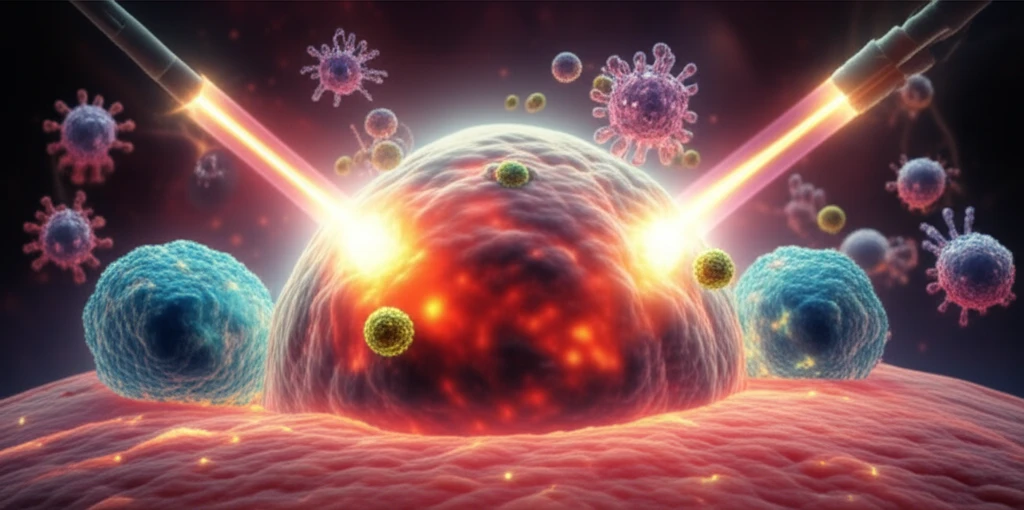
Radiation therapy has long been used to target cancer cells directly, but emerging evidence suggests it can also trigger a systemic anti-tumor response known as the abscopal effect. This effect occurs when radiation not only destroys cancer cells in the treated area but also stimulates the immune system to attack cancer cells throughout the body. Combining immune-checkpoint inhibitors with radiation therapy is a logical strategy to harness both local and systemic anti-cancer effects.
A recent study investigated the safety and efficacy of combining RT with anti-PD-1 immunotherapy in patients with metastatic melanoma. By retrospectively analyzing patient data, researchers aimed to determine if this combination could lead to better outcomes without increasing toxicity.
Decoding the Study: Combining Radiation and Immunotherapy
The study, conducted at a single institution, retrospectively collected data from 59 patients with metastatic melanoma who received anti-PD-1 immunotherapy (either pembrolizumab or nivolumab) between August 2014 and December 2015. Of these patients, 17 also received palliative RT to a total of 21 sites. The researchers then compared survival data, overall response rates, and the occurrence of toxicities between patients who received concurrent RT (IR group) and those who did not (NIR group).
- Toxicity: The acute and late toxicity profiles were similar between the two groups, indicating that adding RT to anti-PD-1 therapy did not significantly increase adverse effects.
- Response Rate: The objective response rate (complete or partial response) was significantly higher in the IR group (64.7%) compared to the NIR group (33.3%). This suggests that combining RT with anti-PD-1 therapy may enhance the treatment's effectiveness in shrinking tumors.
- Abscopal Effect: One patient in the IR group experienced a complete response that was compatible with an abscopal effect, meaning that the radiation not only affected the targeted tumor but also triggered a response in tumors outside the irradiated field.
- Survival: While the 6-month disease-free survival and overall survival rates were numerically higher in the IR group, the differences were not statistically significant.
Future Directions: Optimizing the Combination
This study contributes to the growing body of evidence supporting the potential of combining radiation therapy with immune-checkpoint inhibitors for cancer treatment. The results suggest that this combination can be safe and effective, but several questions remain.
Further research is needed to determine the optimal timing and fractionation of RT in combination with anti-PD-1 therapy. Clinical trials are also needed to confirm these findings and to identify which patients are most likely to benefit from this approach.
As research continues to unravel the complex interplay between radiation and the immune system, we can expect to see further advances in the use of combined modality therapy for metastatic melanoma and other cancers. These advancements offer hope for improved outcomes and a better quality of life for patients facing these challenging diseases.