
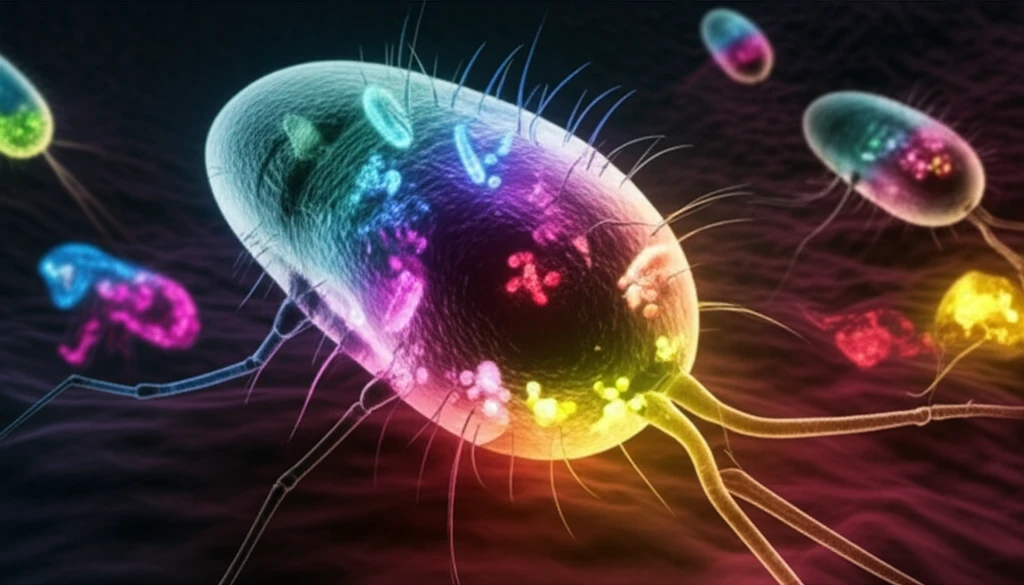
Microscopic view of malaria parasite being disrupted by glowing inhibitors.

Malaria Breakthrough: New Drug Compounds Target Parasite Enzymes

"Scientists develop potent inhibitors that disrupt the malaria parasite's lifecycle, offering a promising path toward more effective treatments."


Malaria remains a global health crisis, endangering millions, particularly in endemic regions. The persistent emergence of drug-resistant parasites underscores the urgent need for innovative antimalarial drugs. Current treatments, including artemisinin-based therapies, face increasing resistance, highlighting the importance of developing new strategies to combat this deadly disease. Scientists are exploring novel drug targets and approaches to overcome resistance mechanisms and improve treatment outcomes.

One promising area of research focuses on plasmepsins, enzymes crucial to the malaria parasite's survival. Plasmepsins, particularly those involved in hemoglobin digestion and other essential processes, have emerged as attractive targets for drug development. Researchers are designing and synthesizing molecules that can selectively inhibit these enzymes, disrupting the parasite's lifecycle and preventing its spread. This approach aims to minimize off-target effects and maximize the therapeutic impact on the parasite.

In a recent study, scientists developed a series of peptidomimetic plasmepsin inhibitors with potent antimalarial activity and selectivity. These compounds target specific plasmepsins, such as Plm IV and Plm X, which play critical roles in parasite maturation and egress from host cells. The inhibitors demonstrated remarkable efficacy in blocking parasite growth and egress, suggesting a novel mechanism of action that could overcome existing drug resistance. This research represents a significant step forward in the quest for new and effective antimalarial drugs.

How Do These New Compounds Inhibit Malaria?

Microscopic view of malaria parasite being disrupted by glowing inhibitors.

The new compounds are peptidomimetic plasmepsin inhibitors, meaning they mimic the structure of natural peptides and target plasmepsin enzymes. Plasmepsins are aspartic proteases crucial for the malaria parasite's survival. They play a vital role in hemoglobin digestion, a process the parasite relies on for nutrients. By inhibiting these enzymes, the compounds disrupt the parasite's ability to break down hemoglobin, starving it and preventing its growth and replication.

Researchers focused on improving the selectivity of these inhibitors to minimize off-target effects. The goal was to create compounds that primarily target plasmepsins within the malaria parasite, while sparing similar enzymes in humans, such as cathepsin D. Cathepsin D is important for protein catabolism and other cellular processes in humans, and inhibiting it can lead to unwanted side effects. By carefully designing the inhibitors to selectively bind to plasmepsins, the researchers aimed to enhance their safety and efficacy.

  • Selectivity Through Structural Design: Modifications to the inhibitor molecules were made to target specific structural differences between plasmepsins and human cathepsin D.
  • Targeting Key Enzymes: The inhibitors were designed to block the activity of plasmepsins involved in hemoglobin digestion and parasite maturation.
  • Disrupting Parasite Lifecycle: By inhibiting plasmepsins, the compounds interfere with the parasite's ability to grow, replicate, and spread.
In addition to inhibiting hemoglobin digestion, these compounds also interfere with parasite egress. Egress is the process by which mature parasites exit infected host cells to infect new cells. The researchers found that their inhibitors blocked the maturation of SUB1, a serine protease essential for egress. By preventing SUB1 maturation, the inhibitors disrupt the parasite's ability to exit host cells, further limiting its spread. This dual mechanism of action makes these compounds particularly promising as antimalarial agents.

Future Directions in Malaria Research

This research opens new avenues for malaria drug development. Further studies will focus on optimizing the structure of these inhibitors to enhance their potency, selectivity, and pharmacokinetic properties. Researchers also plan to investigate the precise mechanisms by which these compounds disrupt parasite egress and SUB1 maturation. By gaining a deeper understanding of these processes, they hope to identify additional drug targets and strategies to combat malaria. The development of these peptidomimetic plasmepsin inhibitors represents a significant step forward in the ongoing battle against malaria, offering hope for more effective and durable treatments in the future.

About this Article -

This article was crafted using a human-AI hybrid and collaborative approach. AI assisted our team with initial drafting, research insights, identifying key questions, and image generation. Our human editors guided topic selection, defined the angle, structured the content, ensured factual accuracy and relevance, refined the tone, and conducted thorough editing to deliver helpful, high-quality information.See our About page for more information.

This article is based on research published under:

DOI-LINK: 10.1016/j.ejmech.2018.11.068, Alternate LINK

Title: Peptidomimetic Plasmepsin Inhibitors With Potent Anti-Malarial Activity And Selectivity Against Cathepsin D

Subject: Organic Chemistry

Journal: European Journal of Medicinal Chemistry

Publisher: Elsevier BV

Authors: Rimants Zogota, Linda Kinena, Chrislaine Withers-Martinez, Michael J. Blackman, Raitis Bobrovs, Teodors Pantelejevs, Iveta Kanepe-Lapsa, Vita Ozola, Kristaps Jaudzems, Edgars Suna, Aigars Jirgensons

Published: 2019-02-01

Everything You Need To Know

1

How do these new drug compounds actually work to combat malaria?

The new compounds are peptidomimetic plasmepsin inhibitors. This means they are designed to mimic the structure of natural peptides and target plasmepsin enzymes which are crucial for the malaria parasite's survival. Plasmepsins are aspartic proteases that play a vital role in hemoglobin digestion, a process the parasite relies on for nutrients. By inhibiting these enzymes, the compounds disrupt the parasite's ability to break down hemoglobin, starving it and preventing its growth and replication. This is important because disrupting hemoglobin digestion deprives the parasite of necessary nutrients, hindering its development and multiplication within the host.

2

Why are plasmepsins so important for the malaria parasite's survival?

Plasmepsins are crucial enzymes for the malaria parasite's survival because they are involved in essential processes such as hemoglobin digestion. Hemoglobin digestion provides the parasite with the nutrients it needs to grow and replicate inside host cells. Without functional plasmepsins, the parasite cannot efficiently break down hemoglobin, leading to starvation and ultimately, the parasite's demise. Plasmepsins like Plm IV and Plm X are important for parasite maturation and egress from host cells. Inhibiting these enzymes can block parasite growth and its ability to spread, making them significant targets for antimalarial drug development.

3

Besides just inhibiting hemoglobin digestion, what other key processes do these new compounds affect in the malaria parasite's lifecycle?

The inhibitors also disrupt parasite egress by blocking the maturation of SUB1, a serine protease essential for egress. Egress is the process by which mature parasites exit infected host cells to infect new cells. By preventing SUB1 maturation, the inhibitors disrupt the parasite's ability to exit host cells, further limiting its spread. This is significant because blocking egress can prevent the parasite from infecting new cells, slowing down the progression of the disease and reducing its severity.

4

What does 'selectivity' mean in the context of these new inhibitors, and why is it so important?

Selectivity in these inhibitors refers to their ability to target plasmepsins within the malaria parasite while sparing similar enzymes in humans, such as cathepsin D. Cathepsin D is important for protein catabolism and other cellular processes in humans, and inhibiting it can lead to unwanted side effects. By carefully designing the inhibitors to selectively bind to plasmepsins, researchers aim to enhance their safety and efficacy. This is important because minimizing off-target effects reduces the risk of adverse reactions and improves the tolerability of the drug, making it more suitable for widespread use.

5

What are the next steps in the research and development of these new compounds?

Future research will focus on optimizing the structure of these peptidomimetic plasmepsin inhibitors to enhance their potency, selectivity, and pharmacokinetic properties. Researchers also plan to investigate the precise mechanisms by which these compounds disrupt parasite egress and SUB1 maturation. By gaining a deeper understanding of these processes, they hope to identify additional drug targets and strategies to combat malaria. This is important because further optimization can lead to more effective and durable treatments for malaria, potentially overcoming existing drug resistance and improving patient outcomes.

Newsletter Subscribe

Subscribe to get the latest articles and insights directly in your inbox.