
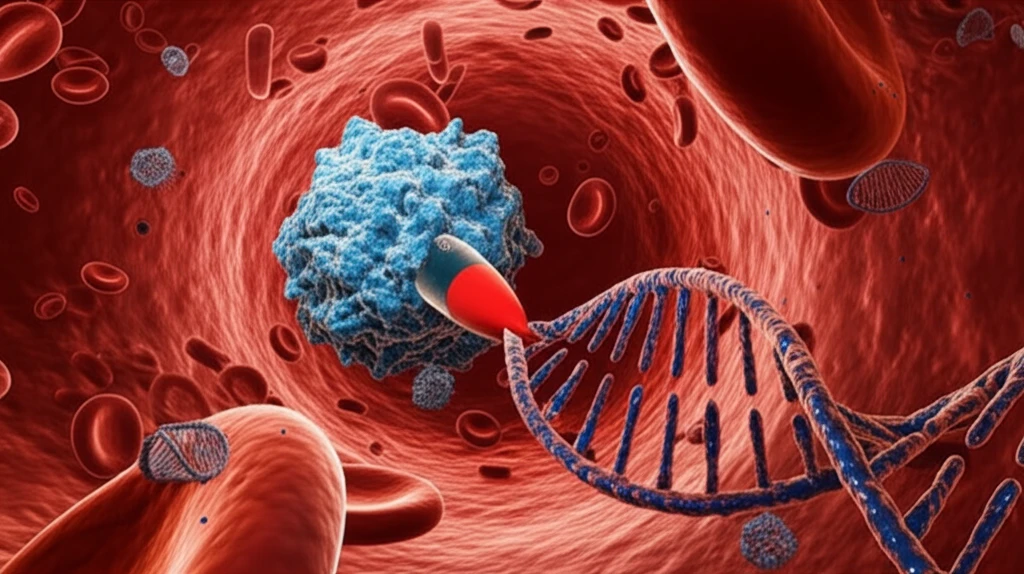
Malaria Breakthrough: CRISPR Tech Rewrites Parasite's Genetic Code

"Scientists pioneer epigenetic editing with CRISPR-Cas9 to manipulate gene expression in Plasmodium falciparum, paving the way for novel malaria treatments."
Malaria, a pervasive global health threat, continues to inflict a devastating toll, particularly in tropical regions. The deadliest strain, Plasmodium falciparum, is responsible for nearly half a million deaths each year. Central to combating this disease is a deep understanding of the parasite’s biology, especially how it invades host cells and causes illness. For years, scientists have been hampered by the limitations of genetic manipulation tools available for this complex organism.
Traditional methods of altering the parasite’s genome have often been inefficient or impractical, especially when dealing with essential genes or long noncoding RNAs. These molecules, tucked away within the parasite’s DNA, are crucial for its survival and behavior. The recent advent of CRISPR-Cas9 technology offered a glimmer of hope, but its application in malaria research has been limited—until now.
In a groundbreaking study, researchers have successfully adapted the CRISPR-Cas9 system to epigenetically edit the malaria parasite Plasmodium falciparum. This new approach allows for precise control over gene expression without permanently altering the parasite’s genetic code, opening up exciting possibilities for developing targeted malaria treatments.
Global Burden and Regional Treatment Patterns
Malaria is a disease caused by a parasite transmitted by mosquitoes and remains a major cause of death worldwide, which is why industry research catalogs indicators such as treatment coverage, incidence, prevalence, and prevention coverage across more than 100 market reports. Regional data illustrate how treatment-seeking behavior varies: in a 2023 survey of Nigerian respondents, some in the South West geo-political zone reported getting treated for malaria every two months, while others reported receiving treatment twice a year. These statistics underpin both disease surveillance and the measurement of treatment effects, with research designs typically reporting results as average relative risks or odds ratios with 95% confidence intervals.
Guideline-Driven Care and Its Practical Gaps
The WHO Guidelines for malaria bring together the organization's most up-to-date recommendations for the disease in one online platform, making them the reference standard for treatment policy. Historically, policy has also been tailored to context, as when a site-specific approach to malaria treatment policy was formally approved in 2001. The guidelines acknowledge important limitations, noting that in endemic regions some semi-immune malaria patients could be cured using partial treatment with effective medicines, regimens that would be unsatisfactory in patients without immunity. Real-world evaluations therefore measure adherence to malaria treatment standards against current guidelines for P. vivax, P. falciparum, and mixed infections.
A Centuries-Long Fight Against Malaria
Malaria has shaped settlement, labor, war, empire, agriculture, public health, and medical theory for centuries, making it one of the most historically consequential infectious diseases. One of its foundational treatments, quinine, is isolated from the bark of the cinchona tree, which had been used for hundreds of years by groups like the Quechua people to treat ailments including shivers and diarrhea - an origin that famously spawned the gin and tonic. It is also regarded as one of the diseases closest to eradication, with a long accumulation of treatment advances bringing humans to the brink of beating it.
Epigenetic Editing: A New Frontier in Malaria Research
Epigenetic editing involves modifying the way genes are expressed, rather than changing the genes themselves. Think of it like a dimmer switch on a light: you can control how bright the light shines without altering the bulb. In this study, scientists harnessed a modified version of the CRISPR-Cas9 system to precisely control gene expression in P. falciparum. They fused a catalytically inactive Cas9 protein (dCas9) with epigenetic effector domains—specifically, histone acetyltransferases (HATs) and histone deacetylases (HDACs). These enzymes play a crucial role in regulating gene expression by modifying histone proteins, which package DNA within the cell's nucleus.
- Precision Targeting: The CRISPR-Cas9 system allows for highly specific targeting of genes, minimizing off-target effects.
- Reversible Control: Epigenetic modifications are reversible, providing dynamic control over gene expression.
- No Permanent Genome Alteration: The parasite’s DNA remains unchanged, avoiding potential complications associated with permanent genetic modifications.
New Agents and Policy Evidence
Research continues to focus on drug-resistant parasites, with one team developing a new antimalarial agent as malaria remains a serious health issue globally, especially in Africa. In Ethiopia, a systematic review and meta-analysis was performed to obtain stronger evidence on treatment outcomes of malaria from the existing literature, drawing together several studies that had assessed the efficacy of anti-malarial agents in the country. Elsewhere, a retrospective analysis of the change in anti-malarial treatment policy in Peru reviewed all related documents to verify the dates and events described in interviews, with a draft of the report later presented to some of the key stakeholders.
Complications That Complicate Treatment
Beyond drug resistance, malaria can produce severe complications that complicate treatment. Malarial nephropathy is one such kidney condition, and its management requires antimalarial drugs alongside measures to correct water and electrolyte disturbances, fluid replacement, and in some cases dialysis. According to the source, the drug of choice for the treatment of malaria remains Chloroquine - a reminder that complications and older legacy drugs still feature in routine malaria care even as modern regimens evolve.
Standard Regimens Versus Alternative Options
Three-day artemisinin-based combination therapy (ACT) is the current standard of care for the treatment of malaria, though specific drug resistance is driving research toward alternatives as the ultimate goal of anti-malarial drug development. Comparisons also extend to how patients actually choose treatment: one study examined patient perspectives on traditional and alternative treatments, focusing on their motivations, beliefs, and treatment-seeking behaviors. Practical comparisons surface across lay media and commercial channels as well, from social-media content contrasting antimalarial drug efficacy and prevention strategies to online pharmacy services in the UK offering free prescriptions and delivery for a range of malaria treatments.
Future Implications and Beyond
This innovative epigenetic CRISPR-Cas9 system offers a powerful new tool for dissecting the complex biology of malaria parasites and identifying novel drug targets. By precisely controlling gene expression, researchers can gain a deeper understanding of the parasite’s behavior and develop targeted interventions to disrupt its life cycle. This approach holds immense promise for the development of new and more effective malaria treatments in the fight against this deadly disease.
Experts Weigh Resistance, Regimens, and Testing
Expert commentary warns that parasites resistant to antimalarial treatments are a threat to the clinical management of falciparum malaria. The WHO's expert-opinion recommendation is to complete treatment in severe malaria following parenteral drug administration by giving a full course of combination therapy, either ACT or quinine plus clindamycin or doxycycline. On the diagnostic side, malaria rapid diagnostic tests have generally been found reliable and cost-effective, yet in Burkina Faso the adherence of prescribers to negative test results was found to be poor. Public health messaging reinforces a testing-first policy, with experts urging that every suspected malaria case must be tested and confirmed before treatment is administered.
Treating the Youngest and Repurposing Artemisinin
The future of malaria treatment in Africa is described as brighter than ever following the arrival of the first malaria treatment specifically tailored for babies, which addresses a significant gap in care for the youngest and most vulnerable children who previously had no effective tailored option. Future research also centers on the backbone of modern therapy: artemisinin is reported to be about 90% effective in treating P. falciparum malaria, and its combination treatments carry a very low risk of resistance. Beyond malaria, artemisinin has shown some positive results in clinical studies in cancer patients and anti-inflammatory effects in cell and animal studies, pointing to broader research potential.
Stockouts, Delays, and Pandemic Disruption
Systemic failures in health systems can interrupt malaria treatment at scale. During the COVID-19 pandemic, results from the Global Fund's biweekly survey of HIV, TB and malaria treatment programs found that 73% of malaria programs reported disruption to service delivery. More broadly, drug stockouts and treatment delays in African health systems lead to interruptions in malaria treatment, worsening disease outcomes and facilitating the spread of drug resistance. Together, these reports show how supply-chain and service-delivery breakdowns compound the disease's burden of morbidity and mortality.
Community Care, Diagnostics, and Maternal-Child Health
Malaria's impact on maternal and child health is a central concern, and research programs such as the Malaria Atlas Project provide detailed maps of transmission patterns and risk factors, supporting targeted interventions, informing policy decisions, and improving malaria control programs in endemic regions. In rural-remote areas of Tanzania's Kilosa district, a quasi-experimental study tested a financial-benefit approach to motivating community health workers to improve prompt access to malaria treatment. Real-life effectiveness studies of anti-malarial treatment regimens conduct primary analysis by intention to treat and include detailed safety and tolerability assessments of the study drugs in all randomly assigned patients. Diagnostics add another human-level risk: one study identified a high rate of false positives with the tested rapid diagnostic test, risking inappropriate treatment and missed diagnoses of other illnesses.