
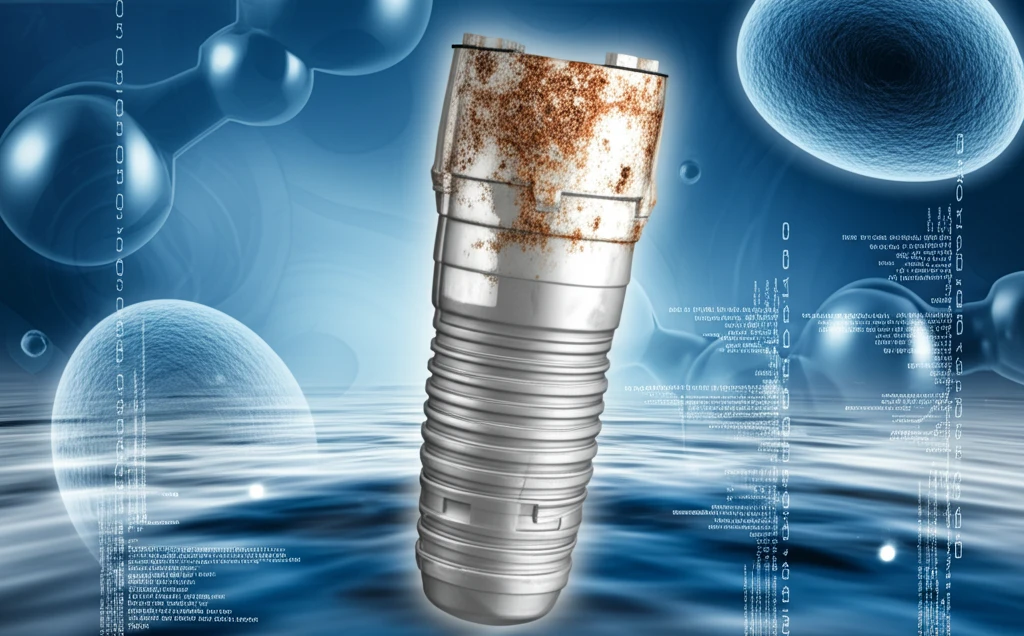
Magnesium Makeover: How Surface Treatments Can Revolutionize Medical Implants

"Explore how innovative chemical treatments using sodium hydroxide and hydrofluoric acid are enhancing magnesium alloy implants, boosting corrosion resistance, and improving biocompatibility for safer, more effective medical solutions."
Magnesium alloys have emerged as promising materials for temporary medical implants, including cardiovascular stents and bone grafts, due to their excellent mechanical properties and biodegradability. The appeal lies in their ability to degrade naturally within the body, eliminating the need for surgical removal and reducing long-term complications. However, the rapid rate at which magnesium degrades in the body and its limited compatibility with biological tissues have hindered widespread clinical use.
The challenge lies in balancing the benefits of magnesium's biodegradability with the need for controlled degradation and improved biocompatibility. When magnesium corrodes too quickly, it can lead to the release of hydrogen gas, local increases in pH, and the formation of corrosion products that can irritate surrounding tissues. Moreover, the surface of magnesium alloys lacks the necessary cues to encourage cell adhesion and integration, which is crucial for successful implant function.
To address these limitations, researchers are exploring various surface modification techniques to fine-tune the properties of magnesium alloys. Surface modification aims to create a protective layer that slows down corrosion, enhances biocompatibility, and promotes better integration with the body's tissues. These modifications range from applying specialized coatings to altering the surface chemistry through chemical treatments.
Market Growth and Clinical Potential of Biodegradable Magnesium
Magnesium and its alloys have the potential to be used for biodegradable orthopedic implants, though the corrosion rate in physiological conditions is too high for most applications. For this reason, surface modification to slow the corrosion rate is of great interest. According to one market research report, the global magnesium alloy biodegradable implants market reached USD 183.4 million in 2024 and is expected to register a robust CAGR of 18.7% during the forecast period from 2025 to 2033. In preclinical work, magnesium alloy devices have been implanted into rabbit prevertebral muscles and femur condyle notches to evaluate their behavior in living tissue.
Surface Modification as the Central Strategy
Magnesium (Mg) and its alloys can degrade gradually up to complete dissolution in the physiological environment, a property that makes these biomaterials appealing for applications such as bone implants. However, their rapid degradation in a physiological environment is a key challenge, and reviews identify corrosion mitigation measures as central to making these temporary implants practical. The surface modification approach can be used to tailor the properties of an implant's surface to control the biodegradation rate. Related interfacial engineering and surface coating strategies are among the accepted methods for addressing corrosion in bone implant applications.
From Promise to Clinical Translation
Magnesium (Mg)-based alloys have become an important category of materials attracting increasing attention for their high potential as orthopedic temporary implants, offering a viable alternative to nondegradable metal implants in orthopedics. Foundational research has shown that magnesium alloys exhibit promising properties in promoting periodontal tissue repair by maintaining Human Gingival Fibroblast (HGF) activity, inducing HGFs to differentiate into osteocytes to aid alveolar bone repair and implant stability. More recent research reports that clinical translation of magnesium and magnesium alloy implants for repairing and reconstructing sports injuries holds promise, citing advantages in mechanical properties, biosafety, and promoting tendon-bone interface healing.
The Science of Surface Treatments: NaOH and HF
One promising approach involves treating magnesium alloys with sodium hydroxide (NaOH) and hydrofluoric acid (HF). These chemical treatments induce the formation of conversion layers on the alloy surface, altering its properties in a controlled manner. The process involves immersing the magnesium alloy in NaOH and HF solutions, leading to chemical reactions that create a new surface layer with enhanced characteristics.
- Enhanced Corrosion Resistance: Chemical conversion layers act as a barrier against the corrosive effects of bodily fluids, slowing down the degradation process.
- Improved Biocompatibility: Modified surfaces promote better cell adhesion, encouraging integration with surrounding tissues.
- Tunable Surface Properties: NaOH and HF treatments can be adjusted to create surfaces with varying degrees of hydrophilicity or hydrophobicity.
- Cost-Effective: Chemical treatments are a relatively simple and cost-effective way to enhance the performance of magnesium alloy implants.
A Converging Evidence Base Across Recent Reviews
Recent reviews compare the mechanical properties, corrosion resistance, and biocompatibility of currently researched magnesium-based alloys for use in medical implant applications. Magnesium and Mg alloys are considered potential candidates for biomedical applications because of their high specific strength, low density, and elastic properties. State-of-the-art reviews of magnesium alloy implants for orthopedic and tissue engineering describe recent progress in novel structure design and potential approaches to improve biodegradation performance. Additional review work specifically addresses magnesium and magnesium-based alloys as biomaterials for bone immobilization.
Challenges Alongside the Promise
Magnesium alloy implants have shown promise as bioabsorbable metallic implants due to their biodegradability, biocompatibility, and mechanical behavior related to bone, yet the literature also catalogs major challenges facing these devices. Magnesium biodegradable implants can release bioactive byproducts, including magnesium ions (Mg2+) and hydrogen gas (H2), and the corrosion behavior in the body remains a primary concern. Because the devices are designed to support healing and gradually dissolve as the body recovers, precise control of that degradation is critical for transient implant applications. Ongoing research, including work on accelerating bone healing, continues to investigate how well magnesium alloy implants are absorbed by the human body as cardiovascular and orthopedic disease rates rise.
Biodegradable Magnesium vs. Permanent Implants
Magnesium (Mg)-based alloys have become an important category of materials with high potential as orthopedic temporary implants and are considered a viable alternative to nondegradable metal implants in orthopedics. In contrast, biodegradable implants are designed to dissolve in the body, eliminating the need for removal surgery, but they are described as less durable and suited for temporary support during healing. Where permanent metal systems offer durability for long-term load bearing, biodegradable options trade some of that longevity for the convenience of absorption.
The Future of Magnesium Implants
The application of NaOH and HF treatments represents a significant step forward in unlocking the full potential of magnesium alloys for medical implants. By carefully controlling the surface properties of these materials, scientists can create devices that degrade at a predictable rate, integrate seamlessly with the body's tissues, and minimize the risk of complications. Further research in this area promises to yield even more sophisticated surface modification techniques, paving the way for a new generation of biocompatible and biodegradable medical implants that improve patient outcomes and quality of life. As research progresses, the integration of these surface treatments with other biocompatible materials may lead to hybrid implants with exceptional properties.
A Maturing Path Toward Clinical Use
Magnesium alloys have been receiving much attention for use in biodegradable metal implants because of their excellent mechanical properties and biocompatibility. In vivo evaluation has involved implantation of magnesium alloy devices into rabbit prevertebral muscles and femur condyle notches, offering a window into how these materials behave in living tissue. As surface treatment research matures, the field's central technical question remains reconciling the material's mechanical and biological appeal with the need for controlled, predictable degradation.
Projected Growth and Expanding Applications
Investor analysis of the magnesium alloy implants market projects a CAGR of 10.9% from 2026 to 2033, driven by rapid technological advancements and changing industry priorities. Industry reporting indicates medical magnesium alloy market growth accelerated because biodegradable implants reduced repeat surgeries by 52% in orthopedic trauma procedures, with more than 14 million fracture fixation surgeries globally creating strong demand for bioabsorbable implants during 2025. Market analyses covering segments such as magnesium-yttrium alloys outline application outlooks, challenges, opportunities, and future directions for the sector.
A Data-Driven Market in Transition
Market research on magnesium alloy implants aims to deliver a sharp, evidence-based assessment of market size, growth trajectories, and emerging shifts that will impact strategic choices. This research is built on proprietary data and advanced forecasting models, with reporting that spans market size, segments, and innovation. The framing signals that the sector is being shaped not only by clinical science but also by broader commercial and technological forces, including artificial intelligence.
What Surface Treatment Could Mean for Patients
At its most basic level, the promise of better surface treatments is about easing the patient experience: implants that support healing during recovery and then dissolve, potentially sparing many people a second surgery to remove hardware. If such materials perform reliably, patients could face shorter recovery timelines and avoid complications tied to permanent implants. It is important to emphasize, however, that these outcomes remain dependent on the technology maturing and proving itself across broader clinical use.