
Magnesium Makeover: Can a Zinc and Strontium Coating Make Implants Safer?

"New research explores how modifying magnesium alloys with zinc and strontium could enhance implant safety by fighting corrosion, boosting bone growth, and battling bacteria."
When bones break or suffer defects, surgeons often turn to implants to provide support during the healing process. While materials like stainless steel and titanium alloys have been the go-to choices, they lack a crucial property: the ability to encourage new bone to grow. Furthermore, these materials can lead to bacterial infections and often require a second surgery to remove them once the bone has healed.
Enter magnesium alloys. These materials degrade naturally within the body, offer mechanical strength similar to bone, and release magnesium ions that are essential for tissue growth. However, magnesium alloys degrade too quickly, potentially leading to complications. Scientists are now exploring ways to slow down this degradation and enhance the beneficial properties of magnesium alloys.
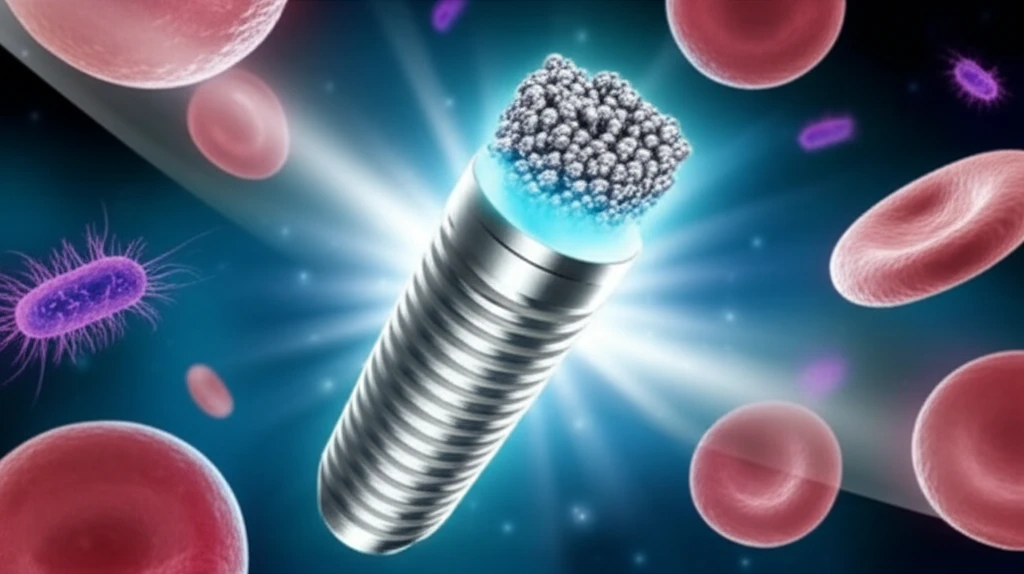
A recent study published in ACS Biomaterials Science & Engineering investigates how adding zinc (Zn) and strontium (Sr) to the surface of a magnesium alloy can improve its performance. The study explores the potential of this modification to enhance corrosion resistance, promote bone growth (osteoinduction), and provide antibacterial properties, creating a safer and more effective implant material.
Coatings to Support Bone Integration
A 2016 study examined zinc-, magnesium-, and strontium-substituted hydroxyapatite coatings on titanium implants, focusing on their different effects on fixation strength. Its source notes that all three elements can benefit bone growth and regeneration. A 2021 review also describes magnesium and strontium, alongside zinc and other trace elements, as surface-coating materials used to improve dental implants’ biological activity. Separately, a 2025 comparative coating study reported magnesium oxide and zinc oxide on coating surfaces before corrosion, suggesting possible toxicity to cells.
Addressing Magnesium’s Corrosion Challenge
A 2024 review reports that corrosion can degrade an implant’s mechanical integrity before surrounding tissue has fully recovered. It surveys alloying, composite creation, and surface coatings as strategies to improve biomechanical and bio-corrosion properties. A 2026 review synthesizes historical milestones in biodegradable magnesium implants and compares magnesium with zinc- and iron-based systems, covering alloy design, processing, surface modification, corrosion, biological response, and clinical translation.
The Zn/Sr Coating: A Triple-Threat Solution for Magnesium Implants
Researchers at several Chinese universities have developed a method to modify the surface of ZK60 magnesium alloy using a one-step hydrothermal process. This process involves creating a coating containing both zinc and strontium ions. The goal is to create a surface that:
- Enhances Corrosion Resistance: The coating acts as a protective barrier, slowing down the rapid degradation of the magnesium alloy in the body's fluids.
- Promotes Bone Growth (Osteoinduction): Zinc and strontium ions are known to encourage bone cell growth and differentiation, helping the implant integrate better with the surrounding bone.
- Combats Bacteria: Zinc ions possess antibacterial properties, helping to prevent infections that can hinder the healing process.
Research on Implants, Infection, and Bone Repair
A 2023 study set out to create porous hydroxyapatite coatings for titanium dental implants, including zinc-, strontium-, and magnesium-multidoped coatings; it identifies osseointegration and antibacterial properties as desirable. A recent review of zinc-based materials describes Zn–Sr and Zn–Mg–Sr osteoinductive alloys, reporting that strontium ions upregulate osteogenic pathways while zinc ions provide antibacterial action for infection control and bone-defect repair. A narrative review also reports that other authors found Mg²⁺-containing implants prevented bone metastasis and tumor recurrence. These sources describe distinct research directions and do not establish that a zinc-and-strontium coating on a magnesium implant produces those outcomes.
Performance Challenges Remain
A 2023 review describes biodegradable magnesium alloys as a promising material for biomedical implants while emphasizing that they have challenges requiring potential solutions. It presents modifications as opportunities to improve the long-term performance of magnesium-based implants. The source summary does not specify particular failure rates or quantify how well any proposed solution works, so it does not establish that these challenges have been overcome.
A Promising Step Toward Safer Implants
The study's findings suggest that the Zn/Sr surface modification of magnesium alloys holds significant promise for improving the safety and effectiveness of medical implants. By slowing down degradation, promoting bone growth, and fighting bacterial infections, this approach could lead to:
Tailoring Degradation with Coatings
A source on zinc and zinc-based alloys describes them as an attractive alternative for absorbable implants because of their combination of in vivo biocompatibility and degradation behavior. It reports that suitable coatings can enhance their biological characteristics and tailor their degradation process. This points to coating design as a way to tune zinc-based implant performance, while the source does not specifically establish the same effects for zinc-and-strontium coatings on magnesium implants.
<ul><li>Reduced risk of complications.</li><li>Faster healing times.</li><li>Improved implant integration.</li><li>Elimination of the need for secondary surgeries.</li></ul>
While further research is needed to optimize the coating process and assess its long-term effects in the body, this study provides a valuable foundation for developing a new generation of biodegradable implants that can better support bone healing and improve patient outcomes.