
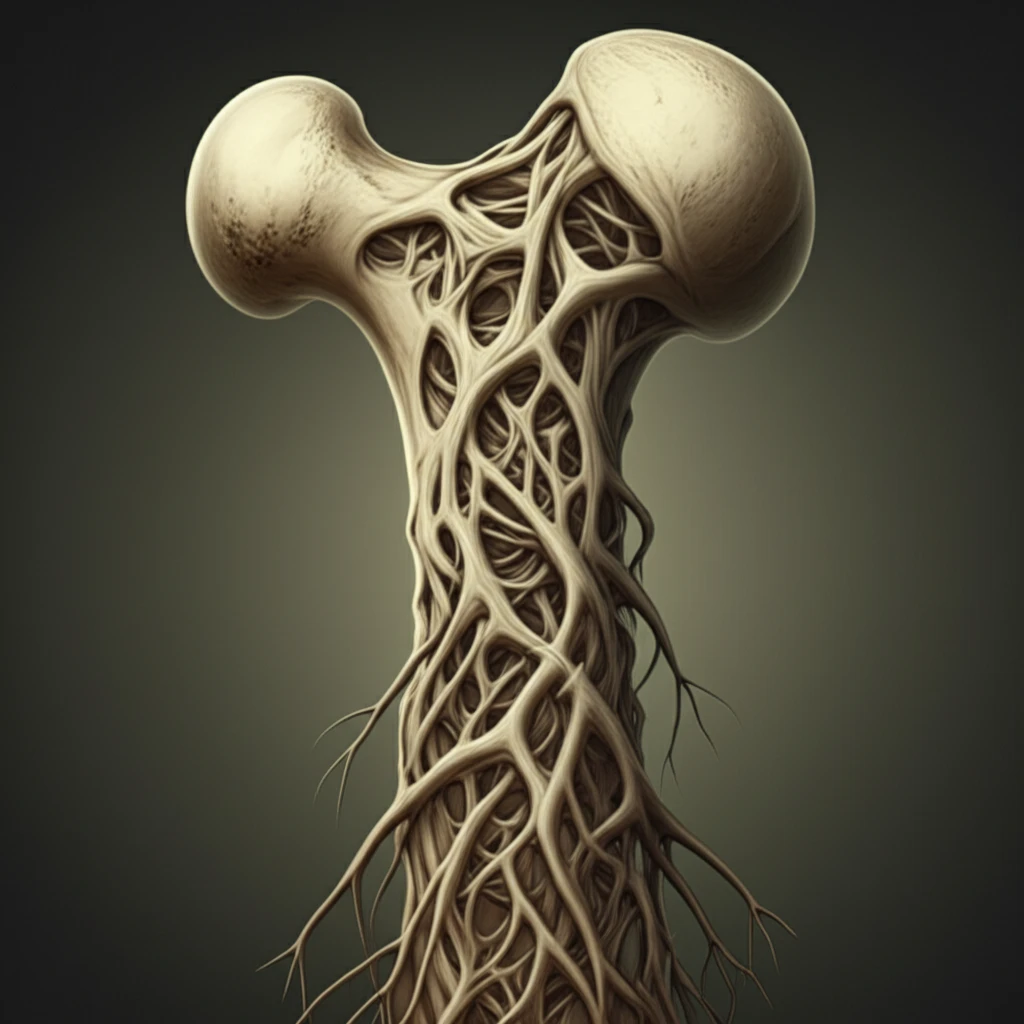
Unraveling Giant Bone Growths: Understanding Exostoses

"A closer look at exostoses, those unexpected bone formations that can emerge and how to manage them."
Exostoses, also known as bone spurs or osteochondromas, are bony growths that develop on the surface of bones. These formations are typically covered by cartilage, a smooth tissue that cushions joints and facilitates movement. Exostoses are generally benign (non-cancerous) and can occur in various parts of the body, with a predilection for long bones, such as those in the legs and arms.
While exostoses are often asymptomatic and discovered incidentally during imaging for other conditions, they can sometimes cause pain, discomfort, or limited range of motion. These symptoms depend on the size, location, and proximity to nearby structures, such as nerves, tendons, and blood vessels. Understanding the nature, causes, and management of exostoses is crucial for effective diagnosis and treatment.
This article delves into the world of exostoses, exploring their formation, symptoms, diagnostic approaches, and available treatment options. Whether you're seeking information for yourself or a loved one, this comprehensive guide aims to provide valuable insights into understanding and managing these bony growths.
Growth, Location, and Impact
An osteochondroma is a benign bony projection near a growth plate, capped by cartilage. Its cartilage cap continues to grow through puberty until the growth plate closes. A 2021 study examined where hand exostoses occur and tracked their progression or regression, as well as their influence on longitudinal bone growth and finger-bone angulation. A 2025 study examined 1,242 patients for maxillary and mandibular tori, categorizing findings by age, gender, and ethnicity.
Treatment Depends on Symptoms and Location
Exostoses are noncancerous bone growths, and treatment may not be needed. The Cleveland Clinic says the decision depends partly on which bone is affected and whether the growth causes pain; certain types may need surgical removal. Its guidance also recommends seeing a healthcare provider after noticing a new growth or bump near a bone. The supplied sources do not give enough detail to compare diagnostic methods or describe specific limitations of treatment.
A Natural-History Study of Hereditary Exostoses
A 1995 natural-history study described hereditary multiple exostosis (EXT) as an autosomal dominant disorder marked by bony protuberances growing from long bones. The study noted that these growths can cause a variety of orthopedic deformities. Its stated aim was to further delineate the natural history of EXT.
What Causes Bone Exostoses?
The exact cause of exostoses is not always clear, but several factors are believed to contribute to their development. These include:
- Genetics: Some individuals may be predisposed to developing exostoses due to inherited genetic factors. Hereditary Multiple Exostoses (HME) is a genetic condition characterized by the development of multiple exostoses throughout the body.
- Trauma or Injury: Repetitive trauma or injury to a bone may stimulate the formation of exostoses at the site of injury. This is seen specially with athletes.
- Underlying Medical Conditions: Certain medical conditions, such as osteochondromatosis (multiple exostoses), can increase the risk of developing exostoses.
- Cartilage cap: Because exostoses are covered in cartilage, they can develop when the cartilage detaches and grows on the surface of the bone.
Incidence Is Difficult to Establish
The exact incidence of osteochondromas is unknown. The cited source attributes this uncertainty to the fact that many are asymptomatic and therefore remain undiagnosed. As a result, documented cases may not capture all osteochondromas.
When to Seek Medical Attention for Bone Exostoses
While most exostoses are benign and may not require treatment, it's important to seek medical attention if you experience any of the following:
Research and Personalized-Medicine Prospects
A market report describes the global multiple hereditary exostosis (MHE) market as gradually evolving amid increased awareness of the rare genetic bone disorder. It identifies advances in genetic testing and personalized medicine as developments enhancing early diagnosis. The report also projects steady growth in the global hereditary multiple exostoses treatment market in the coming years, linking that outlook to research and development expected to support more effective treatment options.
A Visible, Bone-Like Proliferation
ScienceDirect describes an intact exostosis as a broad-based, moundlike bony proliferation. It resembles normal cortical bone in color and texture. The bone is covered by periosteum, with thin skin overlying it.