
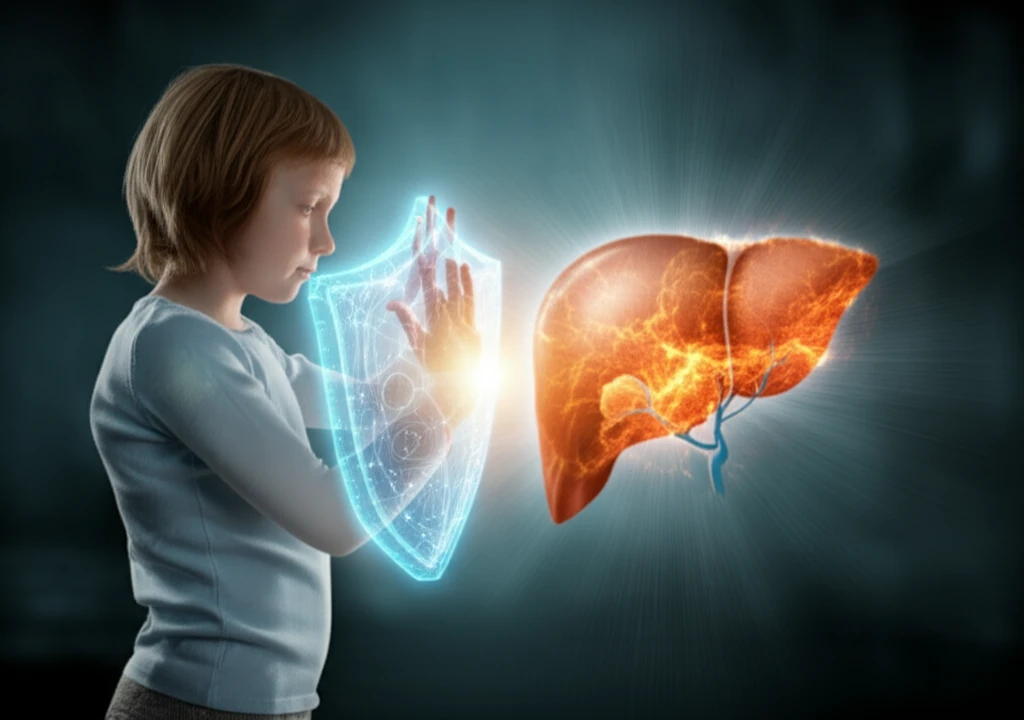
Child with lupus protected by Hepatitis A vaccine.

Lupus and Liver Health: Is Hepatitis A Vaccination Safe for Children?

"A new study investigates the safety and effectiveness of the Hepatitis A vaccine in children with childhood-onset systemic lupus erythematosus (cSLE)."


Systemic lupus erythematosus (SLE) is a chronic autoimmune disease where the body's immune system mistakenly attacks its own tissues and organs. This can lead to inflammation and damage in various parts of the body. While advancements in treatment have significantly improved the outlook for individuals with SLE, infections remain a serious concern.

One such infection is Hepatitis A, a viral liver disease that can be particularly dangerous for those with weakened immune systems. Hepatitis A is more common in areas with poor sanitation, making it a risk for children, especially those with conditions like childhood-onset SLE (cSLE). Vaccination is a key strategy to prevent Hepatitis A, but questions arise about its safety and effectiveness in children with cSLE.

A recent study published in Lupus (2018) has shed light on this important topic. Researchers investigated the use of the inactivated Hepatitis A vaccine in children with cSLE, comparing their immune response and safety outcomes to a group of healthy children.

Decoding the Hepatitis A Vaccine Study: What Parents Need to Know

Child with lupus protected by Hepatitis A vaccine.

The study enrolled 30 children with cSLE and 39 healthy children, all of whom were initially seronegative for Hepatitis A (meaning they had no prior immunity). Both groups received two doses of the Hepatitis A vaccine, administered six months apart. The researchers then measured the levels of Hepatitis A virus (HAV) IgG antibodies – an indicator of immune response – before vaccination and seven months after the initial dose.

The results showed that while the children with cSLE had slightly lower antibody titers compared to the healthy group, the seroconversion rate (the percentage of individuals who developed protective antibodies) was similar in both groups. Specifically, 80% of the cSLE patients and 84.6% of the healthy controls developed sufficient antibodies against Hepatitis A.

  • Safety First: The study found no serious adverse events or disease flares related to the vaccination in the cSLE group. This is reassuring for parents who may be concerned about triggering their child's lupus with a vaccine.
  • Medication Matters: The researchers also looked at whether common lupus medications, such as corticosteroids and immunosuppressants, affected the vaccine's effectiveness. The study found no significant impact, suggesting that these medications don't prevent children with cSLE from developing immunity to Hepatitis A after vaccination.
  • Disease Activity: Similarly, the level of disease activity (how active the lupus was) did not appear to affect seroconversion rates. This suggests that even children with more active lupus can still benefit from the Hepatitis A vaccine.
These findings are encouraging because they suggest that the Hepatitis A vaccine is both safe and effective for children with cSLE. While the antibody levels may be slightly lower compared to healthy children, the vast majority of vaccinated children with cSLE still developed protective immunity.

Protecting Your Child: What This Means for Hepatitis A Vaccination and Lupus

The study provides valuable evidence supporting the use of the inactivated Hepatitis A vaccine in children with cSLE. Talk to your child's doctor about the Hepatitis A vaccine. Vaccination remains a vital tool in safeguarding their health and well-being.

About this Article -

This article was crafted using a human-AI hybrid and collaborative approach. AI assisted our team with initial drafting, research insights, identifying key questions, and image generation. Our human editors guided topic selection, defined the angle, structured the content, ensured factual accuracy and relevance, refined the tone, and conducted thorough editing to deliver helpful, high-quality information.See our About page for more information.

Everything You Need To Know

1

What is childhood-onset systemic lupus erythematosus (cSLE) and how does it relate to Hepatitis A?

Childhood-onset systemic lupus erythematosus (cSLE) is a chronic autoimmune disease where the immune system attacks the body's own tissues and organs. This can lead to inflammation and damage in various parts of the body. Hepatitis A is a viral liver disease that poses a greater risk to individuals with weakened immune systems, making children with cSLE more vulnerable. Therefore, the Hepatitis A vaccine becomes a critical consideration for these children to protect them from this infection.

2

Why is the Hepatitis A vaccine important for children with cSLE?

The Hepatitis A vaccine is particularly important for children with cSLE because of their increased susceptibility to infections due to their condition. cSLE weakens the immune system, and Hepatitis A can be especially dangerous for those with compromised immunity. Vaccination is a key strategy to prevent Hepatitis A, offering protection against this potentially serious viral liver disease and safeguarding their health and well-being.

3

Were there any safety concerns about the Hepatitis A vaccine for children with cSLE?

A recent study published in Lupus (2018) found no serious adverse events or disease flares related to the Hepatitis A vaccination in the cSLE group. This finding is reassuring for parents concerned about triggering their child's lupus with a vaccine. The study specifically looked at safety outcomes and found no evidence of the vaccine worsening the children's condition.

4

How effective is the Hepatitis A vaccine in children with cSLE?

The study showed that the Hepatitis A vaccine is effective in children with cSLE. The seroconversion rate, which is the percentage of individuals who developed protective antibodies, was similar in both cSLE patients and healthy controls. While the children with cSLE had slightly lower antibody titers compared to the healthy group, the vast majority developed sufficient antibodies against Hepatitis A, indicating a good immune response and protection against the virus.

5

Do medications and disease activity in cSLE impact the effectiveness of the Hepatitis A vaccine?

The study addressed whether common lupus medications, such as corticosteroids and immunosuppressants, affected the vaccine's effectiveness and found no significant impact. This suggests that these medications do not prevent children with cSLE from developing immunity to Hepatitis A after vaccination. Moreover, the level of disease activity did not appear to affect seroconversion rates, indicating that even children with more active lupus can still benefit from the Hepatitis A vaccine, thus confirming the vaccine's broad applicability and efficacy within this population.

Newsletter Subscribe

Subscribe to get the latest articles and insights directly in your inbox.