
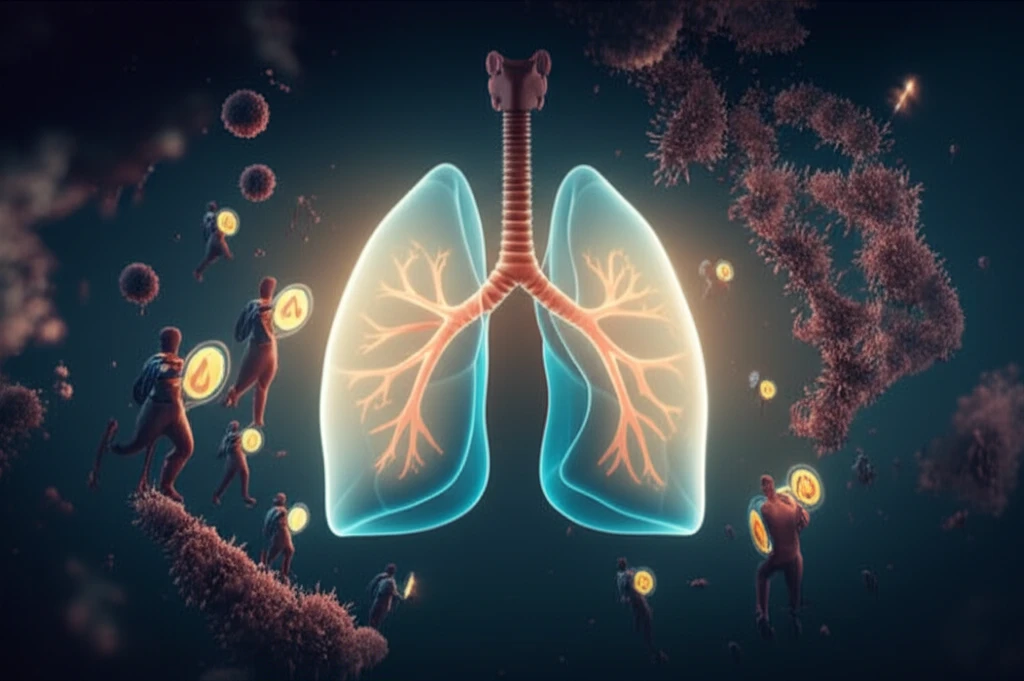
Illustration of healthy lungs protected by macrophages with antioxidant shields.

Lung Inflammation: How Antioxidants Can Help

"Discover how antioxidants in alveolar macrophages combat endotoxemia and promote lung health."


Sepsis and septic shock, triggered by Gram-negative bacteria releasing endotoxins (lipopolysaccharides or LPS), pose a significant threat to health. These endotoxins, integral to the bacterial cell wall, initiate a cascade of reactions as bacteria multiply and die, leading to severe inflammation and potential organ failure.

The lungs, highly susceptible to endotoxin effects, often suffer early damage in septic shock. Pulmonary complications, including edema and respiratory failure, are major contributors to morbidity and mortality during endotoxemia. Therefore, understanding how to protect and support lung health during such systemic inflammatory events is crucial.

Macrophages, activated by endotoxins, produce potent antimicrobial substances like superoxide anions (O2¯) and hydrogen peroxide (H2O2). While these compounds are essential for destroying pathogens, excessive production can harm the body's own tissues. Balancing this oxidative stress is crucial, and antioxidants play a key role in protecting biological systems from the damaging effects of reactive oxygen species.

How Do Antioxidants Protect the Lungs During Endotoxemia?

Illustration of healthy lungs protected by macrophages with antioxidant shields.

A recent study investigated the impact of endotoxemia on the antioxidant activity of alveolar macrophages in Wistar rats. Researchers examined whether stimulating an endotoxemic response affected the macrophages' ability to combat oxidative stress in the lungs. Twenty-four male rats were divided into control and endotoxemic groups, with the latter receiving lipopolysaccharide (LPS) to mimic a bacterial infection.

The study measured several key indicators, including:

  • Leukocyte Counts: Tracking total and differential leukocyte counts in both peripheral blood and bronchoalveolar lavage (BAL).
  • Superoxide Production: Assessing the production of superoxide by alveolar macrophages.
  • Superoxide Dismutase (SOD) Activity: Measuring the activity of superoxide dismutase, a critical antioxidant enzyme.
The findings revealed that endotoxemia increased total leukocyte counts and neutrophil numbers in both peripheral blood and BAL, indicating an inflammatory response in the lungs. Additionally, superoxide production increased, highlighting heightened oxidative stress. However, the activity of superoxide dismutase (SOD) remained unchanged, suggesting that the antioxidant defense system was not significantly altered in adult rats under these conditions. This seemingly paradoxical result suggests that while inflammation and oxidative stress increase during endotoxemia, the lungs maintain their baseline antioxidant capacity.

The Implications for Lung Health

While the unchanged SOD activity might seem counterintuitive, it could enhance the host's ability to combat infectious agents. By maintaining antioxidant capacity, the lungs can effectively balance the need to destroy pathogens with the risk of tissue damage. However, this balance is delicate, and the sustained inflammatory response could contribute to pulmonary injury. Further research is needed to fully understand these complex interactions and develop targeted strategies for protecting lung health during systemic inflammation.

About this Article -

This article was crafted using a human-AI hybrid and collaborative approach. AI assisted our team with initial drafting, research insights, identifying key questions, and image generation. Our human editors guided topic selection, defined the angle, structured the content, ensured factual accuracy and relevance, refined the tone, and conducted thorough editing to deliver helpful, high-quality information.See our About page for more information.

Everything You Need To Know

1

What is endotoxemia, and how does it relate to lung inflammation?

Endotoxemia is a condition triggered by Gram-negative bacteria releasing endotoxins, specifically lipopolysaccharides (LPS). These LPS molecules initiate a cascade of reactions, leading to severe inflammation. The lungs are particularly vulnerable, often suffering early damage. This inflammation can cause pulmonary complications like edema and respiratory failure, underscoring the critical link between endotoxemia and lung health. The study used Wistar rats to examine this relationship.

2

What role do alveolar macrophages play in lung health during endotoxemia?

Alveolar macrophages, activated by endotoxins, are crucial in the body's defense against pathogens. They produce antimicrobial substances such as superoxide anions (O2¯) and hydrogen peroxide (H2O2). While effective at destroying pathogens, excessive production of these compounds can cause oxidative stress, damaging lung tissues. Therefore, the balance between pathogen elimination and tissue protection is key, highlighting the critical role of alveolar macrophages in the process.

3

How do antioxidants protect the lungs during endotoxemia?

Antioxidants are vital in protecting biological systems from the damaging effects of reactive oxygen species. During endotoxemia, the lungs experience heightened oxidative stress due to the inflammatory response. Antioxidants help to mitigate this stress by neutralizing or reducing the harmful effects of compounds like superoxide anions and hydrogen peroxide, thereby protecting lung tissues from damage. The study examined Superoxide Dismutase (SOD) activity in alveolar macrophages to understand the antioxidant response.

4

What were the key findings of the study on Wistar rats concerning lung inflammation and antioxidants?

The study on Wistar rats revealed that endotoxemia increased total leukocyte counts and neutrophil numbers in both peripheral blood and bronchoalveolar lavage (BAL), indicating a significant inflammatory response in the lungs. Superoxide production increased, suggesting heightened oxidative stress. Surprisingly, the activity of Superoxide Dismutase (SOD) remained unchanged, indicating that the antioxidant defense system maintained its baseline capacity despite the inflammatory challenge. This balance could enhance the ability of the lungs to combat infectious agents while attempting to mitigate tissue damage.

5

What are the implications of the study's findings for lung health, and what further research is needed?

The study's findings suggest that while the lungs maintain their antioxidant capacity during endotoxemia, the sustained inflammatory response could still contribute to pulmonary injury. The unchanged Superoxide Dismutase (SOD) activity might seem counterintuitive, but it suggests a delicate balance between fighting pathogens and preventing tissue damage. Further research is needed to fully understand these complex interactions and develop targeted strategies to protect lung health during systemic inflammation, potentially focusing on ways to support or modulate the antioxidant response within alveolar macrophages.

Newsletter Subscribe

Subscribe to get the latest articles and insights directly in your inbox.