
Lung Cancer Breakthrough: How a Smart Drug Combo Offers New Hope

"Revolutionary microemulsion strategy boosts treatment effectiveness and tumor penetration for improved lung cancer outcomes."
Lung cancer remains one of the most significant health challenges worldwide, demanding continuous innovation in treatment strategies. Traditional chemotherapy often falls short due to its inability to effectively target cancer cells while minimizing harm to healthy tissues. This limitation underscores the urgent need for more sophisticated and targeted approaches.
A promising avenue in cancer treatment involves combining multiple drugs to attack cancer cells from different angles. This approach, known as combination chemotherapy, can enhance therapeutic effects, reduce systemic toxicity, and even overcome drug resistance. However, effectively delivering these drug combinations to the tumor site remains a significant hurdle.
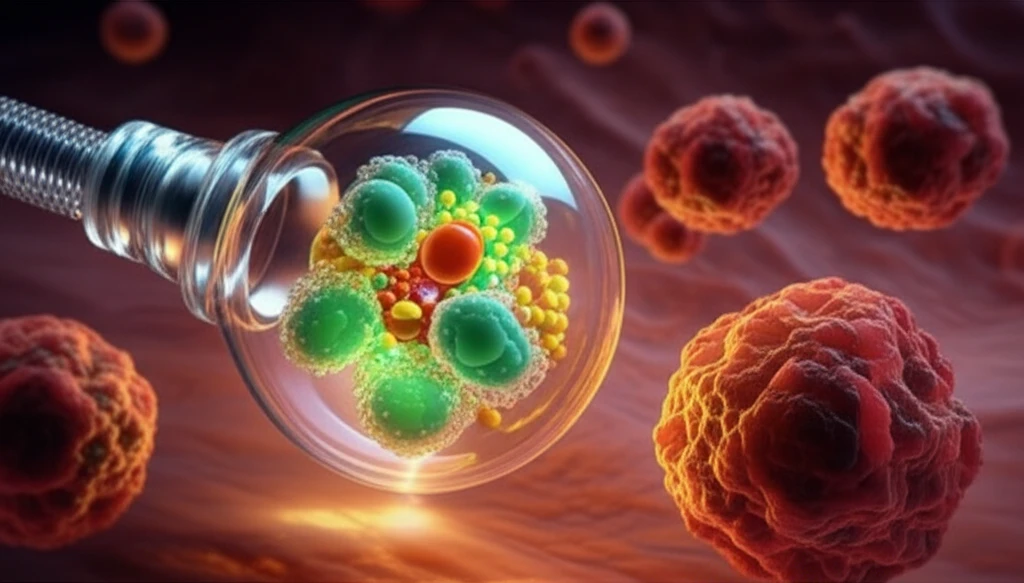
To address this challenge, researchers have developed a novel strategy using a multicomponent microemulsion – a sophisticated mixture that encapsulates multiple drugs into tiny droplets. This innovative delivery system aims to improve the effectiveness of lung cancer treatment by synergistically combining drugs and ensuring deep penetration into tumor tissues.
What is a Multicomponent Microemulsion and Why Does It Matter?
A multicomponent microemulsion is essentially a sophisticated method of delivering drugs. Think of it as a tiny, highly efficient vehicle designed to carry a combination of medications directly to the site of a tumor. This approach is particularly valuable in treating complex diseases like lung cancer, where attacking the cancer cells from multiple angles can significantly improve outcomes.
- Etoposide: A potent chemotherapeutic agent known for its ability to disrupt DNA synthesis in cancer cells.
- Coix Seed Oil: An approved anti-cancer agent in China, believed to have various beneficial properties, including immune modulation.
- Ginsenoside Rh2 (G-Rh2): A drug resistance modulator with anti-cancer capabilities, helping to make cancer cells more vulnerable to treatment.
A Promising Path Forward
The results of this study offer a promising glimpse into the future of lung cancer treatment. By combining rational drug selection with advanced delivery systems like microemulsions, researchers are paving the way for more effective, less toxic therapies. While further research is needed to fully understand the long-term effects and optimize this approach, the potential benefits for lung cancer patients are significant. This innovative strategy provides a solid foundation for future clinical applications, offering new hope in the fight against this challenging disease.