
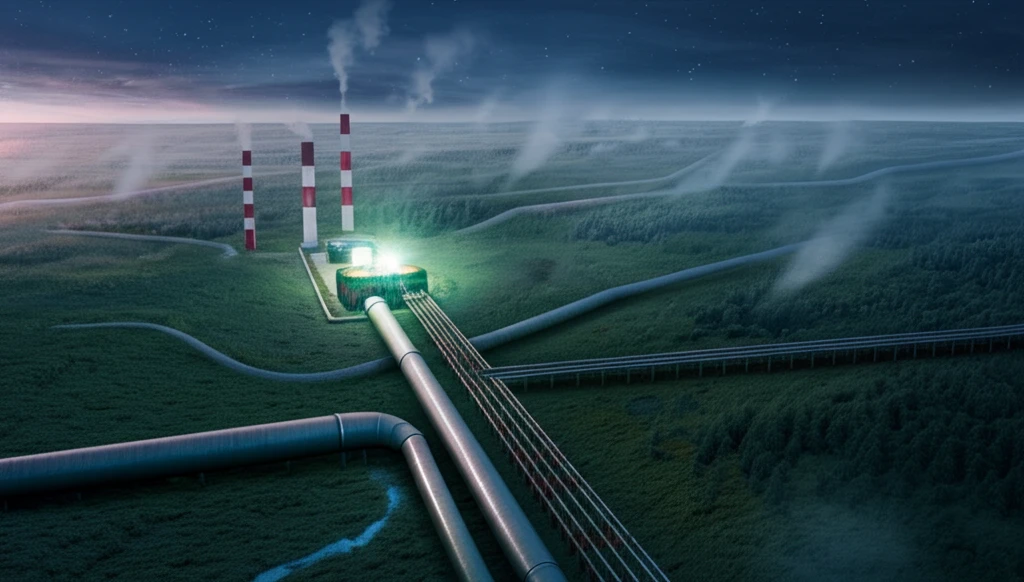
Carbon capture pipelines converging on Louisiana landscape

Louisiana's Industrial Revolution: Can Carbon Capture Pave the Way to a Sustainable Future?

"Explore how Louisiana is tackling its industrial CO2 emissions with innovative carbon capture, transport, and storage systems, aiming for a greener economy while navigating social and environmental considerations."


The world is at a critical juncture, demanding innovative solutions to combat climate change. Central to this global effort is the concept of Carbon Capture, Transport, and Storage (CCTS)—a suite of technologies designed to trap carbon dioxide (CO2) emissions from industrial sources and prevent them from entering the atmosphere. Louisiana, a state known for its rich industrial history and significant CO2 output, is emerging as a key player in deploying CCTS systems.

Louisiana's unique geological landscape, coupled with its existing industrial infrastructure and supportive policies, makes it an ideal location for CCTS initiatives. The state's subsurface geology offers promising storage sites, while its concentration of industrial facilities provides ample opportunities for carbon capture. However, the path to a sustainable future isn't without its challenges. Successfully implementing CCTS in Louisiana requires careful consideration of economic factors, environmental impacts, and social justice concerns.

This article explores the design methods and insights for CO2 capture, transport, and storage systems in Louisiana. Drawing from recent research, we will examine how the state is evaluating the scale of its CO2 emissions, identifying potential storage sites, and designing cost-effective pipeline infrastructure. We'll also delve into the crucial role of social and environmental justice, ensuring that these green initiatives benefit all communities and avoid reinforcing historical inequalities.

How Can Louisiana Capture Millions of Tons of Industrial CO2?

Carbon capture pipelines converging on Louisiana landscape

Louisiana's industrial sector is a major source of CO2 emissions, presenting both a challenge and an opportunity for CCTS deployment. A recent study inventoried 190 industrial facilities in Louisiana, collectively emitting 130 million metric tons of CO2 annually. Nearly two-thirds of these emissions originate from the southeast region, with natural gas power plants, refineries, and petrochemical plants being the largest contributors.

The potential for capturing these emissions is substantial. The study estimates that up to 50 million tons of CO2 per year could be captured at under $100 per ton, and up to 100 million tons per year at under $120 per ton. This hinges on understanding the characteristics of the gas streams from which CO2 can be removed. Facilities like ammonia production and natural gas processing plants emit CO2 streams with high purity, making capture more cost-effective. However, other industrial processes require added separation techniques to remove CO2, increasing the overall cost.

  • Cost-Effective Capture: High-purity CO2 streams from facilities like ammonia plants offer the lowest capture costs.
  • Economies of Scale: Larger emitters benefit from scale economies in capture costs.
  • Technological Solutions: Amine solvents are commercially established for CO2 removal.
To incentivize these efforts, the federal government offers tax credits under the Inflation Reduction Act (IRA). These credits can significantly reduce the levelized cost of CCTS projects, making them more economically viable. By understanding the sources, concentrations, and costs associated with capturing CO2, Louisiana can strategically target its efforts and maximize the impact of CCTS technologies.

The Future of CCTS in Louisiana

Louisiana's journey toward a sustainable future is intricately linked to its ability to effectively deploy carbon capture, transport, and storage systems. By understanding the economic, environmental, and social dimensions of CCTS, the state can pave the way for a greener economy while ensuring a just and equitable transition for all its communities. The insights gained from Louisiana's experience can serve as a valuable model for other regions seeking to mitigate industrial CO2 emissions and build a more sustainable world.

About this Article -

This article was crafted using a human-AI hybrid and collaborative approach. AI assisted our team with initial drafting, research insights, identifying key questions, and image generation. Our human editors guided topic selection, defined the angle, structured the content, ensured factual accuracy and relevance, refined the tone, and conducted thorough editing to deliver helpful, high-quality information.See our About page for more information.

This article is based on research published under:

DOI-LINK: https://doi.org/10.48550/arXiv.2403.17162,

Title: Design Insights For Industrial Co2 Capture, Transport, And Storage Systems

Subject: econ.gn q-fin.ec

Authors: Tubagus Aryandi Gunawan, Lilianna Gittoes, Cecelia Isaac, Chris Greig, Eric Larson

Published: 25-03-2024

Everything You Need To Know

1

What is Carbon Capture, Transport, and Storage (CCTS) and why is it important for Louisiana?

Carbon Capture, Transport, and Storage (CCTS) is a suite of technologies designed to trap carbon dioxide (CO2) emissions from industrial sources, transport it, and store it to prevent its release into the atmosphere. For Louisiana, a state with a significant industrial history and high CO2 output, CCTS is crucial for mitigating climate change. The state's industrial sector emits a massive amount of CO2 annually. Implementing CCTS systems offers a path toward a greener economy by reducing emissions from facilities like natural gas power plants, refineries, and petrochemical plants. This is particularly important because Louisiana is exploring options to decrease its carbon footprint while continuing its industrial operations.

2

What are the main challenges Louisiana faces when implementing CCTS?

Successfully implementing CCTS in Louisiana requires careful consideration of economic factors, environmental impacts, and social justice concerns. One of the main challenges is the cost associated with capturing and storing CO2. Although the Inflation Reduction Act (IRA) provides tax credits, the cost can vary depending on the purity of the CO2 stream. Another challenge is the need to identify suitable storage sites in the state's unique geological landscape. The economic viability of these projects depends on factors such as the type of industrial process and the scale of the project. Furthermore, the implementation should consider environmental and social justice considerations to avoid reinforcing historical inequalities.

3

How does Louisiana plan to capture CO2 from industrial sources?

Louisiana plans to capture CO2 from industrial sources by focusing on the existing infrastructure and industrial facilities, specifically targeting those with the highest CO2 emissions. The process involves a careful evaluation of the sources and concentrations of CO2 emissions. High-purity CO2 streams from facilities like ammonia production and natural gas processing plants, which have lower capture costs, are prioritized. The state is also exploring the use of amine solvents for CO2 removal, which is a commercially established technology. The federal government's tax credits under the Inflation Reduction Act (IRA) will incentivize these efforts, thus reducing the overall cost of CCTS projects. By understanding the sources, concentrations, and costs associated with capturing CO2, Louisiana aims to target its efforts strategically and maximize the impact of CCTS technologies.

4

What types of industrial facilities in Louisiana are the largest contributors to CO2 emissions, and how does this impact CCTS implementation?

In Louisiana, natural gas power plants, refineries, and petrochemical plants are the largest contributors to CO2 emissions. These facilities account for a significant portion of the state's total industrial CO2 output. The concentration of these facilities in the southeast region of Louisiana is a key factor in the implementation of CCTS. These large-scale emitters create substantial opportunities for carbon capture, offering the potential to capture millions of tons of CO2 annually. The scale of these facilities also creates the potential for economies of scale, which can reduce the costs of CCTS projects. However, the specific capture methods and associated costs will vary depending on the industrial processes and the purity of the CO2 streams generated.

5

How does Louisiana's unique geological landscape and existing infrastructure support CCTS initiatives?

Louisiana's unique geological landscape and existing industrial infrastructure provide significant advantages for CCTS initiatives. The state's subsurface geology offers promising storage sites for CO2. Moreover, the concentration of industrial facilities provides ample opportunities for carbon capture. These factors make Louisiana an ideal location for deploying CCTS systems. The existing industrial infrastructure also includes pipelines and other transport networks, which can be adapted for the transport of captured CO2. This combination of geological suitability, industrial concentration, and infrastructural advantages positions Louisiana as a key player in the development of CCTS technologies, paving the way for a sustainable future.

Newsletter Subscribe

Subscribe to get the latest articles and insights directly in your inbox.