
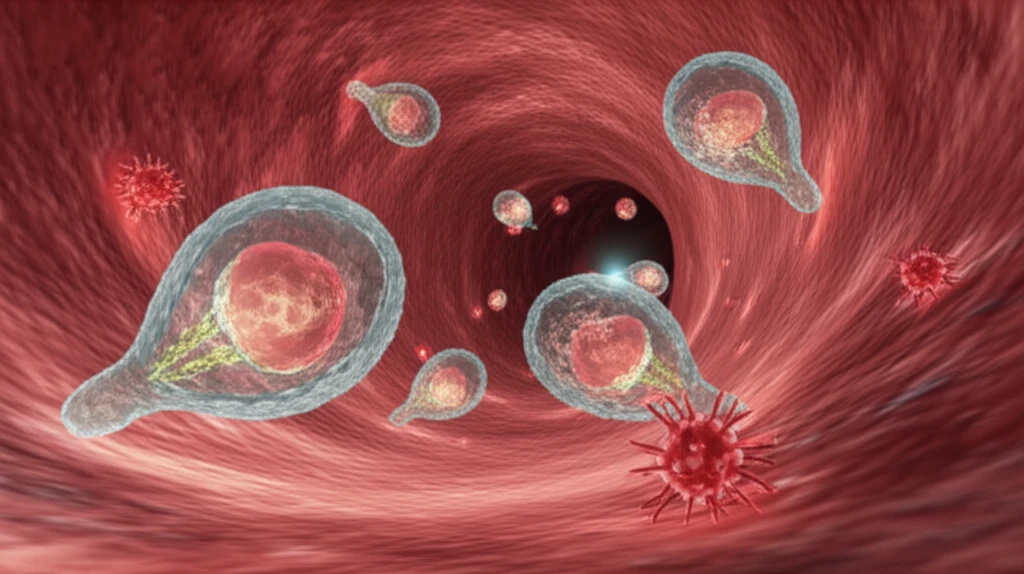
Microscopic liposomes targeting cancer cells in a futuristic bloodstream landscape

Liposomes: The Tiny Tech Revolutionizing Cancer Drug Delivery

"Discover how these microscopic spheres are making cancer treatment more effective and less toxic."


Cancer remains one of humanity's most formidable adversaries, demanding continuous innovation in treatment strategies. While traditional methods like chemotherapy have been mainstays, their systemic toxicity often results in significant side effects, impacting patients' quality of life. In 2012 alone, cancer accounted for 8.2 million deaths worldwide, a number projected to surge by 70% in the coming decades, underscoring the urgent need for more targeted and effective therapies.

Enter liposomes—spherical vesicles composed of lipid bilayers that mimic cellular membranes. These microscopic structures are revolutionizing drug delivery by encapsulating therapeutic agents and ferrying them directly to cancer cells. This targeted approach not only boosts the effectiveness of the treatment but also drastically reduces the exposure of healthy tissues to harmful drugs.

This article explores how liposomes are transforming cancer therapy, offering a beacon of hope by promising treatments that are both more potent and gentler on the body. We will also discuss how liposomes are designed, how they function, and what makes them such a promising tool in the fight against cancer.

What Are Liposomes and Why Are They a Game-Changer in Cancer Treatment?

Microscopic liposomes targeting cancer cells in a futuristic bloodstream landscape

Liposomes are essentially tiny bubbles made of the same material as cell membranes. This makes them exceptionally biocompatible, meaning they are well-tolerated by the body. Their structure allows them to encapsulate both water-soluble and fat-soluble drugs, providing versatility in the types of medications they can deliver.

The real innovation lies in their ability to target tumors specifically. By modifying the surface of liposomes with specific ligands—molecules that bind to receptors overexpressed on cancer cells—researchers can ensure that the drug is delivered precisely where it needs to be. This targeted delivery is a stark contrast to traditional chemotherapy, which affects all rapidly dividing cells, leading to hair loss, nausea, and immune suppression.

  • Reduced Toxicity: Delivers drugs directly to cancer cells, sparing healthy tissue.
  • Versatility: Can carry a wide range of drugs, whether they dissolve in water or fat.
  • Enhanced Efficacy: Ensures a higher concentration of the drug at the tumor site.
Furthermore, liposomes can be engineered to release their payload in response to specific triggers, such as ultrasound or changes in pH, providing an additional layer of control over when and where the drug is activated.

The Future of Liposome Technology in Cancer Care

As research continues, the potential for liposomes to transform cancer treatment is immense. By improving drug delivery and minimizing side effects, these tiny vesicles offer a pathway to more effective, personalized cancer therapies. With ongoing advancements, liposomes are set to play a crucial role in improving outcomes and enhancing the quality of life for patients battling cancer.

About this Article -

This article was crafted using a human-AI hybrid and collaborative approach. AI assisted our team with initial drafting, research insights, identifying key questions, and image generation. Our human editors guided topic selection, defined the angle, structured the content, ensured factual accuracy and relevance, refined the tone, and conducted thorough editing to deliver helpful, high-quality information.See our About page for more information.

Everything You Need To Know

1

What are liposomes, and how do they work within the body?

Liposomes are spherical vesicles made from lipid bilayers, similar in composition to cell membranes, making them biocompatible. They encapsulate therapeutic agents, protecting them from degradation and enabling targeted delivery. By modifying the liposome surface with ligands, researchers can target specific receptors on cancer cells, ensuring the drug is delivered directly to the tumor. This targeted approach significantly reduces exposure of healthy tissues to harmful drugs, a key advantage over traditional chemotherapy.

2

How do liposomes improve cancer treatment compared to traditional chemotherapy?

Liposomes revolutionize cancer treatment by offering targeted drug delivery, a stark contrast to the systemic effects of traditional chemotherapy. Chemotherapy affects all rapidly dividing cells, leading to severe side effects. Liposomes, however, are engineered to deliver drugs directly to cancer cells, reducing toxicity and minimizing harm to healthy tissues. This targeted delivery ensures a higher concentration of the drug at the tumor site, enhancing efficacy while reducing the adverse effects associated with chemotherapy.

3

Can liposomes carry any type of cancer drug?

Yes, a significant advantage of liposomes is their versatility. They can encapsulate both water-soluble and fat-soluble drugs, providing flexibility in the types of medications they can deliver. This capability allows for the delivery of a wide range of therapeutic agents, expanding the scope of treatments that can be administered using this technology.

4

What are the key benefits of using liposomes in cancer therapy?

The key benefits of utilizing liposomes in cancer therapy include reduced toxicity, versatility, and enhanced efficacy. Liposomes deliver drugs directly to cancer cells, sparing healthy tissue and minimizing side effects. They can carry a wide range of drugs, regardless of their solubility. Moreover, they ensure a higher concentration of the drug at the tumor site, thereby improving the treatment's effectiveness.

5

What is the future potential for liposome technology in cancer care?

The future of liposome technology in cancer care is promising, with significant potential to transform treatment. By improving drug delivery and minimizing side effects, liposomes offer a pathway to more effective, personalized cancer therapies. Ongoing research and advancements in liposome technology are expected to play a crucial role in enhancing outcomes and improving the quality of life for patients battling cancer. This includes engineering liposomes to release their payload in response to specific triggers, like ultrasound or changes in pH, providing additional control over drug activation.

Newsletter Subscribe

Subscribe to get the latest articles and insights directly in your inbox.