
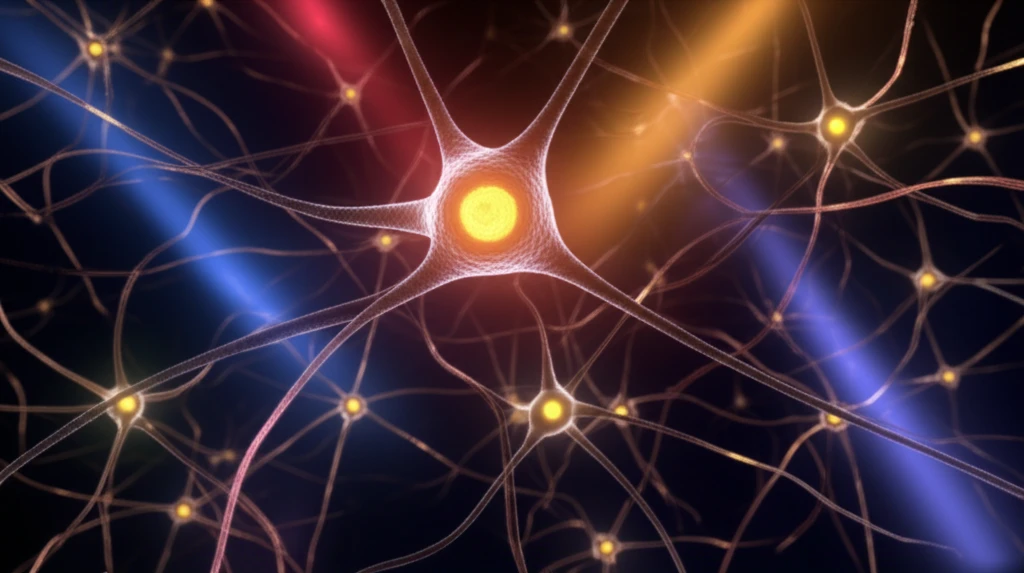
Neurons and astrocytes glowing under targeted light, symbolizing photodynamic therapy and calcium signals.

Light vs. Brain Cells: How Photodynamic Therapy Impacts Neurons & Astrocytes

"Uncover the surprising effects of photodynamic therapy (PDT) on brain cells and learn how this cancer treatment can trigger calcium signals and lipid peroxidation in neurons and astrocytes."


Photodynamic therapy (PDT) is a powerful method for destroying brain tumors by producing reactive oxygen species (ROS), leading to oxidative stress and the death of cancerous cells. Radachlorin, a chlorine derivative photosensitizer, is often used in PDT due to its ability to quickly accumulate in tumor tissue and rapidly clear from the body. However, the effects of radachlorin on healthy brain cells remain unclear.

One major effect of PDT is the induction of reactive oxygen species (ROS). While excessive ROS production can trigger cell death, smaller amounts can play a physiological role, including acting as stimuli for calcium signaling. Calcium ions are vital for regulating intracellular processes and cell-to-cell communication, especially in excitable cells like neurons and astrocytes.

Research has shown that PDT can increase intracellular calcium levels by activating calcium channels or releasing calcium from internal stores. Given the importance of understanding how PDT impacts healthy brain cells, this article delves into the specific effects of radachlorin on calcium signaling and lipid peroxidation in neurons and astrocytes.

Calcium Signals and Brain Cell Response: What Happens?

Neurons and astrocytes glowing under targeted light, symbolizing photodynamic therapy and calcium signals.

Researchers investigated how radachlorin affects primary cultures of cortical neurons and astrocytes using live cell imaging. They found that irradiation in the presence of radachlorin induced calcium signals in both neurons and astrocytes, indicating a direct impact on these brain cells.

Further experiments revealed key aspects of this calcium signaling:

  • Internal Calcium Stores: The calcium signal depended on internal calcium stores within the cells. Even in a calcium-free environment, the signal persisted.
  • Endoplasmic Reticulum (ER): Blocking the ER's calcium stores with thapsigargin (an inhibitor of SERCA) eliminated the calcium response.
  • Phospholipase C (PLC): Inhibitors of phospholipase C (U73122 and Trolox) suppressed the calcium response, indicating PLC's involvement.
  • Lipid Peroxidation: Radachlorin induced lipid peroxidation in both neurons and astrocytes.
These findings suggest that in neurons and astrocytes, PDT-induced lipid peroxidation leads to PLC activation, resulting in the production of inositol 1,4,5-trisphosphate (IP3), which then triggers calcium release.

Protecting the Brain: Implications of PDT on Healthy Tissue

The study highlights that irradiation with radachlorin induces lipid peroxidation in neurons and astrocytes, either directly or indirectly through ROS production. The fact that Trolox, an antioxidant, blocked the effect of radachlorin irradiation further supports the role of ROS.

The photodynamic effect of radachlorin may induce ROS production that triggers lipid peroxidation. Oxidized lipids then stimulate phospholipase C, leading to IP3 production and calcium release from the ER.

While PDT is valuable for cancer treatment, this research underscores the importance of considering its effects on healthy brain tissue. Photo-induced calcium signals in neurons and astrocytes could be protective, stimulating processes for cell protection or utilizing oxidized lipids. However, in certain brain areas, this signal might interfere with normal regulatory processes within the central nervous system. Since calcium signaling is energy-intensive, prolonged elevations in calcium, combined with disrupted energy metabolism from PDT, could potentially damage healthy tissue.

About this Article -

This article was crafted using a human-AI hybrid and collaborative approach. AI assisted our team with initial drafting, research insights, identifying key questions, and image generation. Our human editors guided topic selection, defined the angle, structured the content, ensured factual accuracy and relevance, refined the tone, and conducted thorough editing to deliver helpful, high-quality information.See our About page for more information.

This article is based on research published under:

DOI-LINK: 10.1007/s12035-017-0721-1, Alternate LINK

Title: Reactive Oxygen Species Produced By A Photodynamic Effect Induced Calcium Signal In Neurons And Astrocytes

Subject: Neuroscience (miscellaneous)

Journal: Molecular Neurobiology

Publisher: Springer Science and Business Media LLC

Authors: Maria Neginskaya, Elena Berezhnaya, Anatoly B. Uzdensky, Andrey Y. Abramov

Published: 2017-08-26

Everything You Need To Know

1

How does photodynamic therapy (PDT) target and destroy brain tumors?

Photodynamic therapy (PDT) works by using a photosensitizer like radachlorin to produce reactive oxygen species (ROS) when exposed to light. These ROS cause oxidative stress, which can kill cells, including brain tumor cells. The effects on healthy brain cells, such as neurons and astrocytes, are still being investigated.

2

What happens to neurons and astrocytes when they are exposed to photodynamic therapy (PDT) using radachlorin?

When neurons and astrocytes are exposed to radachlorin and light during photodynamic therapy (PDT), it triggers the release of calcium from internal stores, particularly the endoplasmic reticulum (ER). This process involves phospholipase C (PLC) activation and lipid peroxidation.

3

How does lipid peroxidation in neurons and astrocytes lead to calcium release during photodynamic therapy (PDT)?

Lipid peroxidation in neurons and astrocytes, induced by photodynamic therapy (PDT) with radachlorin, leads to the activation of phospholipase C (PLC). PLC then produces inositol 1,4,5-trisphosphate (IP3), which triggers the release of calcium from the endoplasmic reticulum (ER).

4

What role do reactive oxygen species (ROS) and antioxidants play in photodynamic therapy's (PDT) effects on brain cells?

The research indicates that irradiation with radachlorin leads to lipid peroxidation in both neurons and astrocytes. This can occur directly or indirectly through the production of reactive oxygen species (ROS). The study used Trolox, an antioxidant, to block the effects of radachlorin irradiation, which further supports the role of ROS in the observed cellular responses. The observed calcium signals depend on internal calcium stores within the cells.

5

What are the implications of photodynamic therapy (PDT) on healthy brain tissue and what future research could address these concerns?

Photodynamic therapy's (PDT) impact on healthy brain tissue, specifically neurons and astrocytes, raises important considerations for treatment planning. The induction of lipid peroxidation and alterations in calcium signaling may have consequences for brain function. Further research is necessary to fully understand these effects and develop strategies to minimize potential damage while maximizing the therapeutic benefits of PDT. Future research could investigate the long-term effects of these changes and explore potential protective measures to mitigate harm to healthy brain tissue during PDT.

Newsletter Subscribe

Subscribe to get the latest articles and insights directly in your inbox.