
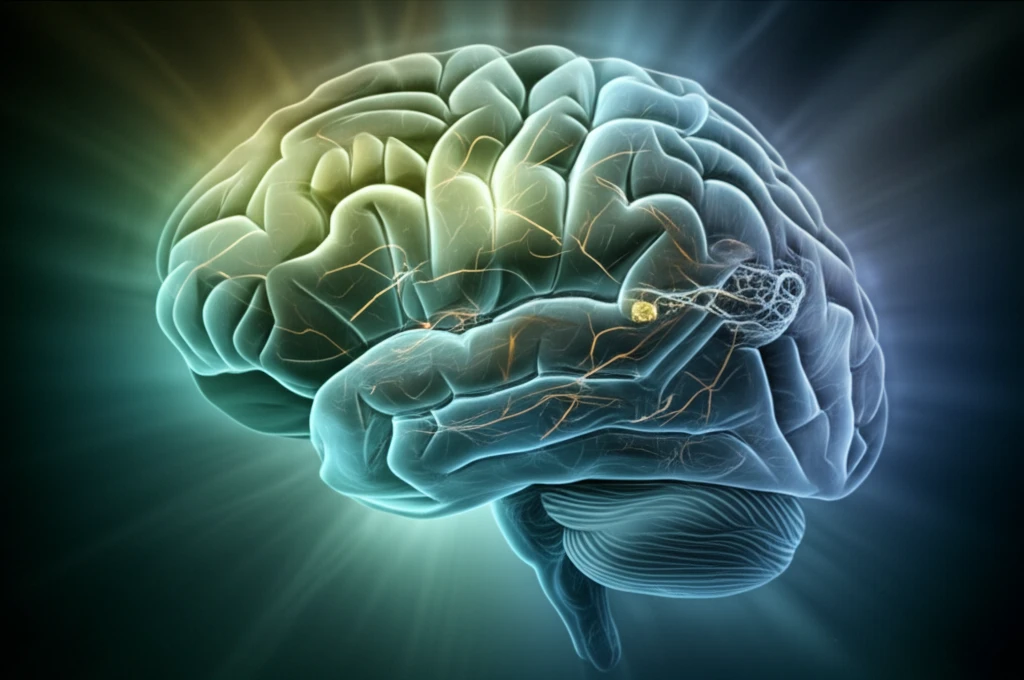
Light Therapy for Alzheimer's: Can Light Waves Combat Brain Fog?

"New research explores how light-activated materials could modulate the self-assembly of Alzheimer's-related proteins, offering hope for non-invasive treatments."
Alzheimer's disease (AD), a devastating neurodegenerative disorder, affects millions worldwide, characterized by progressive memory loss and cognitive decline. A key feature of AD is the abnormal aggregation of beta-amyloid (Aβ) peptides in the brain, forming plaques that disrupt neuronal function.
While current treatments offer limited symptomatic relief, researchers are exploring novel approaches to combat the disease. One promising avenue involves harnessing the power of light to modulate Aβ self-assembly and reduce its toxic effects. This approach utilizes photosensitizing materials, substances that become active when exposed to light, to disrupt Aβ plaques.
This article delves into the innovative world of light-triggered Alzheimer's therapies, exploring how scientists are using light-activated materials and platforms to target and modulate Aβ aggregation, offering new hope for treating this challenging disease.
Shining a Light on Alzheimer's: How Light Therapy Works
The core of light therapy for Alzheimer's lies in the use of photosensitizers. These compounds, when exposed to specific wavelengths of light, undergo chemical reactions that generate reactive oxygen species (ROS). These ROS can then interact with Aβ peptides, altering their structure and preventing them from forming harmful aggregates.
- Molecular photosensitizers: These are small molecules, like porphyrins and methylene blue, that can be designed to bind to Aβ plaques and generate ROS upon light exposure.
- Photoactive nanomaterials: These include nanoparticles made from materials like gold, carbon, or titanium dioxide, which can be activated by light to produce ROS or heat, disrupting Aβ aggregates.
- Photoelectrochemical platforms: These systems use light to generate electrical currents that drive redox reactions, oxidizing Aβ peptides and preventing their aggregation.
The Future of Light-Based Alzheimer's Therapies
While light-triggered modulation of Aβ aggregation holds immense promise, several challenges remain. One key issue is delivering photosensitizers effectively across the blood-brain barrier (BBB), a protective shield that restricts the entry of many substances into the brain. Researchers are exploring various strategies to overcome this hurdle, including using nanoparticles to transport photosensitizers across the BBB.
Another challenge is ensuring the selectivity and safety of light-based therapies. It's crucial to target Aβ plaques specifically while minimizing damage to surrounding healthy tissues. This requires careful design of photosensitizers and precise control over light delivery.
Despite these challenges, the future of light-based Alzheimer's therapies looks bright. As researchers continue to refine these approaches, we can anticipate innovative treatments that offer new hope for preventing and treating this devastating disease. Light may indeed be a powerful tool in the fight against Alzheimer's, offering a non-invasive, targeted, and controllable way to combat the disease.